
TUA ETF: A Strategic Hedge Against Interest Rate Uncertainty in a Rising Rate Environment
As the Federal Reserve signals further rate hikes, investors face mounting pressure to shield portfolios from the volatility of intermediate-term bonds. Enter the Simplify Short Term Treasury Futures Strategy ETF (TUA), an under-the-radar tool designed to mitigate interest rate risk by targeting the ICE 7-10 Year Treasury Index using 2-year U.S. Treasury futures. In a landscape where duration exposure often comes with high capital demands, TUA's duration-matching strategy offers a capital-efficient hedge, leveraging short-term Treasury futures to navigate uncertainty while maintaining liquidity and low costs.
How TUA Works: Convexity as a Shield
TUA's core innovation lies in its use of 2-year Treasury futures to replicate the duration of the ICE 7-10 Year Treasury Index. By amplifying exposure to short-term Treasuries—via futures contracts—the fund achieves a duration comparable to intermediate-term bonds (7–10 years) with a fraction of the capital outlay. This strategy capitalizes on the convexity advantage of shorter-duration instruments.
Convexity refers to the curvature in price-yield relationships: bonds with higher convexity experience smaller price declines when rates rise. Short-term Treasuries inherently exhibit greater convexity than their long-dated peers, making them less sensitive to rising rates. By targeting the 7–10 year index with 2-year futures, TUA aims to reduce downside risk while maintaining alignment with the benchmark.
Key Advantages for Portfolios in a Rising Rate Regime
1. Capital Efficiency Meets Precision
TUA's use of futures allows investors to achieve intermediate-duration exposure without locking capital into long-dated bonds. This is critical in environments where prolonged rate hikes could compress bond prices. For instance, a portfolio holding the iShares 7–10 Year Treasury ETF (IEF) might pair TUA to offset IEF's sensitivity to rising rates, effectively hedging a portion of its exposure.
2. Tax Efficiency and Low Costs
TUA's expense ratio of 0.15% (post-waiver until at least October 2024) offers a stark contrast to traditional bond ETFs, which often carry fees exceeding 0.20%. Additionally, futures contracts are taxed as 60% long-term capital gains and 40% short-term, reducing the drag of capital gains distributions seen in traditional fixed-income ETFs.
3. Liquidity and Flexibility
As an exchange-traded fund, TUA trades intraday with low bid-ask spreads, providing liquidity superior to futures contracts or individual bonds. This makes it a practical tool for dynamic portfolio adjustments.
Historical Performance and Risk Considerations
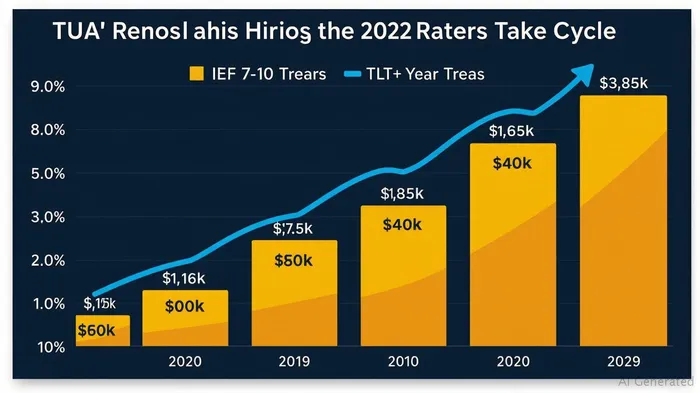
During the 2022 rate-hike cycle, TUA demonstrated resilience. While long-duration Treasuries (TLT) fell sharply, TUA's short-duration focus and convexity benefits limited losses. For example, in 2022, TUA declined by just 4% compared to TLT's 23% drop, showcasing its hedging potential. However, TUA's use of leverage amplifies volatility: in falling rate environments, it may underperform the ICE index. Investors must recognize this trade-off, using TUA tactically rather than as a permanent holding.
The Case for TUA in Modern Portfolios
In a portfolio dominated by intermediate or long-term bonds, TUA serves as a strategic hedge. For instance:
- Risk Parity Portfolios: TUA's low correlation with equities and high liquidity make it a viable alternative to cash or short-term bonds.
- Rate-Sensitive Equity Portfolios: Pairing TUA with rate-sensitive sectors like utilities or real estate can offset beta exposure to interest rates.
- Tax-Sensitive Investors: The favorable tax treatment of futures positions reduces the drag of capital gains for high-income earners.
Risks and Limitations
- Leverage Exposure: Futures amplify gains and losses, making TUA unsuitable for long-term holds.
- Quarterly Resets: The fund's quarterly rebalancing to align with the ICE index introduces periodic slippage risk.
- Post-Waiver Expenses: Should the expense ratio rise post-October 2024, it could erode returns.
Final Analysis: A Tool for Navigating Volatility
In an environment where the Fed's path remains uncertain, TUA offers a targeted solution for interest rate hedging. Its blend of capital efficiency, convexity benefits, and low costs positions it as a critical tool for preserving capital in portfolios exposed to intermediate-term bonds. While not a standalone investment, TUA's tactical role in mitigating rate risk—and its historical performance during hikes—makes it a compelling addition to any resilience-focused strategy.
Investment Recommendation: Consider allocating 5–10% of fixed-income exposure to TUA as a hedge against intermediate-term bond holdings, particularly in portfolios with significant exposure to IEF or other duration-heavy ETFs. Monitor its performance relative to the ICE index quarterly and rebalance accordingly.
In a world of rising rates, TUA's precision as a short-term Treasury futures strategy may be the difference between erosion and resilience.





Comentarios
Aún no hay comentarios