
TSX's Record High: Energy and Utilities Sectors Power Momentum Amid High-Interest Rate Challenges
The Toronto Stock Exchange (TSX) reached record highs in 2025, driven by a surge in energy and utilities sectors that have defied the headwinds of persistently high interest rates. These sectors, long considered defensive plays, are now demonstrating momentum fueled by affordability, stable returns, and strategic adaptation to evolving energy demands. For investors, the question is no longer whether these sectors can thrive in a high-rate environment but how they are positioned to outperform in the long term.
Energy Sector: Affordability and Dividend Yields Attract Value-Seeking Investors
Energy stocks, particularly those in the oil and gas subsector, have emerged as key contributors to the TSX's record performance. Suncor EnergySU--, for instance, has been highlighted for its attractive valuation metrics, profitability, and robust dividend yields. With U.S. equities facing uncertainty due to geopolitical tensions—such as potential Trump-era tariffs—Canadian energy firms are increasingly seen as safer havens for capital. According to a report by The Fool Canada, energy utilities have gained traction due to their relatively low valuations and consistent returns, making them ideal for investors prioritizing income stability over speculative growth [3].
Utilities Sector: Resilience and Growth in a High-Rate Environment
The Canadian utilities sector has shown remarkable resilience, posting a trailing 1-year return of 9.6% and forward earnings growth expectations of 18% annually [2]. This outperformance is underpinned by significant capital investments in grid infrastructure, driven by surging electricity demand—particularly from data centers. U.S. data centers alone now consume 6% to 8% of annual electricity generation, a figure projected to rise to 11% to 15% by 2030 [2]. To meet this demand, utilities are deploying grid-enhancing technologies, expanding renewable energy infrastructure, and exploring partnerships with tech firms to colocate data centers with power generation facilities.
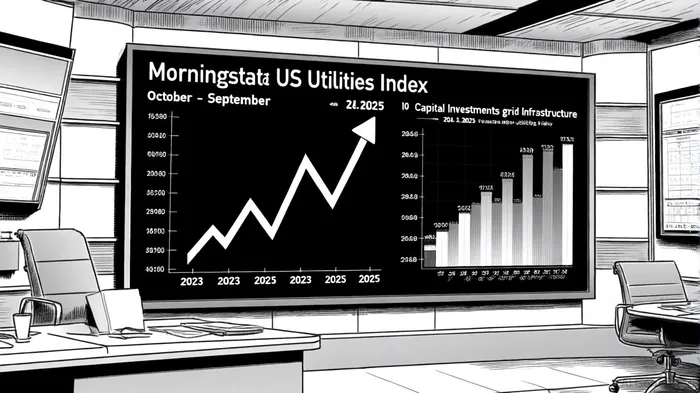
Despite high borrowing costs, the sector has managed to secure growth through strategic reinvestment. The Morningstar US Utilities Index, for example, rose 19% in 2025 and 71% since October 2023, outpacing broader market indices [1]. This momentum is partly attributed to utilities' ability to pass on costs to customers through regulated rate adjustments, though regulatory constraints remain a key challenge [1].
Long-Term Positioning: Balancing Sustainability and Affordability
The utilities sector's long-term appeal lies in its dual focus on decarbonization and reliability. Nuclear energy is experiencing a renaissance, with projects like Microsoft's 20-year power purchase agreement (PPA) to restart a nuclear plant signaling a shift toward baseload power solutions [3]. Meanwhile, renewable energy integration—solar, wind, and energy storage—is accelerating to meet clean energy targets while addressing grid capacity constraints.
Investors must also consider the sector's evolving cost structure. With $36 billion to $60 billion expected to be invested in grid infrastructure by the end of the decade, utilities are adopting innovative tariff models to shift transmission costs from residential to commercial users [2]. These strategies aim to maintain affordability while ensuring equitable cost distribution. However, regulatory uncertainty—particularly under potential U.S. policy shifts—could complicate long-term planning [3].
Conclusion: A Strategic Buy for the Patient Investor
The energy and utilities sectors' performance in 2025 underscores their role as linchpins of the TSX's record highs. While high interest rates pose challenges, the sectors' ability to adapt through technological innovation, regulatory engagement, and strategic partnerships positions them as compelling long-term investments. For investors seeking resilience in an uncertain macroeconomic climate, these sectors offer a unique blend of defensive appeal and growth potential.





Comentarios
Aún no hay comentarios