
TSX's Record-Close Momentum: Strategic Entry Points for Growth-Oriented Investors in a Booming Canadian Market
The Toronto Stock Exchange (TSX) has emerged as a standout performer in 2025, defying macroeconomic headwinds to deliver a year-to-date gain exceeding 20% and surpassing the 30,000-point milestone for the first time in history, according to a BMO analysis. This unprecedented momentum, fueled by sector-specific tailwinds and expectations of monetary easing, presents a compelling case for growth-oriented investors seeking strategic entry points in a market poised for further expansion.
Drivers of Momentum: Sectors and Sentiment
The TSX's resilience is anchored in its heavy weighting toward cyclical sectors. Financials, energy, and materials-collectively accounting for 63% of the index-have surged on a combination of low borrowing costs and speculative optimism, according to a Learn-to-Trade analysis. Gold and base metal miners, such as 5N Plus (up 109% year-to-date), have capitalized on inflationary pressures and geopolitical tensions, while energy stocks have benefited from sustained demand amid U.S. tariff adjustments, as noted in a Motley Fool article.
Monetary policy expectations have further amplified this momentum. With the Bank of Canada now pricing in a 70% probability of a September rate cut following a contractionary Q2 GDP report and a 7.1% unemployment rate, the same Learn-to-Trade analysis finds investors are flocking to equities as a hedge against declining yields. This dynamic mirrors global trends, where central bank liquidity has become a double-edged sword: while it inflates asset prices, it also masks underlying economic fragility.
Strategic Entry Points: Balancing Optimism and Caution
For investors, the TSX's current trajectory offers two primary avenues:
1. Sector Rotation into Outperformers: The energy and materials sectors remain undervalued relative to their 2025 performance, with valuations still below pre-2024 levels despite recent gains, according to the BMO analysis. For instance, Finning International and Badger Infrastructure Solutions have demonstrated robust earnings resilience, suggesting further upside as commodity prices stabilize.
2. Timing the Rate-Cut Cycle: With BMO analysts projecting the index to reach 31,500 by year-end, investors may prioritize entry ahead of the anticipated December rate cut. Historical data cited by Learn-to-Trade suggests that Canadian equities typically outperform by 3–5% in the three months preceding monetary easing.
However, strategic entry must account for risks. The Canadian economy's Q2 contraction and elevated unemployment signal that the TSX's gains are not universally shared. A "K-shaped" recovery-where asset markets decouple from labor markets-could create volatility if consumer confidence falters. Investors should consider hedging with defensive sectors (e.g., utilities) or high-quality dividend payers to mitigate downside risk.
Conclusion: A Market at a Crossroads
The TSX's record closes reflect a unique confluence of monetary stimulus, sector-specific strength, and global capital flows. While the index's projected 5.4% monthly gain through September 2025-a figure highlighted by the Motley Fool article-underscores its appeal, growth-oriented investors must balance optimism with prudence. Strategic entry points exist in undervalued cyclical sectors and rate-sensitive equities, but success will hinge on disciplined position sizing and a clear exit strategy as macroeconomic signals evolve.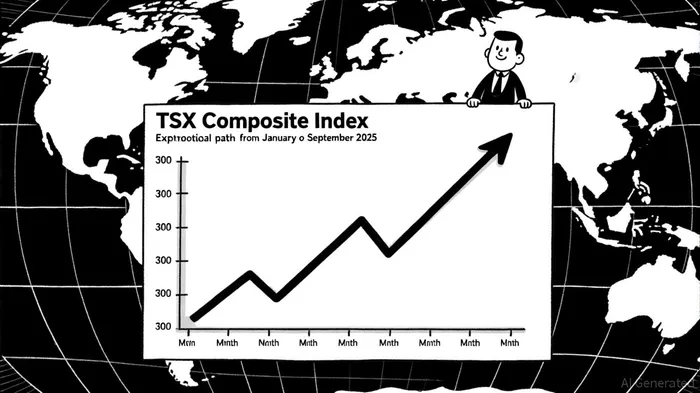







Comentarios
Aún no hay comentarios