
TSX Momentum and Market Positioning: Short-Term Catalysts and Long-Term Structural Trends
The Toronto Stock Exchange (TSX) is experiencing a confluence of short-term bullish momentum and long-term structural tailwinds that position Canadian equities as a compelling investment opportunity. Recent performance data, sector-specific surges, and government-driven initiatives underscore a market poised for sustained growth.
Short-Term Bullish Catalysts: Sector-Specific Momentum
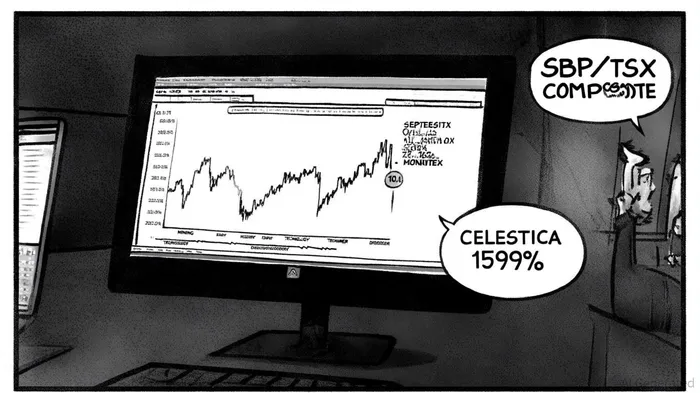
The TSX's record high of 29,772 points on September 22, 2025, reflects a 0.01% daily gain and a 6.79% monthly surge[3]. This momentum is driven by standout performers in key sectors:
- Mining and Critical Minerals: The sector dominates the 2025 TSX30™, with 17 companies listed, including 15 gold-focused firms. Lundin Gold Inc. (LUG) surged 775% year-to-date (YTD), while Celestica Inc.CLS-- (CLS) led with a 1,599% gain, fueled by AI infrastructure demand[1]. Gold equities have thrived as global uncertainty elevates safe-haven asset preferences[1].
- Technology and AI: The tech sector delivered the highest average share price increase of 620%, driven by CelesticaCLS-- and Shopify Inc.SHOP-- (SHOP). AI-driven cloud computing and cybersecurity firms are capitalizing on Canada's growing digital infrastructure investments[1].
- Consumer Discretionary and Communications: Pet Valu (PET) rose 55.4% YTD, supported by its 1,200-store expansion strategy, while TELUSTU-- (T) surged 22.2% YTD, bolstered by a 7.25% dividend yield and $535 million in Q2 free cash flow[1].
The Bank of Canada's 25-basis-point rate cut in 2025 has further amplified risk-on sentiment, supporting consumer and business spending[4].
Long-Term Structural Trends: Policy and Global Demand
Canada's strategic positioning in critical minerals and clean energy is underpinned by government policies and global demand shifts:
1. Critical Minerals Strategy: The 2025 Canadian Critical Minerals Strategy extends the 15% Mineral Exploration Tax Credit and allocates up to $500 million via the Critical Minerals Infrastructure Fund. These measures aim to boost production of nickel, lithium, and rare earth elements—key inputs for batteries and semiconductors[1]. Canada's reserves of 25 of the 40 critical minerals prioritized by the U.S. and Europe position it as a global supplier[4].
2. AI and Clean Energy Synergies: The surge in AI infrastructure demand intersects with clean energy transitions. For instance, Celestica's AI hardware production and Brookfield Renewable Partners' (BEP.UN) renewable investments highlight the sector's dual focus on technological and environmental innovation[2].
3. Global Supply Chain Resilience: The G7's Critical Minerals Action Plan emphasizes diversification and responsible sourcing, aligning with Canada's ESG leadership. By 2040, global demand for critical minerals is projected to nearly double, requiring $65 billion in Canadian investment over 15 years to close the production gap[2].
Market Outlook and Risks
While the TSX is projected to grow steadily through 2025, challenges persist. Trade uncertainties, including potential U.S. tariffs, could temper gains, with some analysts forecasting underperformance relative to the S&P 500[4]. However, the Bank of Canada's gradual rate cuts and infrastructure-driven demand for raw materials provide a counterbalance[4].
Conclusion
The TSX's current momentum, driven by AI, mining, and consumer discretionary sectors, is reinforced by long-term structural trends in critical minerals and clean energy. Government policies, global demand shifts, and strategic investments position Canada to capitalize on the decarbonization and digitalization megatrends. While geopolitical risks remain, the interplay of short-term catalysts and long-term tailwinds suggests a resilient and growth-oriented market for investors.





Comentarios
Aún no hay comentarios