
TSMC's Strong Q1 Earnings Brighten Chip Sector Amid Tariff Uncertainties
TSMC’s first-quarter 2025 results delivered a stark contrast to the gloom that has plagued the semiconductor sector, with net profit soaring 60% year-on-year to NT$361.56 billion ($11.1 billion) and revenue hitting NT$839.25 billion ($25.8 billion). The Taiwan-based giant credited its stellar performance to surging demand for AI-driven semiconductors, which now account for a growing share of its revenue. Yet, as investors celebrate the rebound, looming U.S.-imposed tariffs threaten to cloud the horizon.
A Quarter of Triumph, Driven by AI
TSMC’s Q1 results far exceeded forecasts, with AI-related server and processor sales playing a pivotal role. CEO C.C. Wei emphasized that AI revenue is “on track to double by 2025,” a claim backed by partnerships with tech giants like Apple and Nvidia. The company’s advanced 3-nanometer chips, critical for high-performance computing, are increasingly in demand as AI models expand.
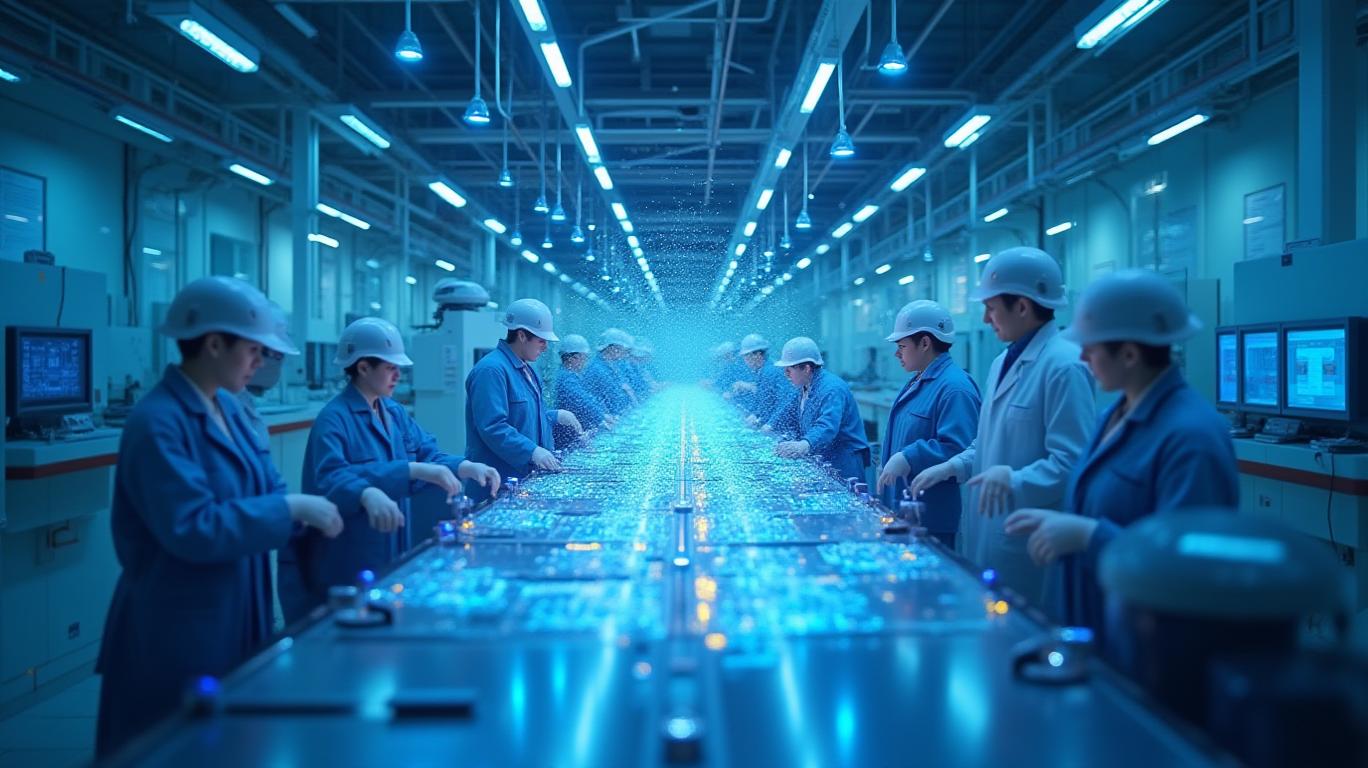
The AI boom has also buoyed TSMC’s confidence in its full-year guidance of “close to mid-20s percent revenue growth in U.S. dollar terms.” This optimism, however, hinges on navigating escalating geopolitical risks.
Tariff Threats: A Double-Edged Sword
The U.S. has imposed a 10% tariff on Taiwanese imports, with the possibility of raising it to 32% within 90 days unless trade negotiations yield progress. TSMCTSM-- faces an additional threat: a potential 100% tariff unless it accelerates U.S. production investments. The company has pledged a $100 billion commitment to expand its U.S. footprint, including three new chip plants. Yet analysts remain skeptical.
Morningstar’s Phelix Lee noted that tariffs on semiconductors and consumer electronics are “likely inevitable,” while Jefferies expects phased implementation over three years. The impact could be significant: a 32% tariff would add roughly 10% to TSMC’s U.S. export costs.
A Sector in Limbo
TSMC’s challenges mirror broader industry concerns. ASML, a key supplier of chip-making equipment, reported weaker-than-expected orders due to tariff uncertainty, while Nvidia faced a $5.5 billion charge related to China’s export restrictions. TSMC, however, insists that demand outside China remains robust.
“The only exception is China,” Wei admitted, highlighting the company’s focus on U.S., European, and Japanese markets. TSMC’s Q2 revenue guidance of $28.4–29.2 billion reflects cautious optimism, though geopolitical risks remain unresolved.
Conclusion: Balancing Growth and Geopolitics
TSMC’s Q1 results underscore its dominance in the AI revolution, with revenue growth outpacing even bullish forecasts. Yet tariffs and trade tensions could dampen its prospects if unresolved. Analysts estimate that TSMC’s mid-20s revenue growth target is achievable only if AI demand continues to offset tariff pressures.
The $100 billion U.S. investment plan is a strategic hedge, but phased tariffs could still erode margins. Investors should weigh TSMC’s AI-driven tailwinds against these risks. With AI-related revenue poised to double and TSMC’s Q2 guidance holding firm, the company remains a critical player in the semiconductor sector—provided geopolitical storms do not derail its progress.
In the end, TSMC’s ability to navigate tariffs while capitalizing on AI’s exponential growth will determine whether its Q1 triumph becomes a sustained victory or a fleeting bright spot.





Comentarios
Aún no hay comentarios