
TSMC's Q3 2025 Momentum: A Strategic Powerhouse in the AI-Driven Semiconductor Cycle
TSMC's Q3 2025 Momentum: A Strategic Powerhouse in the AI-Driven Semiconductor Cycle
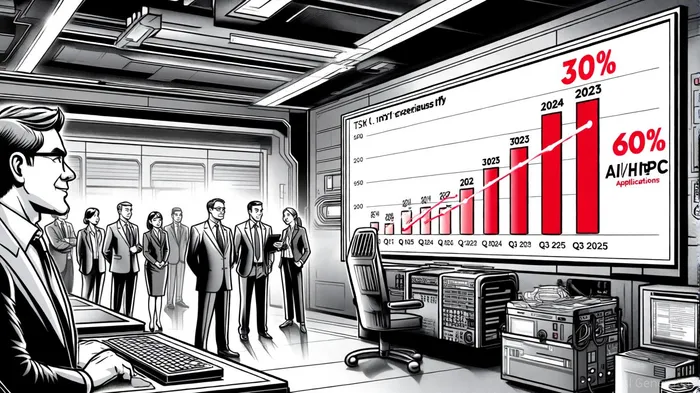
TSMC's third-quarter 2025 performance has solidified its position as the linchpin of the global semiconductor industry, driven by an insatiable demand for AI and high-performance computing (HPC) chips. The company reported Q3 revenue of $32.47 billion, a 30% year-on-year increase, surpassing analyst forecasts and reflecting its dominance in manufacturing advanced chips for clients like NVIDIANVDA-- and AMDAMD--, according to a TradingKey report. This momentum, however, must be contextualized within the broader semiconductor cycle, where TSMC's strategic investments in cutting-edge technology and geographic diversification are reshaping the industry's competitive landscape.
AI and HPC: The New Growth Engine
TSMC's Q3 results underscore a seismic shift in the semiconductor market. Sixty percent of its revenue in the quarter came from AI and HPC applications, a testament to the explosive demand for chips powering generative AI models and data centers, as TechResearch Online reported. This trend aligns with broader industry projections: global semiconductor sales are expected to reach $697 billion in 2025, with AI-related chips alone generating over $150 billion in revenue, per Deloitte's outlook. TSMC's ability to scale production of advanced chips, such as NVIDIA's H100 GPUs, has positioned it as a critical enabler of this AI boom.
Yet, the growth trajectory is not without friction. While Q3's 30% YoY growth is impressive, it marks a deceleration from Q2's 38.6% increase, signaling potential near-term bottlenecks in wafer capacity and supply chain logistics, as Channel NewsAsia reported. These constraints, however, are temporary. TSMC's roadmap includes high-volume production of 2nm chips in Q4 2025 and a 1.4nm node by 2028, ensuring it remains at the forefront of process innovation, according to a TS2 analysis.
Strategic Expansion: Balancing Geopolitics and Profitability
TSMC's strategic positioning extends beyond technology. The company is aggressively diversifying its manufacturing footprint to mitigate geopolitical risks. A $165 billion investment in Arizona's GIGAFAB cluster aims to produce one-third of its most advanced chips in the U.S., a move that aligns with Washington's push for semiconductor self-sufficiency, as noted in a LinkedIn analysis. While this expansion bolsters TSMC's resilience against U.S.-China trade tensions, it raises questions about the long-term impact on Taiwan's domestic ecosystem, which has historically been the backbone of its supply chain, according to a SiliconHub ranking.
This geographic realignment also reflects a broader industry trend. As Deloitte notes, the enterprise edge-on-premises AI infrastructure for data privacy and regulatory compliance-is becoming a key battleground, with TSMC's advanced packaging technologies like CoWoS offering a competitive edge. However, the company must navigate rising R&D costs and wafer capacity constraints, which could temper growth in the short term, as TrendForce reports.
Competitive Dynamics: TSMC's 2nm Lead and Rivals' Challenges
TSMC's dominance in the foundry market (67.6% share in Q1 2025) is underpinned by its 2nm process, which leverages nanosheet transistors to deliver superior performance and power efficiency. Samsung Foundry, its closest competitor, is racing to catch up with its SF2 2nm GAA process, but lower yield rates (30% vs. TSMC's 60%) highlight the gap in manufacturing maturity, according to a PatentPC report. Intel Foundry Services, meanwhile, is betting on its 18A (1.8nm) process and IDM 2.0 strategy to reclaim process leadership by late 2025, though its current market share lags significantly, as described in a FinancialContent article.
Risks and Opportunities in the Semiconductor Cycle
Despite its strengths, TSMCTSM-- faces headwinds. Geopolitical tensions, particularly U.S.-China trade dynamics, could disrupt supply chains or force clients to shift production to alternative foundries. Additionally, the industry's reliance on AI-driven growth introduces volatility; if demand for gen AI chips slows, TSMC's margins could face pressure.
However, the long-term outlook remains bullish. The semiconductor industry's trajectory toward $1 trillion in sales by 2030 hinges on TSMC's ability to maintain its technological edge while scaling production. Its partnerships with tech giants like Apple and NVIDIA, coupled with its leadership in advanced packaging, position it to capture a disproportionate share of this growth.
Investment Implications
For investors, TSMC's Q3 2025 results and strategic bets present a compelling case. The company's stock has surged 34% in 2025, reflecting market confidence in its AI-driven growth story. While near-term capacity constraints and geopolitical risks warrant caution, TSMC's technological leadership and diversified manufacturing strategy offer a durable moat. As the semiconductor industry enters a new era defined by AI and HPC, TSMC is not just riding the wave-it is the wave.
Historical context from past earnings events adds nuance to this thesis. A backtest of TSMC's performance following earnings beats since 2022 reveals mixed signals: while the stock often experiences a sharp 1-day rally (80% win rate, ~2% excess return), this momentum tends to fade within 5–10 days, with a partial recovery by the 30-day window, as shown in backtest results. This pattern suggests that while TSMC's earnings surprises can drive short-term optimism, long-term value creation depends on its ability to sustain demand and execute its 2nm roadmap.





Comentarios
Aún no hay comentarios