
TSMC's $100 Billion Gamble: Will Intel Be Left Behind in the U.S. Chip War?
Generado por agente de IAWesley Park
martes, 4 de marzo de 2025, 11:48 am ET1 min de lectura
EYE--
In a bold move that could reshape the global semiconductor landscape, Taiwan Semiconductor Manufacturing Company (TSMC) has announced a $100 billion investment in the United States, bringing its total planned investment to a staggering $165 billion. This strategic decision, made under the watchful eyeEYE-- of President Trump, has raised eyebrows and sparked speculation about the future of the U.S. chip industry, particularly for IntelINTC--, which has been grappling with declining market share and manufacturing delays.
TSMC's expansion in the U.S. is a calculated gamble, aimed at mitigating geopolitical risks and strengthening its position in the global semiconductor market. By investing heavily in advanced manufacturing facilities, TSMCTSM-- seeks to reduce its reliance on Taiwan, a region that has become increasingly volatile due to tensions between the U.S. and China. This strategic move allows TSMC to diversify its production capabilities and tap into the vast talent pool and technological advancements available in the U.S.
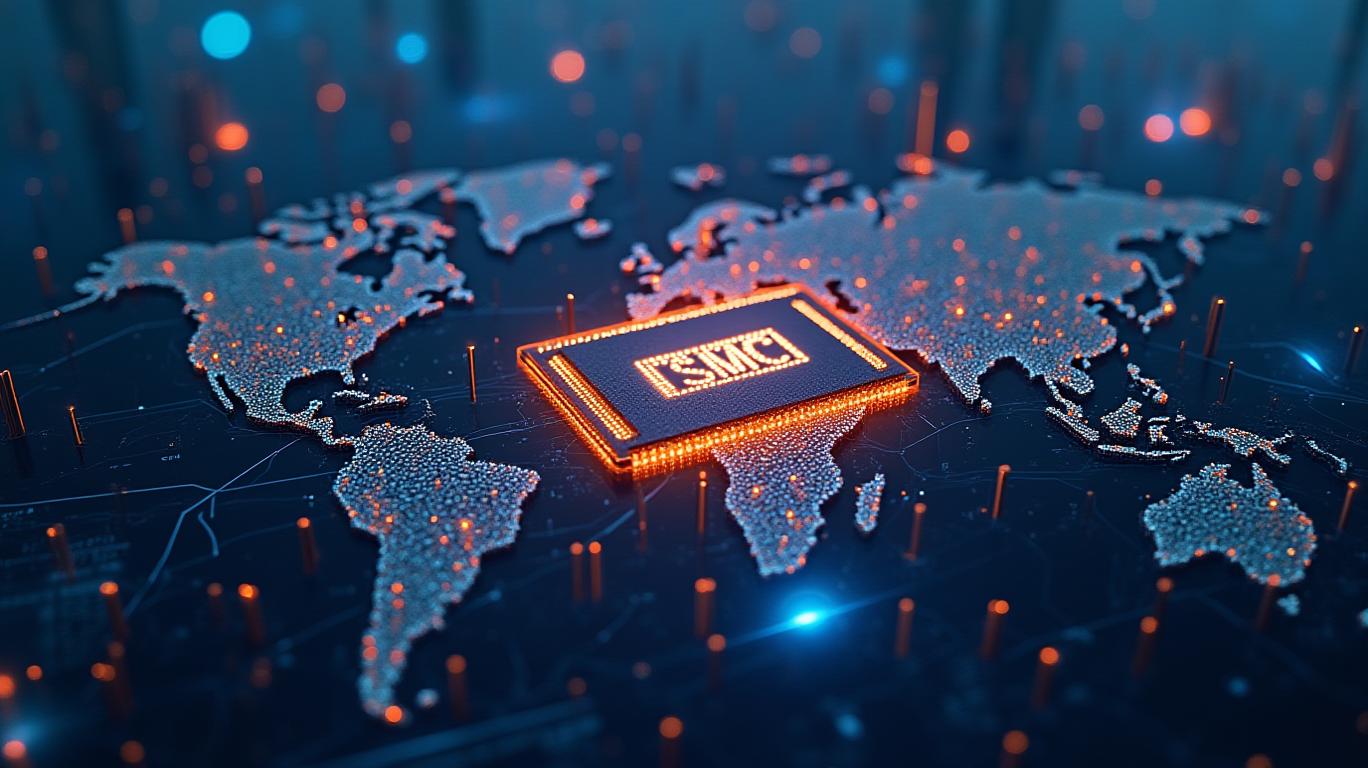
However, TSMC's aggressive expansion in the U.S. could pose a significant threat to Intel's market position and future growth prospects. Intel, once the dominant player in the semiconductor industry, has struggled in recent years, with declining sales and manufacturing delays. TSMC's advanced manufacturing capabilities and significant investment could attract more customers, including AI chip makers like Nvidia and Broadcom, further increasing its competitive advantage over Intel.
Intel's struggles have not gone unnoticed by potential acquirers. Broadcom, a major player in the semiconductor industry, has reportedly considered purchasing some of Intel's chip-design assets. Additionally, TSMC has held discussions with the Trump administration about absorbing some of Intel's U.S. factories, potentially further impacting Intel's market position and future growth prospects.
As TSMC continues to invest heavily in the U.S., Intel must adapt and innovate to remain competitive. The company has received nearly $8 billion in funding from the CHIPS Act to expand its manufacturing capabilities in Ohio, Arizona, and New Mexico. However, Intel's manufacturing process has lagged behind TSMC's, with the 18A chip manufacturing method recently suffering a six-month delay. To stay relevant in the U.S. chip war, Intel must address these manufacturing challenges and attract customers to its factories.
In conclusion, TSMC's $100 billion investment in the U.S. is a strategic gamble that could reshape the global semiconductor landscape. While this expansion presents opportunities for TSMC, it also poses significant challenges to Intel's market position and future growth prospects. As the U.S. chip war heats up, both companies must adapt and innovate to remain competitive in the rapidly evolving semiconductor market.
INTC--
TSM--
In a bold move that could reshape the global semiconductor landscape, Taiwan Semiconductor Manufacturing Company (TSMC) has announced a $100 billion investment in the United States, bringing its total planned investment to a staggering $165 billion. This strategic decision, made under the watchful eyeEYE-- of President Trump, has raised eyebrows and sparked speculation about the future of the U.S. chip industry, particularly for IntelINTC--, which has been grappling with declining market share and manufacturing delays.
TSMC's expansion in the U.S. is a calculated gamble, aimed at mitigating geopolitical risks and strengthening its position in the global semiconductor market. By investing heavily in advanced manufacturing facilities, TSMCTSM-- seeks to reduce its reliance on Taiwan, a region that has become increasingly volatile due to tensions between the U.S. and China. This strategic move allows TSMC to diversify its production capabilities and tap into the vast talent pool and technological advancements available in the U.S.
However, TSMC's aggressive expansion in the U.S. could pose a significant threat to Intel's market position and future growth prospects. Intel, once the dominant player in the semiconductor industry, has struggled in recent years, with declining sales and manufacturing delays. TSMC's advanced manufacturing capabilities and significant investment could attract more customers, including AI chip makers like Nvidia and Broadcom, further increasing its competitive advantage over Intel.
Intel's struggles have not gone unnoticed by potential acquirers. Broadcom, a major player in the semiconductor industry, has reportedly considered purchasing some of Intel's chip-design assets. Additionally, TSMC has held discussions with the Trump administration about absorbing some of Intel's U.S. factories, potentially further impacting Intel's market position and future growth prospects.
As TSMC continues to invest heavily in the U.S., Intel must adapt and innovate to remain competitive. The company has received nearly $8 billion in funding from the CHIPS Act to expand its manufacturing capabilities in Ohio, Arizona, and New Mexico. However, Intel's manufacturing process has lagged behind TSMC's, with the 18A chip manufacturing method recently suffering a six-month delay. To stay relevant in the U.S. chip war, Intel must address these manufacturing challenges and attract customers to its factories.
In conclusion, TSMC's $100 billion investment in the U.S. is a strategic gamble that could reshape the global semiconductor landscape. While this expansion presents opportunities for TSMC, it also poses significant challenges to Intel's market position and future growth prospects. As the U.S. chip war heats up, both companies must adapt and innovate to remain competitive in the rapidly evolving semiconductor market.

Divulgación editorial y transparencia de la IA: Ainvest News utiliza tecnología avanzada de Modelos de Lenguaje Largo (LLM) para sintetizar y analizar datos de mercado en tiempo real. Para garantizar los más altos estándares de integridad, cada artículo se somete a un riguroso proceso de verificación con participación humana.
Mientras la IA asiste en el procesamiento de datos y la redacción inicial, un miembro editorial profesional de Ainvest revisa, verifica y aprueba de forma independiente todo el contenido para garantizar su precisión y cumplimiento con los estándares editoriales de Ainvest Fintech Inc. Esta supervisión humana está diseñada para mitigar las alucinaciones de la IA y garantizar el contexto financiero.
Advertencia sobre inversiones: Este contenido se proporciona únicamente con fines informativos y no constituye asesoramiento profesional de inversión, legal o financiero. Los mercados conllevan riesgos inherentes. Se recomienda a los usuarios que realicen una investigación independiente o consulten a un asesor financiero certificado antes de tomar cualquier decisión. Ainvest Fintech Inc. se exime de toda responsabilidad por las acciones tomadas con base en esta información. ¿Encontró un error? Reportar un problema




Comentarios
Aún no hay comentarios