
Tsakos Energy Navigation: Navigating the Energy Transition Amid Macroeconomic Tailwinds and Geopolitical Shifts
The energy transition is no longer a distant horizon but an active battleground where macroeconomic tailwinds and geopolitical shifts are reshaping the fortunes of maritime players like Tsakos Energy NavigationTEN-- (TEN). As the world grapples with decarbonization, LNG's role as a transitional fuel, and the fragility of global supply chains, TEN's strategic alignment with these dynamics positions it to outperform traditional risk factors. This analysis explores how TEN's fleet modernization, coupled with evolving market conditions, creates a compelling case for investors.
Strategic Fleet Modernization: A Foundation for Resilience
Tsakos Energy Navigation has emerged as a leader in decarbonizing its fleet, with a focus on dual-fuel LNG-powered vessels. Since 2024, the company has delivered six environmentally friendly ships, including three Dual-Fuel LNG LR2 product tankers, and has ambitious newbuilding programs targeting 2030[3]. These initiatives align with global sustainability goals while addressing regulatory pressures such as the International Maritime Organization's (IMO) 2030/2050 emissions targets. By prioritizing green technologies, TEN is not only future-proofing its operations but also enhancing its appeal to ESG-focused investors.
Macroeconomic Tailwinds: LNG's Dual Role as a Transition Fuel
The global LNG market is undergoing a seismic shift. By 2030, U.S. projects like NextDecade's Rio Grande and Venture Global's Plaquemines are projected to boost global LNG capacity to 890 billion cubic meters (bcm), creating a potential oversupply of 200 bcm[1]. While this surplus could depress prices, it also underscores LNG's flexibility as a transitional fuel. Over 72% of energy sector executives are investing in renewables while maintaining fossil fuel operations[2], a dual-track strategy that positions LNG as a bridge to decarbonization. For TEN, this means sustained demand for its LNG-capable vessels, which support grid stability and renewable integration[3].
Geopolitical Shifts: Volatility as a Catalyst for Resilience
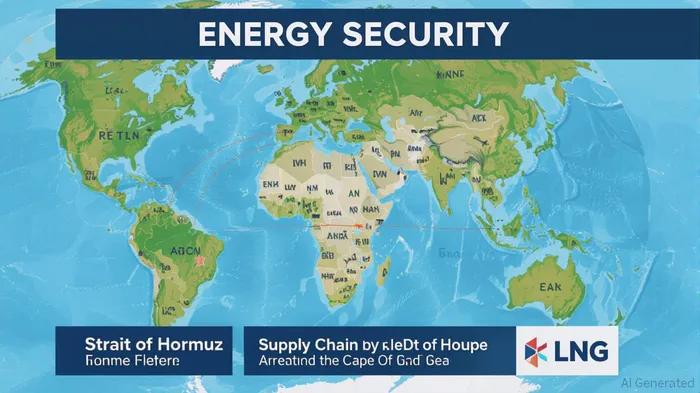
Geopolitical tensions are amplifying the importance of LNG shipping. The Strait of Hormuz, a critical chokepoint for 20% of global oil and LNG, has seen freight rates surge by 55% due to Iranian threats[1]. Similarly, Red Sea attacks have forced rerouting around the Cape of Good Hope, adding 10–15 days to transit times and 30–40% to costs[3]. These disruptions are accelerating energy security strategies, with Europe diversifying its supply from Russia to the U.S. and Norway[1]. For TEN, its dual-fuel fleet and geographic reach position it to capitalize on rerouted trade flows and higher freight premiums.
Investor Sentiment: Balancing Risks and Opportunities
While traditional risks like oil price volatility and regulatory compliance remain relevant, macroeconomic and geopolitical factors are increasingly dominating investor sentiment. Q3 2025 energy sector earnings are projected to decline by -3%, reflecting broader market pressures[1]. However, TEN's focus on green vessels and LNG infrastructure aligns with long-term trends. Analysts highlight that integrated energy players prioritizing cash flow and infrastructure investments are better positioned for the transition[1]. Though direct data on TEN's investor sentiment is sparse, its earnings call transcripts and newbuilding programs[2][3] suggest confidence in its strategic direction. A backtest of earnings call performance from 2022 to 2025 reveals that short-term (±10 days) post-event returns were generally muted and statistically insignificant versus the benchmark[3]. While the win-rate improved gradually, it did not translate into meaningful excess returns, with most performance differences remaining within noise levels[3].
Conclusion: A Strategic Edge in a Fragmented Landscape
Tsakos Energy Navigation's proactive approach to decarbonization and its alignment with LNG's transitional role position it to thrive amid macroeconomic and geopolitical headwinds. While traditional risks persist, the company's fleet modernization and adaptability to shifting supply chains create a buffer against volatility. As nations prioritize energy security and sustainability, TEN's strategic investments are likely to outperform conventional challenges, making it a compelling play in the evolving energy transition.





Comentarios
Aún no hay comentarios