
Tryg A/S: A Dividend Machine with Strategic Momentum
The insurance sector is rarely a place for headline-grabbing volatility, but Tryg A/S (CPH:TRYG) is proving that steady execution can create compelling value. Q2 2025 results underscore the Danish insurer's transformation into a high-margin, shareholder-friendly business with a clear path to sustainable profitability and dividend growth. Let's dissect what makes Tryg a standout income play.
1. Operational Efficiency: The Combined Ratio Speaks Volumes
Tryg's combined ratio of 77.2% in Q2 2025 marks its lowest level in years, signaling a disciplined underwriting culture. This ratio—calculated as (Claims Paid + Expenses) / Premiums—demonstrates that Tryg is not only profitable but also generating excess capital to reinvest or return to shareholders.
- The improvement from 78.8% in Q2 2024 was driven by a 30-basis-point drop in claims costs, aided by AI-driven automation in Denmark's car collision claims.
- The expense ratio held steady at 13.5%, reflecting strict cost controls.
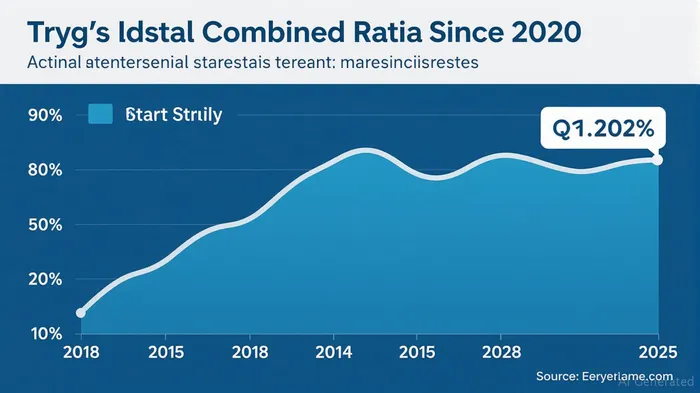
This combination of low claims and stable costs creates a moat against industry headwinds, such as inflation and competitive pricing pressures.
2. Dividend Growth: A 5% Hike, Backed by 199% Solvency
Tryg's ordinary dividend per share rose 5% to DKK 2.05 in Q2, part of a consistent dividend-growth streak. With a solvency ratio of 199%, management has ample flexibility to boost returns further.
- The Piotroski F-Score of 9/9 (a measure of financial health) and a 4.88% dividend yield place Tryg among Europe's most attractive income stocks.
- Management has flagged potential extraordinary capital returns by year-end if solvency remains robust.
3. Strategic Execution: Norway's Turnaround and Tech-Driven Growth
Tryg's 2027 strategy—focusing on scale, technical excellence, and customer-centricity—is paying off:
- Norway's turnaround was a standout. The combined ratio improved to 82.1% in H1 2025 from 88.5% in H1 2024, reflecting better underwriting discipline.
- Motor portfolio stability: AI tools now automate 85% of car claim assessments in Denmark, reducing cycle times and error rates. A cross-border underwriting model, adopted in Sweden, is already lowering the combined ratio by 2-3%.
These initiatives are on track to achieve the 2027 targets: a combined ratio of ~81% and an insurance service result of DKK 8-8.4 billion.
4. Accounting Adjustments: Less Investment Income, More Insurance Focus
A key nuance: Q2's investment income fell to DKK 110 million (vs. DKK 538 million in Q2 2024). This reflects accounting changes to hedge inflation risk in long-tailed lines. While this reduces headline investment income, it reinforces the core insurance story:
- Restatements shifted prior-period gains from investments to the insurance service result, clarifying that Tryg's profitability is now driven by underwriting excellence, not volatile markets.
- Pre-tax profit remained stable despite the shift, proving the resilience of the insurance business.
Investment Thesis: Buy for Dividends, Bet on Strategy Execution
Tryg's dividend yield of 4.88%, paired with a fortress balance sheet and clear strategic roadmap, makes it a low-risk, high-reward income play. The stock's 0.5% post-earnings pop hints at investor confidence, but there's upside from strategy execution:
- Catalysts ahead: Full adoption of underwriting tools in Sweden by late 2025, and continued Norwegian margin expansion.
- Risk: A sudden spike in claims (e.g., from extreme weather) could pressure the combined ratio. However, Tryg's 199% solvency provides a buffer.
Final Take
Tryg A/S is a textbook example of a well-run insurer converting operational rigor into shareholder value. With a 5% dividend hike, a fortress balance sheet, and strategic initiatives on track, it's a rare blend of safety and growth. For income investors, this is a buy-and-hold name. For growth investors, the execution of its 2027 targets could unlock further upside.
Recommendation: Accumulate shares on dips, targeting a yield above 4.5%. Keep an eye on Norway's margin trends and Sweden's underwriting adoption rate—these are the levers pulling Tryg toward its ambitious targets.







Comentarios
Aún no hay comentarios