
Trust Wallet's Risk-Mitigation Features as a Strategic Asset in Volatile Markets: A 2025 Investment Analysis
In the ever-evolving landscape of cryptocurrency, volatility remains a defining characteristic. As markets swing between euphoria and panic-exemplified by the Crypto Fear & Greed Index hitting 24 in March 2025, signaling "Extreme Fear"-investors demand tools that not only safeguard assets but also provide clarity amid chaos. Trust Wallet, a leading non-custodial crypto wallet, has emerged as a strategic asset in this context, leveraging advanced security features and user-centric design to mitigate risks during turbulent periods. This analysis evaluates Trust Wallet's risk-mitigation strategies, contextualizing them within industry trends and user trust metrics to assess their long-term value.
1. Trust Wallet's Security Architecture: A Shield Against Volatility-Driven Threats
Trust Wallet's 2025 updates underscore its commitment to proactive risk management. The built-in transaction risk scanner is a standout feature, flagging suspicious smart contracts and dApp interactions in real time. This tool directly addresses a critical vulnerability in volatile markets: the surge in phishing scams and malicious dApps during periods of heightened user anxiety. By alerting users to risky permissions before transactions are finalized, Trust Wallet reduces exposure to social engineering attacks, a tactic increasingly exploited during market downturns.
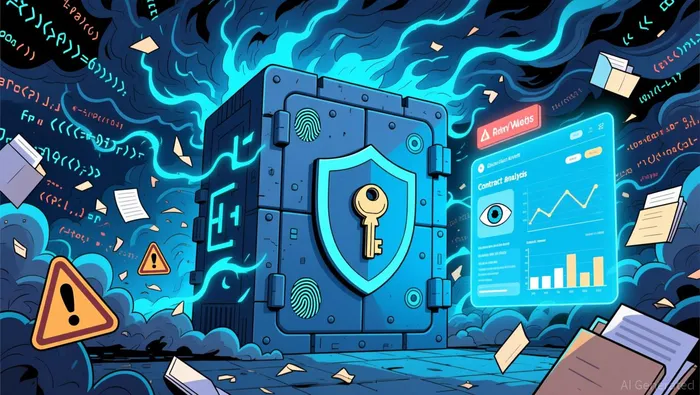 The wallet's adoption of EIP-7702 further enhances security. This EthereumETH-- upgrade enables gasless transactions and session-based permissions, minimizing the risk of accidental token approvals that could be exploited by malicious actors. For instance, users can now grant temporary access to dApps without exposing their entire portfolio, a feature particularly valuable during high-stress trading environments. Coupled with a redesigned permission manager that color-codes risk levels and allows instant revocation of access, Trust Wallet empowers users to maintain granular control over their assets.
2. Institutional-Grade Security and Regulatory Alignment
Trust Wallet's security framework is fortified by AES-256 encryption, hardware-level key storage, and biometric authentication, ensuring private keys remain inaccessible even if a device is compromised. These measures align with global regulatory trends, such as the U.S. GENIUS Act, which emphasized stablecoin oversight and institutional-grade custody standards. By maintaining a non-custodial model-where users retain full control over private keys-Trust Wallet sidesteps regulatory risks targeting custodial platforms, a critical advantage as jurisdictions like the EU and U.S. tighten crypto compliance rules according to the latest regulatory analysis.
Third-party audits by firms like Halborn and Certik further validate Trust Wallet's security posture. In 2025, the wallet underwent 30+ audits annually, including specialized smart contract reviews for its swap functions. While past vulnerabilities, such as a 2022 browser extension bug, were swiftly resolved, the frequency of audits demonstrates a culture of continuous improvement. This transparency is vital for institutional investors, who increasingly prioritize auditable security protocols in their asset management strategies.
3. User Trust Metrics: A Barometer of Strategic Value
Trust Wallet's user base has grown to 210 million users by mid-2025, with 35% of global crypto wallet downloads attributed to the platform. This growth is underpinned by a 4x year-over-year revenue increase and $84.2 million in annual revenue according to market analysis, reflecting strong market confidence. The Trust Wallet TokenTWT-- (TWT), with a $342.88 million market cap, also signals institutional interest in the ecosystem according to financial reports.
However, user trust is not without challenges. App store reviews highlight usability issues, such as zero-balance displays and high transaction fees in the Swift Wallet according to user feedback. Critics also note the lack of customer support for recovering stolen funds according to app reviews. These concerns, while valid, are mitigated by Trust Wallet's in-app education layer, which educates users on phishing prevention and secure recovery phrase storage. The wallet's emphasis on user responsibility-such as storing recovery phrases offline-aligns with its non-custodial ethos but requires a trade-off between convenience and security.
4. Strategic Asset Potential in Volatile Markets
The strategic value of Trust Wallet lies in its ability to de-risk crypto ownership during market instability. During the March 2025 volatility, users leveraged Trust Wallet's tools to monitor support/resistance levels and track on-chain data, enabling informed decisions amid uncertainty. For institutional investors, the wallet's non-custodial model eliminates counterparty risks, a critical factor as traditional custodians face regulatory scrutiny.
Expert analysis further reinforces this perspective. A 2025 report by Forsights notes that non-custodial wallets like Trust Wallet are "cornerstones of institutional trust," particularly as frameworks like the GENIUS Act promote safer custody practices. By aligning with these trends, Trust Wallet positions itself as a bridge between retail and institutional markets, a rare dual-utility proposition in the crypto space.
Conclusion: A Resilient Foundation for Long-Term Investment
While no platform is immune to criticism, Trust Wallet's 2025 security features-ranging from real-time risk scanners to EIP-7702 compliance-demonstrate a forward-thinking approach to risk mitigation. Its user trust metrics, including 210 million users and a 35% market share, validate its role as a strategic asset in volatile markets. For investors, the wallet's alignment with regulatory trends and institutional-grade security offers a compelling case for long-term adoption. As crypto markets continue to mature, Trust Wallet's ability to balance innovation with security will likely remain a key differentiator.






Comentarios
Aún no hay comentarios