
How Trust Drives Financial Market Resilience in 2025: The Critical Role of Institutional Credibility
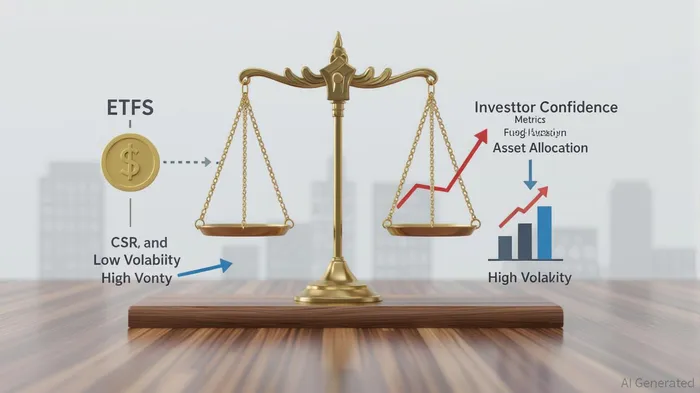
In 2025, the financial markets are no longer just about numbers—they're about trust. As volatility persists and investor expectations evolve, the credibility of institutional investors has emerged as a linchpin for market resilience. From asset allocation shifts to corporate behavior, the reputation of institutions shapes everything from ESG (Environmental, Social, Governance) strategies to the very structure of portfolios. Let's break it down.
The Credibility Conundrum: How Institutional Track Records Influence Investor Behavior
Institutional investors with disciplinary histories (IDH)—those who've faced regulatory violations—have a corrosive effect on the firms they invest in. According to a 2024 study published in , . This isn't just about ethics; it's about self-interest. Firms under such investors prioritize short-term gains over long-term sustainability, often at the expense of transparency and accountability[1].
Meanwhile, . This creates a toxic feedback loop: investors with poor track records incentivize risky corporate practices, which in turn erode public trust and destabilize markets. The lesson? Credibility isn't just a reputational asset—it's a structural one.
Asset Allocation in the Age of Distrust: Passive Funds and Alternatives Take Center Stage
As trust in active management wanes, investors are fleeing traditional mutual funds and embracing passive strategies. , . This shift isn't just about cost—it's about control. ETFs offer transparency and flexibility, allowing investors to hedge against the risks posed by untrustworthy institutional actors[3].
But the story doesn't end with ETFs. Credible institutional investors are also steering capital toward alternatives—private credit, real estate, and commodities—as a buffer against market volatility[3]. These assets, less correlated with traditional equities and bonds, provide diversification and inflation protection. For example, BlackRock's 2025 analysis highlights how systematic frameworks for blending strategic and tactical asset allocation have gained traction, particularly among institutions with strong reputations[1]. The takeaway? Trust drives demand for non-traditional assets, which in turn fortify portfolios against systemic shocks.
The Stock-Bond Paradox: Rebuilding Resilience in a Post-Pandemic World
The pandemic shattered the long-held assumption that stocks and bonds move in opposite directions. In 2025, their correlation has turned positive, undermining the foundational logic of 60/40 portfolios[1]. This shift has forced investors to rethink diversification. Here, institutional credibility plays a pivotal role. Firms with strong reputations are more likely to adopt adaptive strategies, such as dynamic asset allocation and AI-driven risk modeling, to navigate this new reality[3].
Consider the case of private credit. As traditional bonds lose their luster, credible institutions are deploying capital into private debt markets, where yields remain attractive and defaults are rare. This isn't just a tactical move—it's a structural response to a world where trust in conventional instruments is fraying[3].
Crisis Resilience: Why Trust Matters Most When Markets Tremble
While 2025 hasn't seen a major crisis yet, historical patterns suggest that institutional credibility acts as a shock absorber. During the 2008 financial crisis, institutions with strong reputations retained investor confidence longer, enabling them to deploy capital more effectively during recovery[2]. In today's environment, where ESG fatigue and regulatory scrutiny are rampant, this resilience is even more critical.
A 2025 report by BlackRockBLK-- underscores this point, noting that systematic asset allocation frameworks—often championed by credible institutions—can adapt to varying market regimes, from inflationary spikes to liquidity crunches[1]. In essence, trust isn't just a virtue—it's a strategic advantage.
The Bottom Line: Trust as a Tradable Asset
In 2025, institutional credibility isn't just a compliance checkbox—it's a tradable asset. Investors are voting with their capital, favoring institutions that prioritize transparency, ethical governance, and adaptive strategies. For those who ignore this trend, the cost could be steep: eroded returns, regulatory penalties, and a loss of market share to more trustworthy competitors.
As markets evolve, one truth remains constant: trust is the ultimate currency. And in a world where volatility is the norm, the institutions that earn and maintain it will be the ones that lead the next bull market.







Comentarios
Aún no hay comentarios