
Trump Wears 'Happy Trump' Pin, But Insists He Was Never Happy Before Making America Great Again
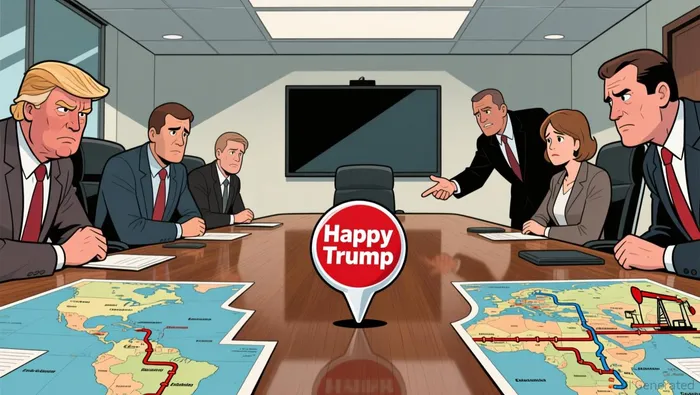
President Donald Trump wore a lighthearted 'Happy Trump' pin during a meeting with oil executives at the White House on Friday. The cartoon-style pin, given to him as a gift, drew smiles from attendees during discussions about U.S. involvement in Venezuela’s oil industry according to reports. Trump emphasized that he is 'never happy' and only satisfied when America is 'made great again.'
The meeting brought together executives from major U.S. oil companies like Exxon MobilXOM--, ChevronCVX--, and ConocoPhillipsCOP--. Trump encouraged these companies to invest $100 billion in Venezuela over the next decade to boost oil production. He also suggested the U.S. might reimburse firms for their investments.
Industry leaders expressed caution, with some labeling Venezuela as 'uninvestable' due to political instability and infrastructure issues. Chevron remains the only major U.S. oil company still operating in the country, while others like ExxonXOM-- and ConocoPhillips have distanced themselves from large-scale investments due to past nationalization experiences according to industry analysis.
Why Did This Happen?
Trump's push to reinvolve U.S. oil companies in Venezuela follows recent U.S. military actions to remove President Nicolás Maduro. The administration now controls Venezuela's oil reserves and has begun selling crude to the U.S. market. Trump believes this will drive down oil prices while securing long-term U.S. strategic interests according to industry experts.
The U.S. government aims to stabilize Venezuela's oil production and restore it to historical levels. At its peak, the country produced over 3.5 million barrels per day in the 1970s, a figure far above its current output. Trump envisions a swift return to those levels, though industry experts remain skeptical about the timeline.
How Did Markets Respond?
U.S. crude futures remained near $59 per barrel as markets digested the administration's plans. The potential influx of Venezuelan crude could impact prices, especially as U.S. refineries are already equipped to process the country's heavy crude.
Executives at the meeting, however, were hesitant to commit to long-term investments. Many preferred to wait for greater clarity on political stability and legal frameworks before making significant financial decisions.





Comentarios
Aún no hay comentarios