
Trump Vows to Make More Deals Like Intel Stake, Critics Slam Move as Federal Incursion
PorAinvest
lunes, 25 de agosto de 2025, 11:20 am ET2 min de lectura
INTC--
Government Investment and Equity Stake
According to the agreement, the U.S. government will subscribe to 433.3 million shares of Intel stock at a price of $20.47 per share. This investment, totaling $8.9 billion, will be funded partly through the CHIPS Act, with $5.7 billion allocated from this source and $3.2 billion from the Secure Enclave Program. The Secure Enclave Program aims to ensure a domestic supply of advanced microchips for U.S. national security applications.
Market Reaction and Analyst Views
Intel's stock price initially rose by approximately 5.5% on the news of the government's equity stake. However, after the official disclosure of the details, the stock price fell by over 1% in after-hours trading. Analysts have been divided in their opinions on the impact of this investment. While some view it as a positive development, others point to Intel's fundamental challenges, such as the need to catch up technologically with Taiwan Semiconductor.
Daniel Morgan, Senior Portfolio Manager at Synovus Trust, stated that Intel needs to improve its technological capabilities to attract customers. He believes that Intel's issues extend beyond financial injections and that the company needs to compete more effectively in the semiconductor market.
Political and Market Implications
The investment in Intel marks a shift in the U.S. government's industrial strategy, moving towards a more hands-on approach to supporting critical infrastructure. This move has raised concerns about the potential for increased federal involvement in the private sector, which could introduce new political risks for companies.
U.S. Senator Bernie Sanders has expressed support for the initiative, highlighting the bipartisan consensus on the importance of reshaping domestic chip production. The agreement could set a precedent for future government investments in strategic industries, potentially leading to similar arrangements with other technology firms.
Conclusion
The Trump administration's investment in Intel is a significant development in the U.S. government's approach to industrial policy. While the move aims to strengthen domestic semiconductor manufacturing and create jobs, it has also sparked debate and raised questions about the balance between public ownership and corporate autonomy. As the deal remains under final review, investors and industry stakeholders will closely watch the implications for the future of U.S. manufacturing and global technology leadership.
References
[1] https://news.futunn.com/en/post/61026831/trump-the-us-government-should-acquire-10-of-intel
[2] https://finance.yahoo.com/news/intel-intc-stock-holds-21-015010467.html
[3] https://www.ainvest.com/news/trump-admin-equity-stake-intel-shift-industrial-strategy-2508/
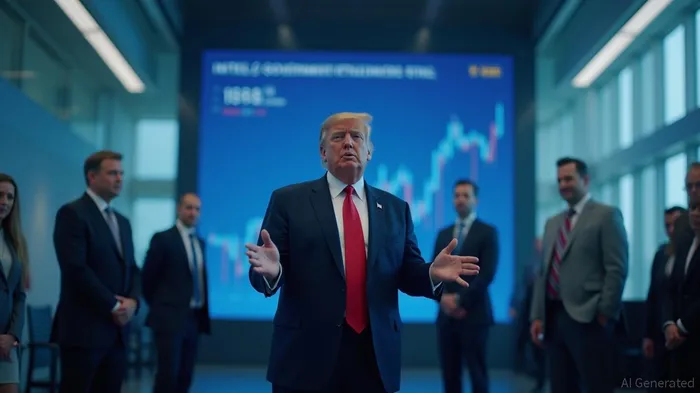
US President Donald Trump has expressed his support for the government's 10% stake in Intel, stating he will make deals like this "all day long" to bring more money and jobs to the US. The move has been criticized by some analysts and politicians, who see it as an incursion of federal involvement in the private sector. Intel's stock has a consensus Hold rating among Wall Street analysts, with an average price target of $22.17.
The Trump administration has announced a significant investment in Intel, securing a 10% stake in the technology giant. This move, which involves the U.S. government investing $8.9 billion in Intel's equity, has generated considerable interest and debate among investors and analysts.Government Investment and Equity Stake
According to the agreement, the U.S. government will subscribe to 433.3 million shares of Intel stock at a price of $20.47 per share. This investment, totaling $8.9 billion, will be funded partly through the CHIPS Act, with $5.7 billion allocated from this source and $3.2 billion from the Secure Enclave Program. The Secure Enclave Program aims to ensure a domestic supply of advanced microchips for U.S. national security applications.
Market Reaction and Analyst Views
Intel's stock price initially rose by approximately 5.5% on the news of the government's equity stake. However, after the official disclosure of the details, the stock price fell by over 1% in after-hours trading. Analysts have been divided in their opinions on the impact of this investment. While some view it as a positive development, others point to Intel's fundamental challenges, such as the need to catch up technologically with Taiwan Semiconductor.
Daniel Morgan, Senior Portfolio Manager at Synovus Trust, stated that Intel needs to improve its technological capabilities to attract customers. He believes that Intel's issues extend beyond financial injections and that the company needs to compete more effectively in the semiconductor market.
Political and Market Implications
The investment in Intel marks a shift in the U.S. government's industrial strategy, moving towards a more hands-on approach to supporting critical infrastructure. This move has raised concerns about the potential for increased federal involvement in the private sector, which could introduce new political risks for companies.
U.S. Senator Bernie Sanders has expressed support for the initiative, highlighting the bipartisan consensus on the importance of reshaping domestic chip production. The agreement could set a precedent for future government investments in strategic industries, potentially leading to similar arrangements with other technology firms.
Conclusion
The Trump administration's investment in Intel is a significant development in the U.S. government's approach to industrial policy. While the move aims to strengthen domestic semiconductor manufacturing and create jobs, it has also sparked debate and raised questions about the balance between public ownership and corporate autonomy. As the deal remains under final review, investors and industry stakeholders will closely watch the implications for the future of U.S. manufacturing and global technology leadership.
References
[1] https://news.futunn.com/en/post/61026831/trump-the-us-government-should-acquire-10-of-intel
[2] https://finance.yahoo.com/news/intel-intc-stock-holds-21-015010467.html
[3] https://www.ainvest.com/news/trump-admin-equity-stake-intel-shift-industrial-strategy-2508/
Divulgación editorial y transparencia de la IA: Ainvest News utiliza tecnología avanzada de Modelos de Lenguaje Largo (LLM) para sintetizar y analizar datos de mercado en tiempo real. Para garantizar los más altos estándares de integridad, cada artículo se somete a un riguroso proceso de verificación con participación humana.
Mientras la IA asiste en el procesamiento de datos y la redacción inicial, un miembro editorial profesional de Ainvest revisa, verifica y aprueba de forma independiente todo el contenido para garantizar su precisión y cumplimiento con los estándares editoriales de Ainvest Fintech Inc. Esta supervisión humana está diseñada para mitigar las alucinaciones de la IA y garantizar el contexto financiero.
Advertencia sobre inversiones: Este contenido se proporciona únicamente con fines informativos y no constituye asesoramiento profesional de inversión, legal o financiero. Los mercados conllevan riesgos inherentes. Se recomienda a los usuarios que realicen una investigación independiente o consulten a un asesor financiero certificado antes de tomar cualquier decisión. Ainvest Fintech Inc. se exime de toda responsabilidad por las acciones tomadas con base en esta información. ¿Encontró un error? Reportar un problema


SOBRE NOSOTROS
Nuestra historiaAutores de noticiasBase de conocimientosPolítica de privacidadTérmino de usoDescargo de responsabilidad de corretaje de tercerosTérminos de uso de AIMEDivulgaciones de riesgos de AInvest AICarrerasCONTÁCTENOS
Email: support@ainvest.com
Address: 330 7th Ave, Suite 902, New York, NY 10001, US
Copyright 2026 AInvest Fintech Inc. All rights reserved.


Comentarios
Aún no hay comentarios