
Trump's Vision: U.S. to Own and Develop Gaza Strip
Generado por agente de IAEli Grant
martes, 4 de febrero de 2025, 7:24 pm ET1 min de lectura
EL--
In a surprising turn of events, U.S. President Donald Trump has announced that the United States will own and develop the Gaza Strip, marking a significant shift in the region's geopolitical dynamics. The move, which has drawn sharp criticism from regional leaders and international observers, aims to address the longstanding conflict between Israel and the Palestinians while fostering economic growth and stability in the region.
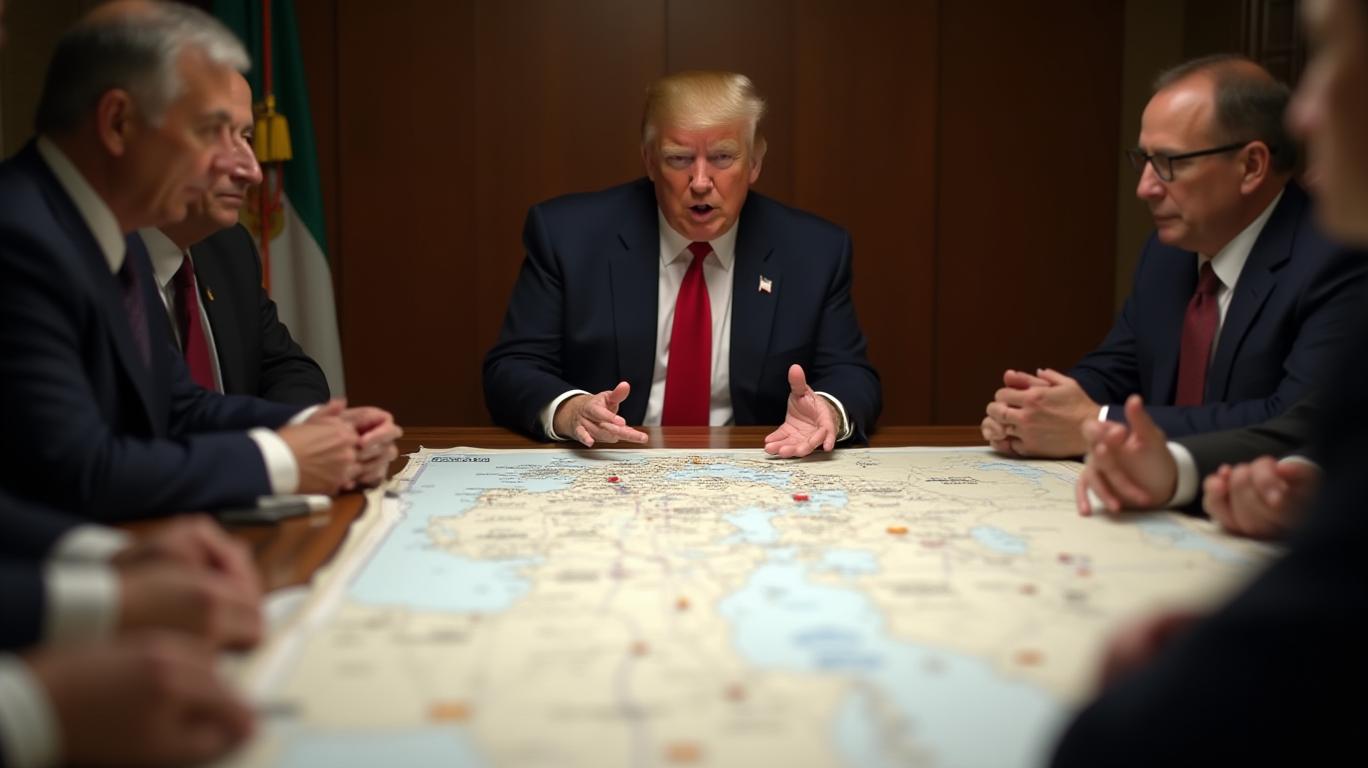
Trump's proposal, which involves moving more than a million Palestinians to neighboring countries, has been met with resistance from Egypt and Jordan, who have swiftly rejected the idea. Both countries fear regional chaos and domestic opposition, highlighting the delicate balance of power in the Middle East. Palestinian politicians have also decried the plan as a plan to ethnically cleanse Gazans from their land.
Despite the criticism, Trump remains steadfast in his vision for the Gaza Strip. The U.S. plan, which has been embraced by extremist Israeli politicians, aims to revitalize the Gazan economy through large infrastructure and economic investments. The plan also calls for the creation of a massive free trade zone covering Sderot-Gaza-El Arish, which would allow Israel, Gaza, and Egypt to take advantage of the location cooperatively.
However, the plan faces numerous challenges, including security concerns, political instability, and the potential for regional chaos. Experts warn that an influx of refugees into neighboring Arab countries could destabilize them and pose an existential threat. Moreover, the plan risks alienating the Palestinian people and their representatives, potentially undermining the prospects for a lasting peace in the region.

In conclusion, Trump's vision for the Gaza Strip represents a significant shift in the region's geopolitical dynamics, with potentially far-reaching consequences for Israel, Egypt, Jordan, and the Palestinian Authority. While the plan aims to address the longstanding conflict and foster economic growth, it also faces numerous challenges and risks. As the situation continues to evolve, it is crucial for regional leaders and international stakeholders to engage in meaningful dialogue and cooperation to ensure a peaceful and prosperous future for the people of the Gaza Strip and the broader Middle East.
MET--
In a surprising turn of events, U.S. President Donald Trump has announced that the United States will own and develop the Gaza Strip, marking a significant shift in the region's geopolitical dynamics. The move, which has drawn sharp criticism from regional leaders and international observers, aims to address the longstanding conflict between Israel and the Palestinians while fostering economic growth and stability in the region.
Trump's proposal, which involves moving more than a million Palestinians to neighboring countries, has been met with resistance from Egypt and Jordan, who have swiftly rejected the idea. Both countries fear regional chaos and domestic opposition, highlighting the delicate balance of power in the Middle East. Palestinian politicians have also decried the plan as a plan to ethnically cleanse Gazans from their land.
Despite the criticism, Trump remains steadfast in his vision for the Gaza Strip. The U.S. plan, which has been embraced by extremist Israeli politicians, aims to revitalize the Gazan economy through large infrastructure and economic investments. The plan also calls for the creation of a massive free trade zone covering Sderot-Gaza-El Arish, which would allow Israel, Gaza, and Egypt to take advantage of the location cooperatively.
However, the plan faces numerous challenges, including security concerns, political instability, and the potential for regional chaos. Experts warn that an influx of refugees into neighboring Arab countries could destabilize them and pose an existential threat. Moreover, the plan risks alienating the Palestinian people and their representatives, potentially undermining the prospects for a lasting peace in the region.
In conclusion, Trump's vision for the Gaza Strip represents a significant shift in the region's geopolitical dynamics, with potentially far-reaching consequences for Israel, Egypt, Jordan, and the Palestinian Authority. While the plan aims to address the longstanding conflict and foster economic growth, it also faces numerous challenges and risks. As the situation continues to evolve, it is crucial for regional leaders and international stakeholders to engage in meaningful dialogue and cooperation to ensure a peaceful and prosperous future for the people of the Gaza Strip and the broader Middle East.

Divulgación editorial y transparencia de la IA: Ainvest News utiliza tecnología avanzada de Modelos de Lenguaje Largo (LLM) para sintetizar y analizar datos de mercado en tiempo real. Para garantizar los más altos estándares de integridad, cada artículo se somete a un riguroso proceso de verificación con participación humana.
Mientras la IA asiste en el procesamiento de datos y la redacción inicial, un miembro editorial profesional de Ainvest revisa, verifica y aprueba de forma independiente todo el contenido para garantizar su precisión y cumplimiento con los estándares editoriales de Ainvest Fintech Inc. Esta supervisión humana está diseñada para mitigar las alucinaciones de la IA y garantizar el contexto financiero.
Advertencia sobre inversiones: Este contenido se proporciona únicamente con fines informativos y no constituye asesoramiento profesional de inversión, legal o financiero. Los mercados conllevan riesgos inherentes. Se recomienda a los usuarios que realicen una investigación independiente o consulten a un asesor financiero certificado antes de tomar cualquier decisión. Ainvest Fintech Inc. se exime de toda responsabilidad por las acciones tomadas con base en esta información. ¿Encontró un error? Reportar un problema




Comentarios
Aún no hay comentarios