
Trump's VAT Tariffs: A New Front in the Trade War
Generado por agente de IAWesley Park
viernes, 21 de febrero de 2025, 7:03 am ET1 min de lectura
ESCA--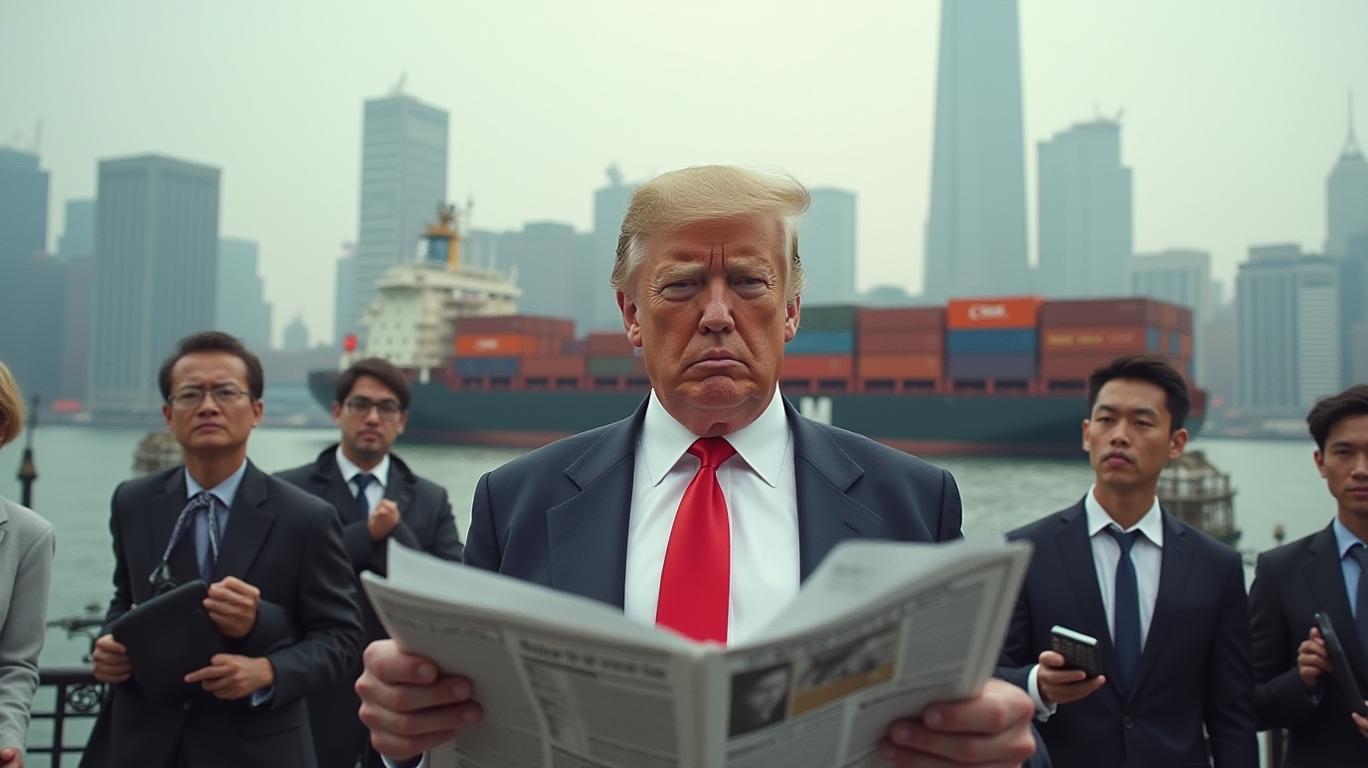
As the global trade landscape continues to shift, U.S. President Donald Trump has thrown a new curveball into the mix: reciprocal tariffs on Value-Added Taxes (VATs). This move, announced on February 21, 2025, has the potential to significantly impact the global economy, particularly in countries that rely heavily on VAT revenues. Let's delve into the reasons behind Trump's decision, the potential implications, and the arguments for and against VATs as trade barriers.
Trump's rationale for VAT tariffs
Trump and his administration have argued that other nations use VATs to gain an unfair trade advantage against the United States. By imposing reciprocal tariffs on VATs, Trump aims to offset these perceived disadvantages and level the playing field for U.S. manufacturers. The White House has also suggested that tariffs can be used as a negotiating tool and a means to raise revenue for the federal budget.
Potential economic implications
The imposition of reciprocal tariffs on VATs could have significant impacts on the global economy, particularly in countries that heavily rely on VAT revenues. Some potential consequences include:
1. Disruption of global supply chains: VATs are border-adjusted and trade-neutral, but if the U.S. imposes tariffs on VATs, it could disrupt global supply chains and increase costs for businesses. This could lead to higher prices for consumers and potentially reduce economic growth.
2. Escalation of trade tensions: The imposition of reciprocal tariffs on VATs could escalate trade tensions between the U.S. and other countries. Other nations might retaliate with their own tariffs, leading to a broader tariff war.
3. Impact on government revenue: VATs are a significant contributor to government revenues in many countries. If the U.S. imposes reciprocal tariffs on VATs, it could lead to a decrease in VAT revenues for these countries, potentially straining their budgets and public services.
Arguments for and against VATs as trade barriers
The arguments for and against VATs as trade barriers are complex and multifaceted. Some argue that VATs are trade-neutral because they are applied to both domestic and imported goods. However, others contend that VATs can be perceived as an export subsidy for countries that impose them, as they are not charged on exports. This perception has led the Trump administration to propose reciprocal tariffs to offset these perceived disadvantages.
Conclusion
Trump's proposed reciprocal tariffs on VATs represent a new front in the ongoing trade war, with significant potential implications for the global economy. While the arguments for and against VATs as trade barriers are nuanced, the imposition of these tariffs could disrupt global supply chains, escalate trade tensions, and impact government revenues. As the situation unfolds, it is crucial for policymakers, businesses, and consumers to stay informed and adapt to the changing trade landscape.
As the global trade landscape continues to shift, U.S. President Donald Trump has thrown a new curveball into the mix: reciprocal tariffs on Value-Added Taxes (VATs). This move, announced on February 21, 2025, has the potential to significantly impact the global economy, particularly in countries that rely heavily on VAT revenues. Let's delve into the reasons behind Trump's decision, the potential implications, and the arguments for and against VATs as trade barriers.
Trump's rationale for VAT tariffs
Trump and his administration have argued that other nations use VATs to gain an unfair trade advantage against the United States. By imposing reciprocal tariffs on VATs, Trump aims to offset these perceived disadvantages and level the playing field for U.S. manufacturers. The White House has also suggested that tariffs can be used as a negotiating tool and a means to raise revenue for the federal budget.
Potential economic implications
The imposition of reciprocal tariffs on VATs could have significant impacts on the global economy, particularly in countries that heavily rely on VAT revenues. Some potential consequences include:
1. Disruption of global supply chains: VATs are border-adjusted and trade-neutral, but if the U.S. imposes tariffs on VATs, it could disrupt global supply chains and increase costs for businesses. This could lead to higher prices for consumers and potentially reduce economic growth.
2. Escalation of trade tensions: The imposition of reciprocal tariffs on VATs could escalate trade tensions between the U.S. and other countries. Other nations might retaliate with their own tariffs, leading to a broader tariff war.
3. Impact on government revenue: VATs are a significant contributor to government revenues in many countries. If the U.S. imposes reciprocal tariffs on VATs, it could lead to a decrease in VAT revenues for these countries, potentially straining their budgets and public services.
Arguments for and against VATs as trade barriers
The arguments for and against VATs as trade barriers are complex and multifaceted. Some argue that VATs are trade-neutral because they are applied to both domestic and imported goods. However, others contend that VATs can be perceived as an export subsidy for countries that impose them, as they are not charged on exports. This perception has led the Trump administration to propose reciprocal tariffs to offset these perceived disadvantages.
Conclusion
Trump's proposed reciprocal tariffs on VATs represent a new front in the ongoing trade war, with significant potential implications for the global economy. While the arguments for and against VATs as trade barriers are nuanced, the imposition of these tariffs could disrupt global supply chains, escalate trade tensions, and impact government revenues. As the situation unfolds, it is crucial for policymakers, businesses, and consumers to stay informed and adapt to the changing trade landscape.

Divulgación editorial y transparencia de la IA: Ainvest News utiliza tecnología avanzada de Modelos de Lenguaje Largo (LLM) para sintetizar y analizar datos de mercado en tiempo real. Para garantizar los más altos estándares de integridad, cada artículo se somete a un riguroso proceso de verificación con participación humana.
Mientras la IA asiste en el procesamiento de datos y la redacción inicial, un miembro editorial profesional de Ainvest revisa, verifica y aprueba de forma independiente todo el contenido para garantizar su precisión y cumplimiento con los estándares editoriales de Ainvest Fintech Inc. Esta supervisión humana está diseñada para mitigar las alucinaciones de la IA y garantizar el contexto financiero.
Advertencia sobre inversiones: Este contenido se proporciona únicamente con fines informativos y no constituye asesoramiento profesional de inversión, legal o financiero. Los mercados conllevan riesgos inherentes. Se recomienda a los usuarios que realicen una investigación independiente o consulten a un asesor financiero certificado antes de tomar cualquier decisión. Ainvest Fintech Inc. se exime de toda responsabilidad por las acciones tomadas con base en esta información. ¿Encontró un error? Reportar un problema




Comentarios
Aún no hay comentarios