
Trump’s Trade Wars: A Double Whammy for Banks
Generado por agente de IATheodore Quinn
sábado, 5 de abril de 2025, 8:30 pm ET2 min de lectura
BAC--
The banking sector is facing a perfect storm as President Trump’s trade wars escalate, adding to an already challenging year. The tariffs, which have been imposed on a wide range of goods, are not only affecting the manufacturing and retail sectors but are also having a significant impact on financial services. The latest round of tariffs, announced on April 5, 2025, has sent shockwaves through the market, with bank stocks tumbling to multi-month lows.
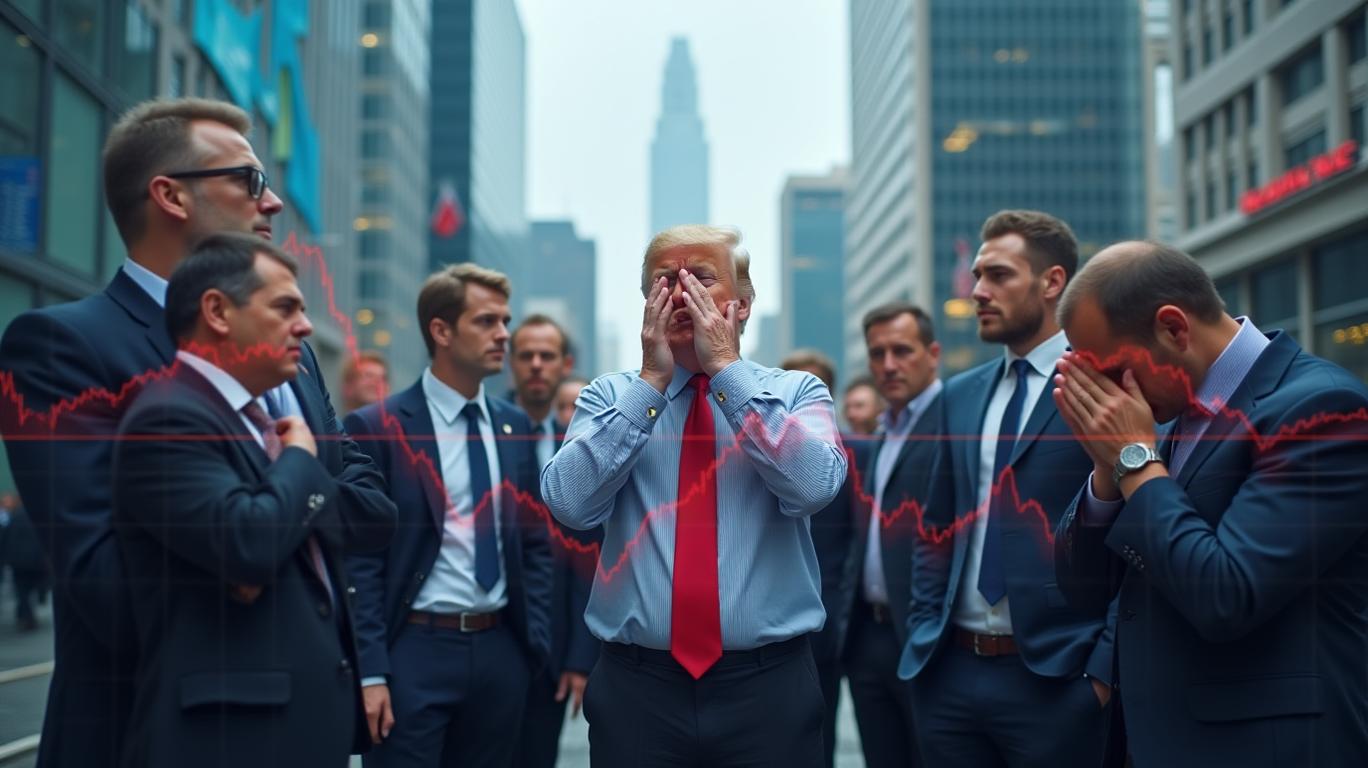
The immediate impact of the tariffs has been a sell-off in bank stocks. On April 6, 2025, Citigroup Inc. and Bank of AmericaBAC-- Corp. stocks were down by more than 11% each, while Morgan StanleyMS-- and Goldman SachsGIND-- saw declines of 9% each. The broader S&P 500 index also took a hit, but the sell-off in bank stocks was particularly severe. This is a clear indication that investors are concerned about the potential impact of the trade wars on the financial health of banks.
The trade wars are creating a challenging environment for banks in several ways. First, the tariffs are likely to lead to stagflation, a combination of high inflation and low economic growth or recession. This is the worst possible scenario for banks, as it drives up loan losses. If the Federal Reserve maintains high interest rates to combat inflation, jobs may be lost, leading to an increase in bad loans. Conversely, if rates are cut to cope with a slowdown, interest income for lenders will be squeezed while credit losses still rise.
Second, the trade wars are affecting consumer finance companies, which are among the biggest losers. Synchrony FinancialSYF--, American Express Co., and Capital One Financial Corp. have all seen significant declines in their stock prices. This is because lower-income workers and families, who are the first to suffer from the economic fallout of the trade wars, are also the primary customers of these companies.
Third, the trade wars are affecting commercial borrowers, both big and small. Higher costs, falling profit margins, and slower sales are all likely to lead to an increase in problem loans. Bank of America Corp. and Citigroup Inc. are particularly vulnerable, as they have significant exposure to global trade.
Fourth, the trade wars are affecting investment banking and wealth management. Deals and capital markets work have been a big disappointment this year, and the outlook is darkening further. The European buy-now-pay-later lender Klarna Group Plc, which was meant to list in the US this month, may need to rethink its plans due to the sliding dollar and tumbling valuations of financial and technology companies.
Fifth, the trade wars are affecting capital inflows. Companies and people that sell into the US have dollar proceeds to invest, and these dollars find their way back into US financial assets. If the trade wars escalate, retaliations could move beyond goods into services trade, affecting US financial groups.
The long-term effects of the trade wars on the banking sector are also a cause for concern. Increased loan defaults and heightened credit risk are likely to be the norm. The data and examples from the materials illustrate the potential for widespread economic disruption, affecting both domestic and international banking institutions.
In conclusion, Trump’s trade wars are making a tough year for banks even harder. The tariffs are creating a challenging environment for banks, with stagflation, increased loan defaults, and heightened credit risk all likely to be the norm. The sell-off in bank stocks is a clear indication that investors are concerned about the potential impact of the trade wars on the financial health of banks. The long-term effects of the trade wars on the banking sector are also a cause for concern, with increased loan defaults and heightened credit risk likely to be the norm. Banks will need to navigate this challenging environment carefully, and investors should be prepared for further volatility in the banking sector.
GIND--
MS--
The banking sector is facing a perfect storm as President Trump’s trade wars escalate, adding to an already challenging year. The tariffs, which have been imposed on a wide range of goods, are not only affecting the manufacturing and retail sectors but are also having a significant impact on financial services. The latest round of tariffs, announced on April 5, 2025, has sent shockwaves through the market, with bank stocks tumbling to multi-month lows.
The immediate impact of the tariffs has been a sell-off in bank stocks. On April 6, 2025, Citigroup Inc. and Bank of AmericaBAC-- Corp. stocks were down by more than 11% each, while Morgan StanleyMS-- and Goldman SachsGIND-- saw declines of 9% each. The broader S&P 500 index also took a hit, but the sell-off in bank stocks was particularly severe. This is a clear indication that investors are concerned about the potential impact of the trade wars on the financial health of banks.
The trade wars are creating a challenging environment for banks in several ways. First, the tariffs are likely to lead to stagflation, a combination of high inflation and low economic growth or recession. This is the worst possible scenario for banks, as it drives up loan losses. If the Federal Reserve maintains high interest rates to combat inflation, jobs may be lost, leading to an increase in bad loans. Conversely, if rates are cut to cope with a slowdown, interest income for lenders will be squeezed while credit losses still rise.
Second, the trade wars are affecting consumer finance companies, which are among the biggest losers. Synchrony FinancialSYF--, American Express Co., and Capital One Financial Corp. have all seen significant declines in their stock prices. This is because lower-income workers and families, who are the first to suffer from the economic fallout of the trade wars, are also the primary customers of these companies.
Third, the trade wars are affecting commercial borrowers, both big and small. Higher costs, falling profit margins, and slower sales are all likely to lead to an increase in problem loans. Bank of America Corp. and Citigroup Inc. are particularly vulnerable, as they have significant exposure to global trade.
Fourth, the trade wars are affecting investment banking and wealth management. Deals and capital markets work have been a big disappointment this year, and the outlook is darkening further. The European buy-now-pay-later lender Klarna Group Plc, which was meant to list in the US this month, may need to rethink its plans due to the sliding dollar and tumbling valuations of financial and technology companies.
Fifth, the trade wars are affecting capital inflows. Companies and people that sell into the US have dollar proceeds to invest, and these dollars find their way back into US financial assets. If the trade wars escalate, retaliations could move beyond goods into services trade, affecting US financial groups.
The long-term effects of the trade wars on the banking sector are also a cause for concern. Increased loan defaults and heightened credit risk are likely to be the norm. The data and examples from the materials illustrate the potential for widespread economic disruption, affecting both domestic and international banking institutions.
In conclusion, Trump’s trade wars are making a tough year for banks even harder. The tariffs are creating a challenging environment for banks, with stagflation, increased loan defaults, and heightened credit risk all likely to be the norm. The sell-off in bank stocks is a clear indication that investors are concerned about the potential impact of the trade wars on the financial health of banks. The long-term effects of the trade wars on the banking sector are also a cause for concern, with increased loan defaults and heightened credit risk likely to be the norm. Banks will need to navigate this challenging environment carefully, and investors should be prepared for further volatility in the banking sector.

Divulgación editorial y transparencia de la IA: Ainvest News utiliza tecnología avanzada de Modelos de Lenguaje Largo (LLM) para sintetizar y analizar datos de mercado en tiempo real. Para garantizar los más altos estándares de integridad, cada artículo se somete a un riguroso proceso de verificación con participación humana.
Mientras la IA asiste en el procesamiento de datos y la redacción inicial, un miembro editorial profesional de Ainvest revisa, verifica y aprueba de forma independiente todo el contenido para garantizar su precisión y cumplimiento con los estándares editoriales de Ainvest Fintech Inc. Esta supervisión humana está diseñada para mitigar las alucinaciones de la IA y garantizar el contexto financiero.
Advertencia sobre inversiones: Este contenido se proporciona únicamente con fines informativos y no constituye asesoramiento profesional de inversión, legal o financiero. Los mercados conllevan riesgos inherentes. Se recomienda a los usuarios que realicen una investigación independiente o consulten a un asesor financiero certificado antes de tomar cualquier decisión. Ainvest Fintech Inc. se exime de toda responsabilidad por las acciones tomadas con base en esta información. ¿Encontró un error? Reportar un problema


SOBRE NOSOTROS
Nuestra historiaAutores de noticiasBase de conocimientosPolítica de privacidadTérmino de usoDescargo de responsabilidad de corretaje de tercerosTérminos de uso de AIMEDivulgaciones de riesgos de AInvest AICarrerasCONTÁCTENOS
Email: support@ainvest.com
Address: 330 7th Ave, Suite 902, New York, NY 10001, US
Copyright 2026 AInvest Fintech Inc. All rights reserved.


Comentarios
Aún no hay comentarios