
Trump's Trade War: Markets in Turmoil as Tariffs Take Effect
Generado por agente de IATheodore Quinn
lunes, 3 de febrero de 2025, 6:05 pm ET1 min de lectura
SBUX--
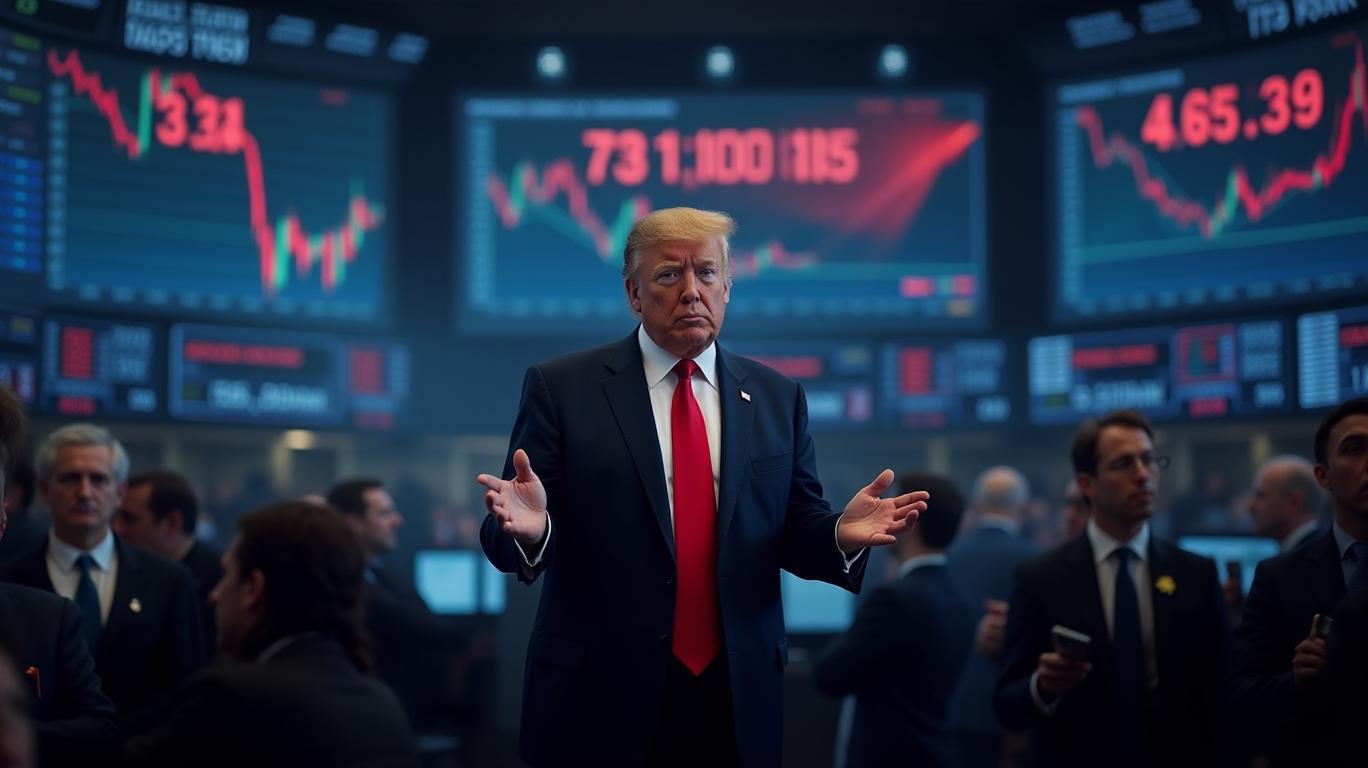
As President Trump's trade war kicks into high gear, global markets are grappling with the fallout. The U.S. leader's decision to impose tariffs on Canada, Mexico, and China has sent shockwaves through financial markets, with stocks worldwide taking a hit. Here's a closer look at the impact and what investors can expect in the coming months.
Market Reaction
The S&P 500, Dow Jones Industrial Average, and Nasdaq composite all experienced significant losses following Trump's tariff announcements. The S&P 500 fell 2.4% on Monday, while the Dow dropped 2.9% and the Nasdaq lost 2.5%. This sell-off was driven by concerns about a potential trade war and its impact on corporate earnings.
Sector Impact
Certain sectors are particularly vulnerable to the effects of Trump's trade war. Big Tech companies, which rely heavily on global supply chains, could face increased costs and potential supply chain disruptions. Insurance companies, meanwhile, may see increased volatility in their investment portfolios due to market uncertainty.
Political Uncertainties
The uncertainty surrounding Trump's trade war can lead to market volatility and decreased investor confidence. This can be seen in the market's reaction to Trump's tariff announcements, where stocks worldwide dropped on concerns about a potential trade war. The uncertainty about the extent and duration of the trade war can also impact the performance of quality stocks with strong leadership, such as Starbucks and Travelers.
Long-term Performance
While short-term market noise and political events can cause fluctuations in stock prices, they tend to have less of an impact on long-term performance. The market's fundamentals, such as earnings growth and economic indicators, play a significant role in influencing the long-term performance of stocks. For instance, the S&P 500's long-term performance has been driven by the earnings growth of the companies within the index.
Investment Strategies
As markets grapple with the fallout from Trump's trade war, investors should consider the following strategies:
1. Diversification: Spread your investments across various sectors and asset classes to minimize the impact of any single event or sector-specific downturn.
2. Long-term perspective: Focus on the fundamentals of the companies you invest in, rather than getting caught up in short-term market noise or political events.
3. Risk management: Be prepared to adjust your portfolio as needed to manage risk, such as by reducing exposure to vulnerable sectors or increasing cash holdings.
In conclusion, Trump's trade war has sent shockwaves through global markets, with stocks taking a hit and certain sectors particularly vulnerable. While short-term market noise and political events can cause fluctuations in stock prices, the market's fundamentals play a significant role in influencing long-term performance. Investors should consider diversification, a long-term perspective, and risk management strategies to navigate the uncertainty ahead.
As President Trump's trade war kicks into high gear, global markets are grappling with the fallout. The U.S. leader's decision to impose tariffs on Canada, Mexico, and China has sent shockwaves through financial markets, with stocks worldwide taking a hit. Here's a closer look at the impact and what investors can expect in the coming months.
Market Reaction
The S&P 500, Dow Jones Industrial Average, and Nasdaq composite all experienced significant losses following Trump's tariff announcements. The S&P 500 fell 2.4% on Monday, while the Dow dropped 2.9% and the Nasdaq lost 2.5%. This sell-off was driven by concerns about a potential trade war and its impact on corporate earnings.
Sector Impact
Certain sectors are particularly vulnerable to the effects of Trump's trade war. Big Tech companies, which rely heavily on global supply chains, could face increased costs and potential supply chain disruptions. Insurance companies, meanwhile, may see increased volatility in their investment portfolios due to market uncertainty.
Political Uncertainties
The uncertainty surrounding Trump's trade war can lead to market volatility and decreased investor confidence. This can be seen in the market's reaction to Trump's tariff announcements, where stocks worldwide dropped on concerns about a potential trade war. The uncertainty about the extent and duration of the trade war can also impact the performance of quality stocks with strong leadership, such as Starbucks and Travelers.
Long-term Performance
While short-term market noise and political events can cause fluctuations in stock prices, they tend to have less of an impact on long-term performance. The market's fundamentals, such as earnings growth and economic indicators, play a significant role in influencing the long-term performance of stocks. For instance, the S&P 500's long-term performance has been driven by the earnings growth of the companies within the index.
Investment Strategies
As markets grapple with the fallout from Trump's trade war, investors should consider the following strategies:
1. Diversification: Spread your investments across various sectors and asset classes to minimize the impact of any single event or sector-specific downturn.
2. Long-term perspective: Focus on the fundamentals of the companies you invest in, rather than getting caught up in short-term market noise or political events.
3. Risk management: Be prepared to adjust your portfolio as needed to manage risk, such as by reducing exposure to vulnerable sectors or increasing cash holdings.
In conclusion, Trump's trade war has sent shockwaves through global markets, with stocks taking a hit and certain sectors particularly vulnerable. While short-term market noise and political events can cause fluctuations in stock prices, the market's fundamentals play a significant role in influencing long-term performance. Investors should consider diversification, a long-term perspective, and risk management strategies to navigate the uncertainty ahead.

Divulgación editorial y transparencia de la IA: Ainvest News utiliza tecnología avanzada de Modelos de Lenguaje Largo (LLM) para sintetizar y analizar datos de mercado en tiempo real. Para garantizar los más altos estándares de integridad, cada artículo se somete a un riguroso proceso de verificación con participación humana.
Mientras la IA asiste en el procesamiento de datos y la redacción inicial, un miembro editorial profesional de Ainvest revisa, verifica y aprueba de forma independiente todo el contenido para garantizar su precisión y cumplimiento con los estándares editoriales de Ainvest Fintech Inc. Esta supervisión humana está diseñada para mitigar las alucinaciones de la IA y garantizar el contexto financiero.
Advertencia sobre inversiones: Este contenido se proporciona únicamente con fines informativos y no constituye asesoramiento profesional de inversión, legal o financiero. Los mercados conllevan riesgos inherentes. Se recomienda a los usuarios que realicen una investigación independiente o consulten a un asesor financiero certificado antes de tomar cualquier decisión. Ainvest Fintech Inc. se exime de toda responsabilidad por las acciones tomadas con base en esta información. ¿Encontró un error? Reportar un problema




Comentarios
Aún no hay comentarios