
Trump's TikTok Executive Order: A New Era for U.S. Tech Policy and Cross-Border Investment Risks
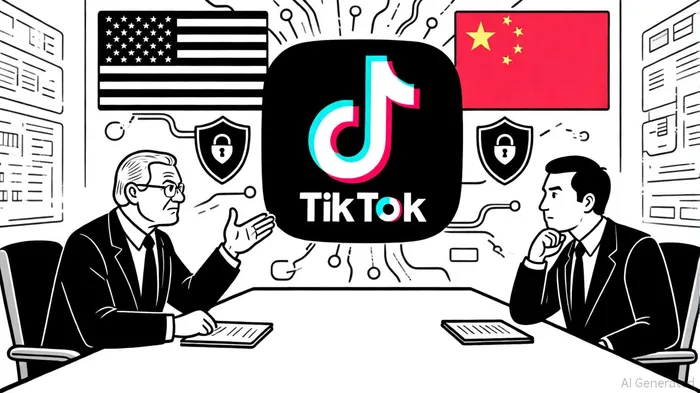
In September 2025, President Donald Trump's executive order on TikTok marked a pivotal shift in U.S. tech policy, signaling a recalibration of national security priorities and cross-border investment dynamics. By approving a joint-venture structure for TikTok's U.S. operations—controlled by OracleORCL--, Silver Lake, and other U.S. investors—Trump's administration sought to balance economic interests with geopolitical risks. This move not only averted a potential ban on the app but also set a precedent for how foreign-owned tech platforms might navigate U.S. regulatory scrutiny in an era of heightened Sino-American tensions.
Regulatory Trends: National Security as a Strategic Tool
The TikTok deal reflects a broader trend in U.S. tech policy under Trump: the weaponization of national security to reshape global tech governance. By mandating that TikTok's U.S. data be stored in a domestic cloud environment and its algorithm retrained by U.S. partners, the administration underscored its commitment to data sovereignty and algorithmic control. Oracle's role as a cybersecurity overseer, ensuring no foreign influence on user data or recommendation systems, exemplifies this approach[1].
This strategy aligns with the administration's broader efforts to decouple from Chinese technology. For instance, Trump's executive orders banning Huawei and ZTE from U.S. 5G infrastructure, alongside tariffs on Chinese semiconductors, highlight a consistent theme: prioritizing U.S. technological leadership over open-market principles[4]. The TikTok deal, however, introduces a nuanced model—one that allows foreign platforms to operate in the U.S. under strict domestic oversight, rather than outright bans.
Cross-Border Investment: Risks and Opportunities
For investors, the TikTok deal signals both risks and opportunities. On the one hand, it raises concerns about regulatory overreach and the potential for retaliatory measures from China. Analysts warn that Beijing could impose reciprocal data localization requirements on U.S. tech firms operating in China, complicating global supply chains[5]. For example, if TikTok's U.S. algorithm remains embedded in the app while its data is hosted domestically, it could embolden other nations to demand similar arrangements, fragmenting the global digital ecosystem[4].
On the other hand, the deal creates openings for U.S. tech firms. Oracle's involvement in securing TikTok's data and algorithms positions it as a key player in the emerging market for cybersecurity and data governance services. Similarly, cloud providers like Microsoft and infrastructure firms like NVIDIA stand to benefit from increased demand for secure, U.S.-based data storage and AI training[2]. According to a report by Bloomberg, the TikTok restructuring could generate $178 billion in U.S. economic activity over four years, sustaining thousands of jobs and spurring innovation in AI and cybersecurity[1].
Geopolitical Implications: A Double-Edged Sword
The TikTok deal also underscores the growing role of geopolitics in tech policy. While it aims to neutralize Chinese influence, it risks escalating tensions. For instance, the U.S. insistence on algorithmic control could provoke Chinese countermeasures, such as restrictions on U.S. social media platforms like Facebook or Twitter. Additionally, the deal's emphasis on data localization may encourage other nations—such as India, Russia, or the EU—to adopt similar policies, fragmenting the internet into competing digital spheres[5].
Investors must also consider the legal uncertainties. Critics argue that the TikTok joint venture could set a dangerous precedent for corporate governance, where U.S. regulators dictate operational structures for foreign firms. Legal scholars have raised concerns that the deal's reliance on “trusted U.S. partners” to oversee algorithms and data may violate antitrust principles or First Amendment protections[3].
Conclusion: Navigating a Fragmented Future
Trump's TikTok executive order is more than a regulatory fix—it is a harbinger of a new era in U.S. tech policy. By prioritizing national security, the administration has redefined the rules of cross-border tech investment, favoring controlled collaboration over open competition. For investors, this means hedging against geopolitical volatility while capitalizing on opportunities in cybersecurity, data localization, and AI infrastructure.
However, the long-term success of this model hinges on its ability to balance security with innovation. If the U.S. continues to impose stringent controls on foreign tech firms, it risks stifling the very creativity and global connectivity that have fueled its tech sector's dominance. As the TikTok deal unfolds, investors must remain vigilant, adapting to a landscape where regulatory trends are as unpredictable as they are transformative.





Comentarios
Aún no hay comentarios