
Trump Tariffs Weigh on Manufacturing Jobs as Sector Loses 94K Since April 2025
President Donald Trump's aggressive tariff policy, aimed at reviving U.S. manufacturing, is increasingly coming under scrutiny as job losses in the sector continue to mount. Despite promises of a manufacturing renaissance, recent data shows that U.S. manufacturing jobs have dropped by nearly 94,000 since April 2025. This follows a pattern of job declines that have accelerated since the administration began its sweeping tariff campaign according to Bloomberg.
The administration's logic is straightforward: by imposing high tariffs on foreign imports, domestic manufacturers would face less competition, encouraging companies to reshore production and hire more workers. However, experts argue that this strategy is failing to deliver the promised job growth. Studies show that while some industries may see a few protected sectors grow, the overall impact of tariffs has been negative, with job losses in steel-dependent industries far outweighing gains.
The uncertainty surrounding the duration of tariffs and shifting trade policies has only deepened the confusion for businesses. Many manufacturers, including automakers like General MotorsGM--, are hesitant to make long-term investments in U.S. production, fearing that tariffs could be reversed or modified. This hesitation is understandable, as the cost of reshoring is high, and the potential return is uncertain. For example, EVCO, a manufacturer of industrial parts, estimates it would cost between $12 million and $15 million to build a new U.S. plant, with no guarantee of profitability.
Why the Strategy Is Failing
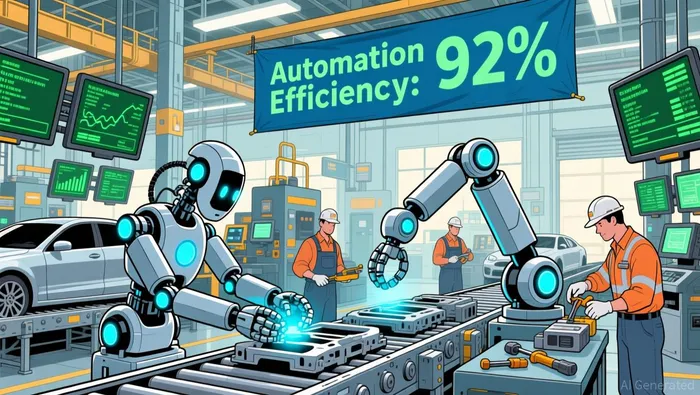
The administration's reliance on tariffs to bring manufacturing jobs back to the U.S. has been met with skepticism from economists and industry experts. One major issue is the assumption that offshoring is the primary reason for the decline in manufacturing jobs. In reality, automation and improved productivity have been the biggest culprits. From 2000 to 2010, automation accounted for 4.5 million job losses in manufacturing, compared to just 1.1 million due to offshoring.
Tariffs, while potentially shielding some domestic industries, have also led to higher production costs and reduced competitiveness for U.S. companies. The Federal Reserve found that while tariffs helped certain sectors , they hurt others by increasing costs, ultimately reducing overall factory employment. This is particularly true for industries that rely on imported parts and raw materials, such as the automotive and construction sectors. For example, the steel tariffs imposed during Trump's first term led to job losses in steel-using industries like auto manufacturing, as prices rose and demand fell.
Challenges to Reshoring
Reshoring production to the U.S. is also complicated by a shortage of skilled workers and the high cost of labor. In the furniture industry, for instance, Asian factory workers earn an average of $13,000 a year, compared to $43,000 for U.S. employees. This wage gap makes it difficult for U.S. manufacturers to compete with the low-cost production available overseas. Even companies that want to reshore may struggle to find the skilled workers needed to operate advanced machinery and manage complex supply chains according to industry reports.
Another challenge is the uncertainty surrounding the longevity of Trump's tariff policies. Companies that spend billions to move production to the U.S. must weigh the risk that tariffs could be lifted or modified in the near future. This uncertainty makes long-term planning difficult and could lead to wasted investments. For example, one executive at a major U.S. automaker noted that the company is currently evaluating whether to reshore production but remains cautious about making a decision.
The Mixed Impact on the Economy
While Trump's tariffs have had a mixed impact on the economy, some industries and countries have benefited. Australia has seen a boost in gold and beef exports as U.S. import duties have redirected trade flows. Similarly, Brazil has received some relief after Trump removed tariffs on food imports like coffee and beef, easing pressure on consumers facing high prices. However, these gains may be short-lived, as the administration continues to adjust its tariff strategy based on political and economic pressures according to market analysts.
The broader economic impact of Trump's tariffs remains uncertain. On one hand, the administration argues that they are necessary to protect U.S. manufacturing and reduce the trade deficit. On the other, economists warn that the tariffs could lead to a recession, which would further hurt job prospects in the sector. Moody's Analytics estimates that a recession could result in 3.5 million fewer jobs by 2027. At the same time, a best-case scenario in which tariffs lead to a full reshoring of manufacturing could create only 1.5 million new jobs, a relatively small number compared to the overall labor market.
What Analysts Are Watching
Analysts are closely monitoring the Supreme Court's upcoming ruling on the legal basis for Trump's tariffs. The court is expected to decide whether the president exceeded his authority in imposing the duties under the International Emergency Economic Powers Act. If the court rules against the administration, it could force a rollback of some tariffs and create further uncertainty for businesses and investors according to ABC News.
In the meantime, companies are navigating a volatile trade environment. Some, like Hyundai and Apple, have announced plans to invest in U.S. production, while others remain cautious. The automotive industry, in particular, is in a difficult position, as automakers must weigh the costs of reshoring against the risk of tariffs being reversed. For now, the impact of Trump's tariff policy remains mixed, with some signs of progress but also growing concerns about the long-term consequences for U.S. manufacturing jobs.





Comentarios
Aún no hay comentarios