
Trump's Tariffs: The Weekend That Shattered Global Markets
Generado por agente de IATheodore Quinn
sábado, 5 de abril de 2025, 6:16 am ET2 min de lectura
The weekend of April 5, 2025, will be remembered as a seismic shift in global trade and financial markets. President Trump's unilateral imposition of tariffs sent shockwaves through stock markets and commodity prices, wiping out trillions in market value and sparking a wave of economic uncertainty. The move, which was framed as a response to perceived economic imbalances and unfair trade practices, had immediate and far-reaching repercussions that are still being felt today.
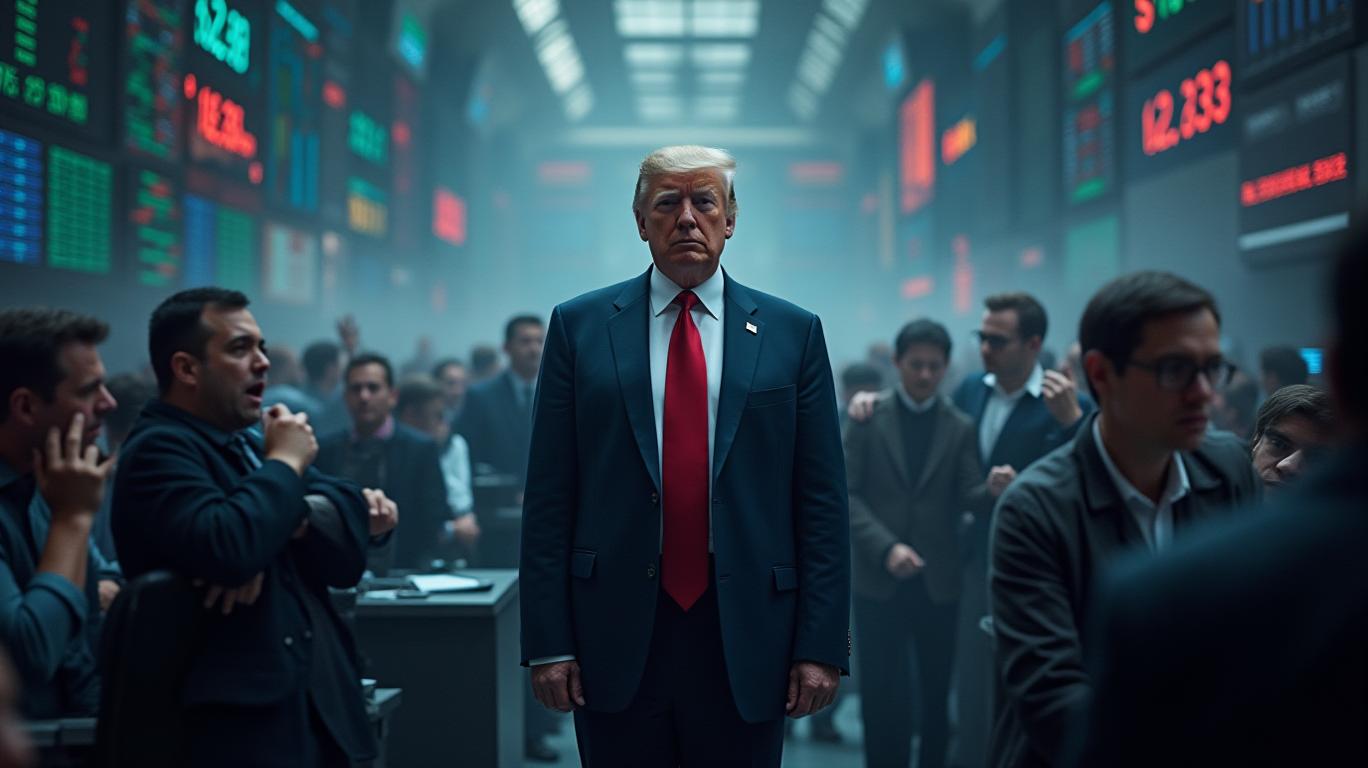
The tariffs, which ranged from 10% to 50%, were imposed on a wide array of countries, including allies and critical trading partners. The announcement on Wednesday shook global stock markets to their core, with the S&P 500 experiencing a record two-day decline, wiping out $5 trillion in stock market value by Friday's close. Prices for oil and commodities also plunged, while investors fled to the safety of government bonds, reflecting a broader market panic and a shift towards more secure investments.
The decision to impose these tariffs was driven by several strategic considerations aimed at addressing perceived economic imbalances and protecting American workers. According to the White House fact sheet dated April 2, 2025, President Trump declared that "foreign trade and economic practices have created a national emergency," and his order imposes responsive tariffs to strengthen the international economic position of the United States and protect American workers. The tariffs were imposed under the International Emergency Economic Powers Act of 1977 (IEEPA) to address the national emergency posed by large and persistent trade deficits driven by the absence of reciprocity in trade relationships and other harmful policies like currency manipulation and exorbitant value-added taxes (VAT) perpetuated by other countries.
The tariffs were designed to take effect on April 5, 2025, at 12:01 a.m. EDT, with an individualized reciprocal higher tariff on countries with which the United States has the largest trade deficits taking effect on April 9, 2025, at 12:01 a.m. EDT. These tariffs were intended to remain in effect until President Trump determined that the threat posed by the trade deficit and underlying nonreciprocal treatment was satisfied, resolved, or mitigated. The tariffs also included modification authority, allowing President Trump to increase the tariff if trading partners retaliated or decrease the tariffs if trading partners took significant steps to remedy nonreciprocal trade arrangements and align with the United States on economic and national security matters.
The decision to impose these tariffs had significant implications for U.S. trade relations with key allies and adversaries. For instance, the tariffs affected countries like Australia, the UK, Colombia, Argentina, Egypt, and Saudi Arabia, which were among the first hit with the 10% tariff. The tariffs also included higher "reciprocal" tariff rates of 11% to 50% on imports from larger trading partners, with European Union imports hit with a 20% tariff and Chinese goods hit with a 34% tariff, bringing Trump's total new levies on China to 54%. This move was seen as a significant shift in U.S. trade policy, rejecting the post-second world war system of mutually agreed tariff rates and ushering in a new era of unilateral trade actions.
The tariffs also had a profound impact on global stock markets, wiping out $5 trillion in stock market value for S&P 500 companies by Friday's close, a record two-day decline. Prices for oil and commodities plunged, while investors fled to the safety of government bonds. The tariffs were also metMET-- with strong reactions from affected countries, with China hitting back hard at what it perceived as "bullying" Trump tariffs, and global recession fears growing as a result.
In summary, President Trump's decision to impose a 10% baseline tariff on all imports was driven by strategic considerations aimed at addressing economic imbalances and protecting American workers. The decision had significant implications for U.S. trade relations with key allies and adversaries, leading to a seismic shift in global trade dynamics and sparking concerns about potential economic repercussions. The weekend of April 5, 2025, will be remembered as a turning point in global trade and financial markets, with the repercussions of Trump's tariffs still being felt today.



Divulgación editorial y transparencia de la IA: Ainvest News utiliza tecnología avanzada de Modelos de Lenguaje Largo (LLM) para sintetizar y analizar datos de mercado en tiempo real. Para garantizar los más altos estándares de integridad, cada artículo se somete a un riguroso proceso de verificación con participación humana.
Mientras la IA asiste en el procesamiento de datos y la redacción inicial, un miembro editorial profesional de Ainvest revisa, verifica y aprueba de forma independiente todo el contenido para garantizar su precisión y cumplimiento con los estándares editoriales de Ainvest Fintech Inc. Esta supervisión humana está diseñada para mitigar las alucinaciones de la IA y garantizar el contexto financiero.
Advertencia sobre inversiones: Este contenido se proporciona únicamente con fines informativos y no constituye asesoramiento profesional de inversión, legal o financiero. Los mercados conllevan riesgos inherentes. Se recomienda a los usuarios que realicen una investigación independiente o consulten a un asesor financiero certificado antes de tomar cualquier decisión. Ainvest Fintech Inc. se exime de toda responsabilidad por las acciones tomadas con base en esta información. ¿Encontró un error? Reportar un problema




Comentarios
Aún no hay comentarios