
Trump Tariffs Trigger Market Meltdown: Just How Bad Was the Sell-Off?
Generado por agente de IATheodore Quinn
jueves, 3 de abril de 2025, 6:51 pm ET3 min de lectura
AAPL--
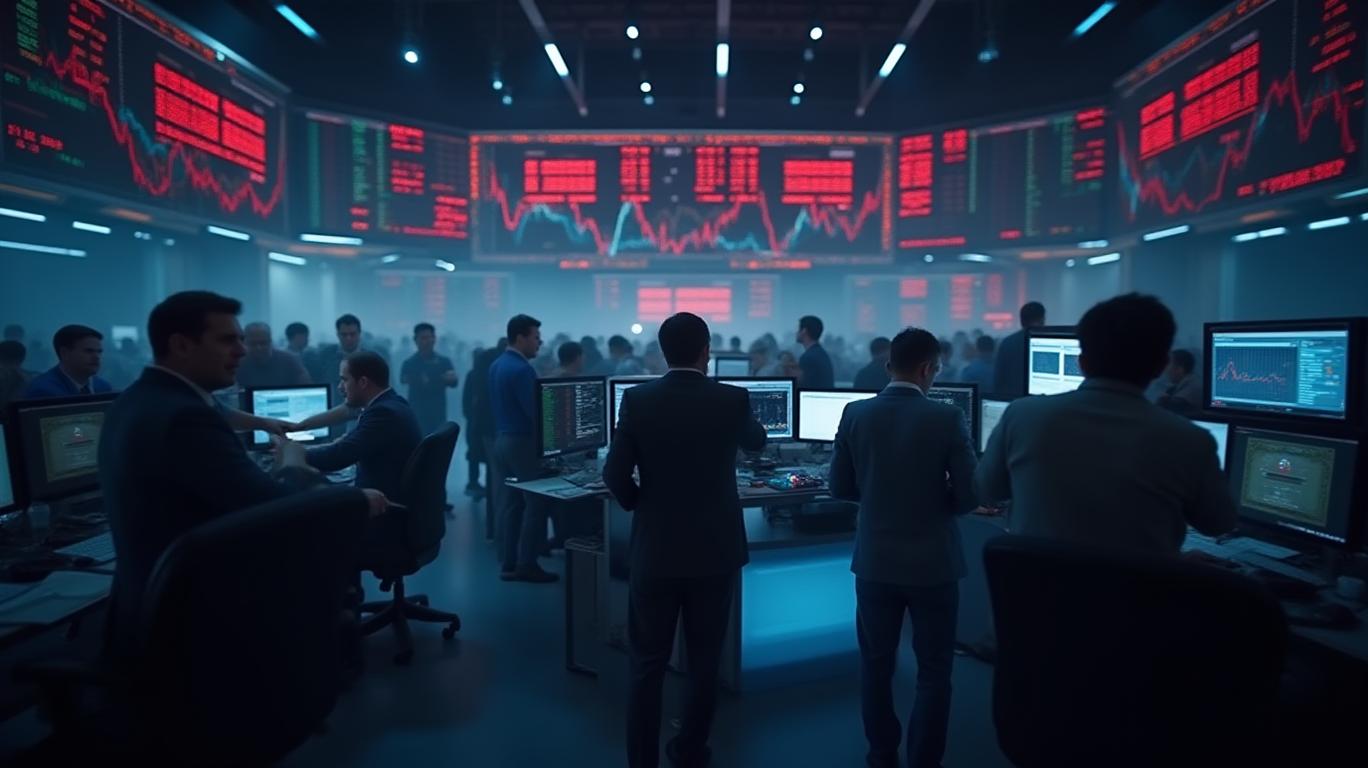
The stock market sell-off on Thursday, April 3, 2025, was nothing short of catastrophic. President Donald Trump's announcement of sweeping tariffs on imports from dozens of countries sent shockwaves through global financial markets, leading to one of the most dramatic market downturns in recent history. The Dow Jones Industrial Average plummeted 1,394 points, or more than 3%, while the S&P 500 and Nasdaq Composite suffered their worst single-day losses since 2020. The question on everyone's mind: just how bad was the sell-off, and what does it mean for the future of the U.S. economy?
The immediate impact of Trump's tariffs was swift and severe. The Dow Jones Industrial Average dropped 1,394 points, or more than 3%, and the U.S. dollar fell against other major currencies. The S&P 500 dropped 4.84% and settled at 5,396.52, posting its worst day since June 2020. The Nasdaq Composite plummeted 5.97% and ended at 16,550.61, registering its biggest decline since March 2020. The slide across equities was broad, with more than 400 of the S&P 500's constituents posting losses. The key sectors and companies most affected by the sell-off included multinational companies, big sellers of imported goods, and tech shares. NikeNKE-- and AppleAAPL-- dropped 14% and 9%, respectively. Five BelowFIVE-- lost nearly 28%, Dollar TreeDLTR-- tumbled 13%, and GapGAP-- plunged 20%. Tech shares dropped in an overall risk-off mood, with Nvidia off almost 8% and Tesla down more than 5%.
The tariffs, which ranged from a baseline of 10% to as high as 50% on certain goods, were expected to drive up the costs of a wide range of products, from cars to clothes to computers. This increase in costs would likely be passed on to consumers, leading to higher prices for everyday items. For example, the tariffs on Chinese goods, which now approach 70% when combined with previous levies, would make imported goods significantly more expensive for American consumers.
The immediate reaction of global markets to the announcement was one of shock and uncertainty. On Thursday, April 3, 2025, the Dow Jones industrial average dropped 1,394 points, or more than 3%, and the U.S. dollar fell against other major currencies. This market reaction indicated that investors were worried about the U.S. economy and the potential for a global recession. Olu Sonola, head of U.S. economic research for Fitch Ratings, stated, “This is a game changer, not only for the U.S. economy but for the global economy. Many countries will likely end up in a recession. You can throw most forecasts out the door, if this tariff rate stays on for an extended period of time.”
The potential long-term implications included a higher risk of a recession, increased unemployment, and inflation. Goldman Sachs raised the chance of a recession in the next 12 months to 35% from 20% previously. The U.S. dollar index, which measures the dollar’s strength against six foreign currencies, was down almost 4% for the year, its worst start to any year since 2016. Oil prices surged after Trump announced secondary tariffs on “all oil coming out of Russia,” with West Texas Intermediate crude surging 3% to hit $71.46 a barrel and Brent crude gaining 2.68% to hit $74.71 a barrel. Gold surged to a fresh record high, rising above $3,150 a troy ounce, as investors sought safe havens amid economic turmoil.
The tariffs also had significant implications for the U.S. manufacturing base. Trump's administration aimed to boost domestic production by imposing these tariffs, but economists and analysts were skeptical. The tariffs were seen as a tax on importers that would usually be passed on to consumers, potentially leading to higher prices and reduced consumer spending. For instance, the tariffs on cars and light trucks, which were hit with 25% levies, would make imported vehicles more expensive, potentially reducing demand and affecting the automotive industry.
In summary, the immediate economic implications of the tariffs included higher prices for consumers and a significant drop in global stock markets. The potential long-term implications included a higher risk of recession, increased unemployment, and inflation, as well as a potential boost to the U.S. manufacturing base, although this was not guaranteed. Global markets reacted with shock and uncertainty, leading to a sell-off in stocks and a flight to safe-haven assets like gold. The question now is whether this sell-off was a temporary reaction to the tariffs or the beginning of a prolonged period of economic uncertainty. Only time will tell, but one thing is clear: the Trump tariffs have had a profound impact on the global economy, and the effects will be felt for years to come.
FIVE--
GAP--
NKE--
The stock market sell-off on Thursday, April 3, 2025, was nothing short of catastrophic. President Donald Trump's announcement of sweeping tariffs on imports from dozens of countries sent shockwaves through global financial markets, leading to one of the most dramatic market downturns in recent history. The Dow Jones Industrial Average plummeted 1,394 points, or more than 3%, while the S&P 500 and Nasdaq Composite suffered their worst single-day losses since 2020. The question on everyone's mind: just how bad was the sell-off, and what does it mean for the future of the U.S. economy?
The immediate impact of Trump's tariffs was swift and severe. The Dow Jones Industrial Average dropped 1,394 points, or more than 3%, and the U.S. dollar fell against other major currencies. The S&P 500 dropped 4.84% and settled at 5,396.52, posting its worst day since June 2020. The Nasdaq Composite plummeted 5.97% and ended at 16,550.61, registering its biggest decline since March 2020. The slide across equities was broad, with more than 400 of the S&P 500's constituents posting losses. The key sectors and companies most affected by the sell-off included multinational companies, big sellers of imported goods, and tech shares. NikeNKE-- and AppleAAPL-- dropped 14% and 9%, respectively. Five BelowFIVE-- lost nearly 28%, Dollar TreeDLTR-- tumbled 13%, and GapGAP-- plunged 20%. Tech shares dropped in an overall risk-off mood, with Nvidia off almost 8% and Tesla down more than 5%.
The tariffs, which ranged from a baseline of 10% to as high as 50% on certain goods, were expected to drive up the costs of a wide range of products, from cars to clothes to computers. This increase in costs would likely be passed on to consumers, leading to higher prices for everyday items. For example, the tariffs on Chinese goods, which now approach 70% when combined with previous levies, would make imported goods significantly more expensive for American consumers.
The immediate reaction of global markets to the announcement was one of shock and uncertainty. On Thursday, April 3, 2025, the Dow Jones industrial average dropped 1,394 points, or more than 3%, and the U.S. dollar fell against other major currencies. This market reaction indicated that investors were worried about the U.S. economy and the potential for a global recession. Olu Sonola, head of U.S. economic research for Fitch Ratings, stated, “This is a game changer, not only for the U.S. economy but for the global economy. Many countries will likely end up in a recession. You can throw most forecasts out the door, if this tariff rate stays on for an extended period of time.”
The potential long-term implications included a higher risk of a recession, increased unemployment, and inflation. Goldman Sachs raised the chance of a recession in the next 12 months to 35% from 20% previously. The U.S. dollar index, which measures the dollar’s strength against six foreign currencies, was down almost 4% for the year, its worst start to any year since 2016. Oil prices surged after Trump announced secondary tariffs on “all oil coming out of Russia,” with West Texas Intermediate crude surging 3% to hit $71.46 a barrel and Brent crude gaining 2.68% to hit $74.71 a barrel. Gold surged to a fresh record high, rising above $3,150 a troy ounce, as investors sought safe havens amid economic turmoil.
The tariffs also had significant implications for the U.S. manufacturing base. Trump's administration aimed to boost domestic production by imposing these tariffs, but economists and analysts were skeptical. The tariffs were seen as a tax on importers that would usually be passed on to consumers, potentially leading to higher prices and reduced consumer spending. For instance, the tariffs on cars and light trucks, which were hit with 25% levies, would make imported vehicles more expensive, potentially reducing demand and affecting the automotive industry.
In summary, the immediate economic implications of the tariffs included higher prices for consumers and a significant drop in global stock markets. The potential long-term implications included a higher risk of recession, increased unemployment, and inflation, as well as a potential boost to the U.S. manufacturing base, although this was not guaranteed. Global markets reacted with shock and uncertainty, leading to a sell-off in stocks and a flight to safe-haven assets like gold. The question now is whether this sell-off was a temporary reaction to the tariffs or the beginning of a prolonged period of economic uncertainty. Only time will tell, but one thing is clear: the Trump tariffs have had a profound impact on the global economy, and the effects will be felt for years to come.

Divulgación editorial y transparencia de la IA: Ainvest News utiliza tecnología avanzada de Modelos de Lenguaje Largo (LLM) para sintetizar y analizar datos de mercado en tiempo real. Para garantizar los más altos estándares de integridad, cada artículo se somete a un riguroso proceso de verificación con participación humana.
Mientras la IA asiste en el procesamiento de datos y la redacción inicial, un miembro editorial profesional de Ainvest revisa, verifica y aprueba de forma independiente todo el contenido para garantizar su precisión y cumplimiento con los estándares editoriales de Ainvest Fintech Inc. Esta supervisión humana está diseñada para mitigar las alucinaciones de la IA y garantizar el contexto financiero.
Advertencia sobre inversiones: Este contenido se proporciona únicamente con fines informativos y no constituye asesoramiento profesional de inversión, legal o financiero. Los mercados conllevan riesgos inherentes. Se recomienda a los usuarios que realicen una investigación independiente o consulten a un asesor financiero certificado antes de tomar cualquier decisión. Ainvest Fintech Inc. se exime de toda responsabilidad por las acciones tomadas con base en esta información. ¿Encontró un error? Reportar un problema




Comentarios
Aún no hay comentarios