
Trump Tariffs and Swiss Exporters: Navigating a New Era of Trade Uncertainty
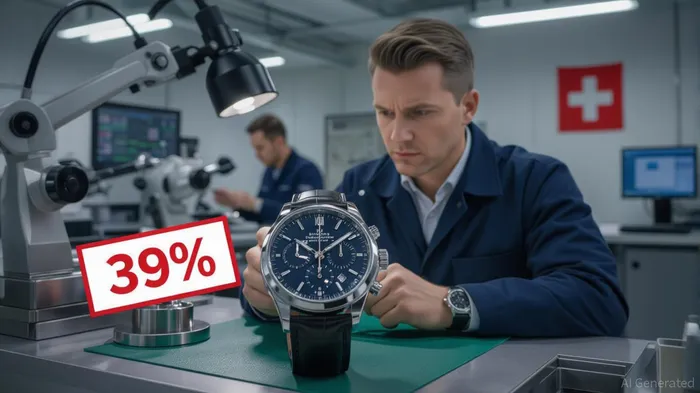
The imposition of a 39% ad valorem tariff on Swiss exports by the U.S. under President Trump's "America First Trade Policy" has created a seismic shift in global trade dynamics. This rate, among the highest in the world, targets Switzerland's most trade-exposed sectors—luxury goods, pharmaceuticals, and precision instruments—while excluding critical categories like pharmaceuticals and gold. For investors, the challenge lies in assessing sector-specific vulnerabilities, corporate resilience, and the potential for diplomatic resolution. Below, we dissect the strategic risks and opportunities.
1. Luxury Goods: The Watchmaking Sector at the Epicenter
Swiss watchmakers, including Rolex, Patek Philippe, and Omega, account for 17% of Switzerland's exports to the U.S., totaling $5.4 billion in 2024. The 39% tariff threatens to erode margins and consumer demand, particularly in a market already grappling with weak global demand and competition from smartwatches.
Strategic Risks:
- Price Elasticity: Analysts predict U.S. retail prices for Swiss watches could rise by 20–30%, deterring price-sensitive consumers.
- Currency Volatility: A strong Swiss franc, exacerbated by the National Bank's zero interest rate policy, amplifies cost pressures.
- Brand Perception: Tariff-driven price hikes risk diluting the exclusivity of luxury brands.
Corporate Responses:
- Market Diversification: Companies like Swatch Group are accelerating expansion into Asia and the Middle East.
- Vertical Integration: Some firms are relocating production to lower-cost regions (e.g., China) to hedge against tariffs.
Investment Implications: Investors should monitor Swatch Group (SUI:SWX) and Richemont (CFR:SWX) for signs of operational agility. Short-term volatility is likely, but long-term value may persist for brands with strong brand equity and diversified markets.
2. Pharmaceuticals: Resilience Amid Regulatory Uncertainty
While pharmaceuticals are exempt from the 39% tariff, the sector faces indirect risks from Trump's rhetoric on drug pricing. Roche and NovartisNVS--, Switzerland's largest pharma firms, have responded with aggressive U.S. investments to preempt regulatory backlash.
Strategic Risks:
- Pricing Pressure: Trump's push for Medicare price negotiations could reduce profit margins.
- Supply Chain Exposure: U.S.-based manufacturing is critical for compliance but costly.
Corporate Responses:
- Capital Allocation: Roche's $50 billion U.S. investment pledge aims to secure regulatory goodwill.
- R&D Focus: Novartis is doubling down on gene therapy and AI-driven drug discovery to maintain competitive advantage.
Investment Implications: Pharma stocks offer relative safety in a volatile trade environment. However, investors should prioritize firms with robust U.S. partnerships and diversified revenue streams.
3. Precision Instruments and Other Sectors: Hidden Vulnerabilities
Swiss precision instruments, machinery, and chocolate face direct tariff exposure. The chocolate industry, for example, could see a 50% cost surge due to the 39% tariff combined with a strong franc.
Strategic Risks:
- Marginal Pricing: Small margins in commodity-like goods (e.g., coffee capsules) leave little room for tariff absorption.
- Supply Chain Complexity: Transshipment penalties under U.S. Executive Order 14316 could disrupt logistics.
Corporate Responses:
- Cost Hedging: Swiss manufacturers are locking in long-term currency swaps to mitigate franc strength.
- Product Innovation: Chocosuisse is promoting premiumization to offset volume declines.
Investment Implications: Precision instrument firms like ABB (ABB:SWX) may benefit from U.S. infrastructure spending, but chocolate exporters like Nestlé (NESN:SWX) require caution.
4. Geopolitical Outlook: Diplomacy or Escalation?
Switzerland has pledged $150 billion in U.S. investments to resolve the trade deficit, but Trump's focus on "reciprocity" remains a hurdle. The August 7 deadline for a negotiated solution adds market volatility.
Key Indicators for Investors:
- Currency Movements: A weaker Swiss franc (CHF/USD) would cushion export sectors but worsen import costs.
- Trade Negotiation Progress: Monitor statements from the Swiss Federal Council and U.S. Treasury.
Conclusion: Strategic Positioning in a High-Risk Environment
For investors, the key is to balance exposure across sectors with varying degrees of tariff resilience:
1. Hedge Currency Risk: Use CHF derivatives to protect against franc strength.
2. Diversify into Pharma: Prioritize pharma over luxury goods for stability.
3. Monitor Diplomatic Timelines: Position for market swings around the August 7 deadline.
While the 39% tariff creates near-term pain, Swiss exporters have historically adapted to trade shocks. For long-term investors, this crisis may present opportunities in undervalued luxury brands and resilient pharma innovators. As always, diversification and active risk management remain paramountPARA-- in an era of geopolitical uncertainty.







Comentarios
Aún no hay comentarios