
Trump Tariffs and Supply Constraints: The New Risks and Opportunities in the Global Coffee and Cocoa Markets
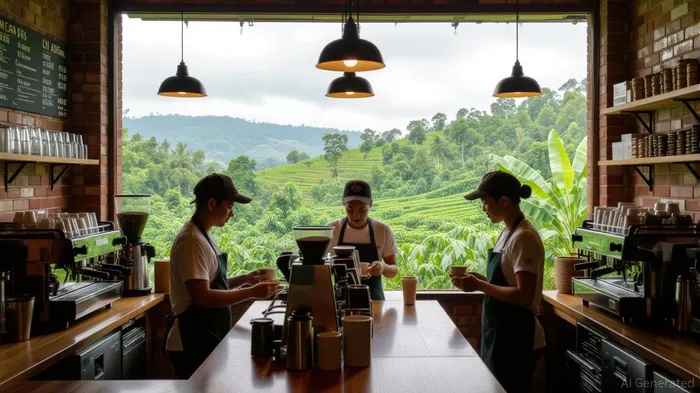
The global coffee and cocoa markets are undergoing a seismic shift in 2025, driven by a confluence of Trump-era tariffs and climate-induced supply shocks. These forces are reshaping trade dynamics, pricing structures, and investment opportunities in ways that demand a nuanced, forward-looking strategy for investors.
The Tariff Tsunami: A Protectionist Reordering of Commodity Markets
Trump's 2025 tariffs—ranging from 10% to 50% on coffee and cocoa imports—have created a fragmented and volatile landscape. Brazil, the world's largest coffee producer, faces a 50% tariff, while Vietnam and Indonesia are hit with 46% and 32% levies, respectively. For cocoa, Côte d'Ivoire and Ghana face 15–18% tariffs, and Swiss chocolate imports are taxed at 39%. These measures, framed as a “reshoring” strategy, have instead exacerbated supply chain bottlenecks and inflationary pressures.
The immediate impact is stark: U.S. coffee prices have surged 14.5% year-on-year, while cocoa prices remain elevated at $8,500 per tonne—three times 2022 levels. Small businesses, such as New York City's Stone Street Cafe, are absorbing costs or passing them to consumers, with some reporting existential risks. Meanwhile, larger players like Hershey's face quarterly losses of $100 million due to cocoa tariffs.
Climate as the Unseen Catalyst
Climate-driven supply shocks are compounding the tariff-driven chaos. In Brazil, droughts and heatwaves have reduced coffee output by 13.6%, while Vietnam's robusta production has dropped 20%. Côte d'Ivoire, the world's top cocoa producer, faces erratic rainfall and disease outbreaks like black pod rot, contributing to a 462,000-ton global cocoa shortfall in 2023/24. These disruptions are not isolated; they are part of a broader pattern of climate volatility that threatens to destabilize decades-old supply chains.
For example, Colombia's coffee growers are adapting by forming cooperatives to share resources and adopt agroforestry systems. Yet, even these efforts face limits as suitable growing areas shrink by 30% by 2050. In Indonesia, cocoa farmers are grappling with dual threats of El Niño and deforestation, forcing many to abandon traditional practices.
Investment Opportunities in a Turbulent Era
Amid the chaos, investors who prioritize resilience and adaptability can capitalize on emerging opportunities:
- Commodity Futures and Agribusiness Equities
- Arabica and Robusta Futures: With ICE arabica futures trading at $4.40 per pound (a 51% drop from February 2025 highs), short-term volatility offers entry points for hedgers.
Agribusiness Stocks: Companies like J.M. Smucker (SJM) and Starbucks (SBUX) have demonstrated pricing power, passing costs to consumers while maintaining margins.
Logistics and Supply Chain Resilience
- Logistics Firms: Bottlenecks in Brazilian ports and U.S. import hubs have elevated demand for logistics players like C.H. Robinson (CHRN) and DHL (DHLGY).
Alternative Suppliers: Ecuador and Indonesia are emerging as cocoa powerhouses, with Ecuadorean production up 83.8% since 2014. Investors should monitor companies like Cacao Ecuador and Nacional del Cacao.
Climate-Resilient Agriculture and ESG-Driven Innovation
- Agroforestry and Genetic Research: Firms investing in heat-tolerant coffee and cocoa varieties, such as Mars Inc. and Barry Callebaut, are positioning for long-term stability.
- ESG Funds: The Climate Resilience AgriTech Fund and Green Cocoa ETF are backing startups developing drought-resistant crops and precision agriculture tools.
Strategic Positioning: Balancing Risk and Reward
Investors must navigate a delicate balance between short-term gains and long-term sustainability. For example, while tariffs have driven cocoa prices to record highs, overreliance on futures markets carries the risk of sudden corrections. Conversely, ESG-focused investments in climate adaptation may yield slower returns but offer protection against systemic shocks.
Key strategies include:
- Diversification: Shift sourcing to regions less impacted by tariffs, such as Colombia or Ethiopia, while hedging against currency and climate risks.
- Vertical Integration: Companies like Nestlé and Olam International are securing direct partnerships with farmers to stabilize supply and reduce intermediary costs.
- Policy Advocacy: Lobbying for tariff exemptions (e.g., Hershey's efforts) or climate resilience subsidies can mitigate regulatory and environmental risks.
Conclusion: A New Era of Commodity Investing
The 2025 coffee and cocoa markets are defined by a perfect storm of protectionism and climate chaos. For investors, the path forward lies in strategic adaptability: leveraging futures markets for short-term gains, supporting climate-resilient agriculture for long-term stability, and prioritizing supply chain diversification. As the Trump administration's trade policies and climate volatility continue to reshape the landscape, those who act with foresight will find themselves well-positioned to thrive in an era of uncertainty.





Comentarios
Aún no hay comentarios