
Trump Tariffs and Structural Reforms: The Dual Challenge Facing South Africa's Growth
The Bureau for Economic Research (BER) of South Africa has issued a stark warning: the nation’s economic growth trajectory hinges on navigating two monumental challenges—U.S. trade policies and domestic structural reforms. With Trump-era tariffs set to take effect in July 2025 and growth forecasts hovering near stagnation, investors must weigh risks and opportunities in a landscape defined by policy uncertainty and systemic inefficiencies.
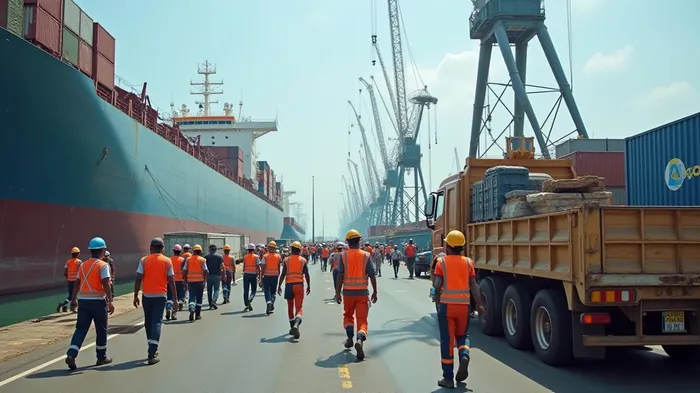
The Tariff Dilemma: 31% and Counting
The Trump administration’s reciprocal tariffs, delayed until July 9, 2025, impose a 31% ad valorem levy on all South African imports unless exempted. This rate, among the highest in modern trade history, targets sectors like electronics, agriculture, and manufacturing, which collectively account for nearly 40% of South Africa’s exports to the U.S. The delay offers a temporary reprieve under the 10% baseline tariff, but businesses must prepare for a July reckoning.
The market’s muted response to the tariff delay underscores investor skepticism. The index has risen just 2.3% year-to-date, lagging behind global peers, as uncertainty over trade and reforms persists.
BER’s Growth Outlook: A Fragile 1.5–2.2%
The BER’s latest analysis paints a cautiously optimistic yet constrained picture. Its 2025 growth forecast of 1.5–2.2% assumes:
- Policy clarity: Accelerated reforms in energy, labor markets, and governance.
- Global stability: Avoidance of a deepening U.S. recession, which would hit South African exports.
- Private investment rebound: A critical missing piece, with capital spending remaining “disappointingly low” despite lower inflation.
However, risks loom large. The BER warns that without structural fixes, growth could average below 2% through 2029—insufficient to address unemployment (32.5%) or fiscal deficits (7.5% of GDP in 2024).
The Reforms Imperative: Four Pillars of Recovery
The BER’s Impumelelo Economic Growth Lab identifies four areas requiring urgent action:
1. Energy Sector: Resolving load-shedding and modernizing Eskom to stabilize electricity supply.
2. Labor Market: Overhauling rigid employment laws to boost competitiveness and jobs.
3. Fiscal Sustainability: Implementing debt rules to curb public spending and SOE bailouts (e.g., Transnet’s $2.2bn debt).
4. Trade Diversification: Expanding ties with Africa and Asia to reduce reliance on U.S. markets.
Progress here could unlock a 3% growth ceiling, but delays threaten to perpetuate stagnation.
Risks and Opportunities: Navigating the Crossroads
Key Risks:
- U.S. Tariff Impact: The 31% levy could slash South African export competitiveness, particularly in sectors like automobiles (subject to Section 232 exemptions) and agriculture.
- Global Slowdown: The IMF’s downward revision of global growth to 2.8% in 2025—driven by a -0.3% contraction in U.S. Q1 GDP—adds pressure.
- Political Gridlock: South Africa’s Government of National Unity (GNU) faces challenges in unifying reform agendas amid internal tensions.
Investment Opportunities:
- Equity Plays: Companies with exposure to domestic demand, such as retailers (e.g., Woolworths) and healthcare providers (e.g., Life Healthcare), may outperform if inflation stays low.
- Currency Plays: The ZAR/USD exchange rate, currently near 19.0, could strengthen if reforms stabilize confidence.
- Debt Markets: South African bonds (e.g., 10-year government notes yielding 10.5%) offer high yields amid fiscal challenges, though carry currency risk.
Conclusion: A Delicate Balancing Act
South Africa’s growth prospects in 2025 are a tale of two forces: external tariffs and internal reforms. With the 31% U.S. tariffs looming and structural bottlenecks unresolved, the BER’s 2.2% growth target is achievable—but only if policymakers prioritize energy efficiency, labor market flexibility, and fiscal discipline.
Investors should remain cautious but opportunistic. Sectors insulated from tariffs (e.g., domestic services) and companies with global supply chain flexibility (e.g., mining giants like Anglo American) may weather the storm. However, a failure to address systemic issues or a further escalation in trade tensions could push growth below 1%, deepening economic distress.
The path forward is clear: South Africa must reform its way out of stagnation while hedging against tariff fallout. For investors, patience—and a sharp focus on fundamentals—will be rewarded in this high-risk, high-reward environment.







Comentarios
Aún no hay comentarios