
Trump Tariffs Spark Market Turmoil, but Investors Stay Calm
Generado por agente de IATheodore Quinn
miércoles, 5 de febrero de 2025, 4:34 am ET2 min de lectura
BF.B--
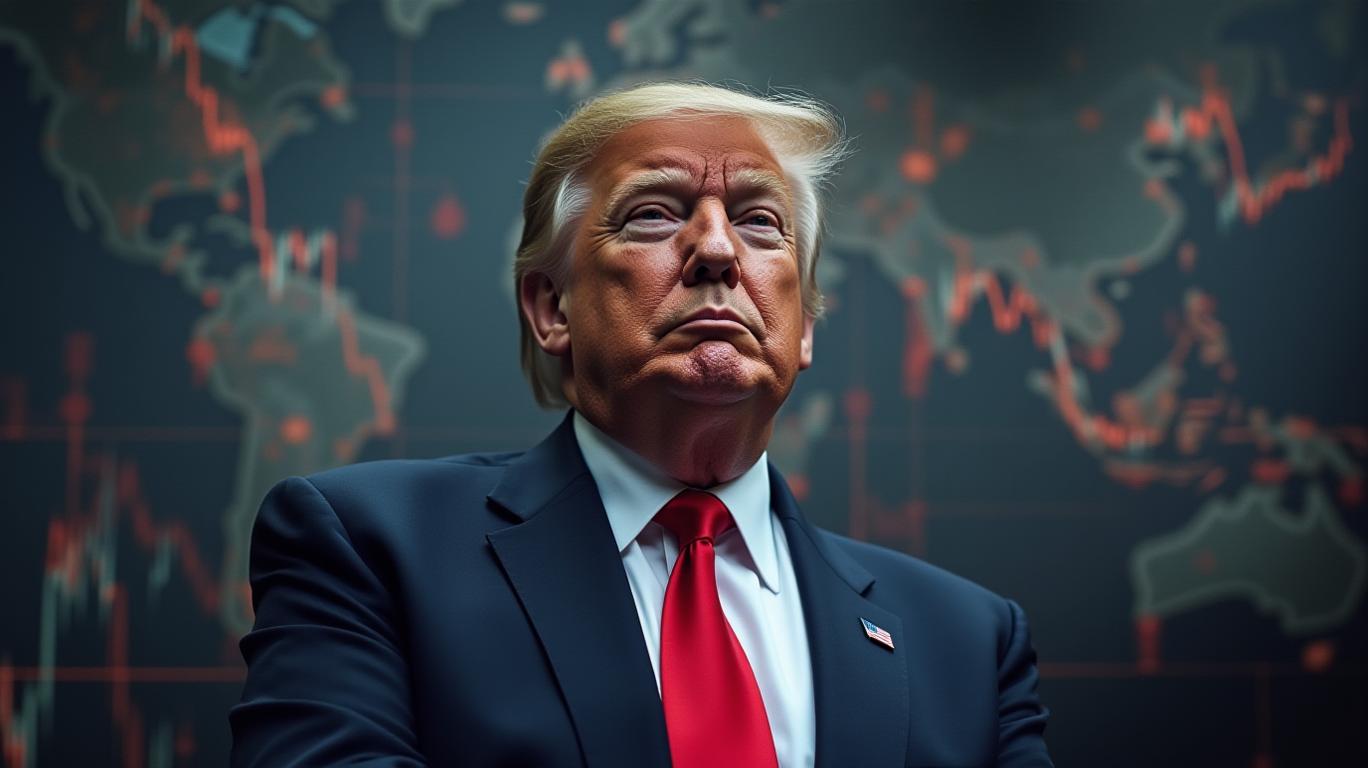
The threat of a punishing trade war sent Wall Street on a roller coaster Monday, with U.S. stocks initially falling sharply on worries about President Donald Trump’s tariffs. The S&P 500 ended up falling 0.8% after Asian and European indexes logged worse drops. The Dow Jones Industrial Average lost 122 points, or 0.3%, and the Nasdaq composite sank 1.2%.
The fear hanging over Wall Street was that Trump’s tariffs could push up prices for groceries, electronics, and all kinds of other bills for U.S. households, adding upward pressure on a U.S. inflation rate that’s largely been slowing since its peak three summers ago. Stubbornly high or accelerating inflation could keep the Federal Reserve from cutting interest rates, which it began doing in September to give the U.S. economy a boost. Profits for U.S. companies, meanwhile, could face downward pressure from slowing global trade.
But U.S. stocks pared their losses after Mexican President Claudia Sheinbaum said tariffs on her country’s goods are on hold for a month following a conversation with Trump. The Dow even turned briefly higher in the afternoon for a small gain. After the U.S. stock market closed for the day, Canadian Prime Minister Justin Trudeau said a conversation he had with Trump also led to a 30-day pause.
Much of Wall Street had been hoping Trump’s talk of tariffs through the presidential campaign was just that, talk, and an opening point for negotiations with U.S. trading partners instead of a permanent policy. Monday’s swivels on Mexico and Canada leave open the question of whether Trump is using tariffs as merely a tool for negotiations.
But when traders came into Monday morning thinking tariffs were imminent, fear rose quickly about the potential for an escalating trade war that could damage economies worldwide, including the United States. “Living in the Midwest, I might feel the trade war soonest and most,” said Brian Jacobsen, chief economist at Annex Wealth Management, because of how much crude oil flows over the northern U.S. border to make gasoline. “Our refiners can’t easily switch away from Canadian crude.”
Crude oil prices swung Monday amid the uncertainty. The price for a barrel of benchmark U.S. crude went from $72.53 on Friday to nearly $75 before the U.S. stock market opened Monday to briefly falling back toward $72.
Trump himself warned Americans they may feel “some pain” from the tariffs, which he said would be “worth the price” to make America great again. He also said Sunday night that import taxes will “definitely happen” with the European Union and possibly with the United Kingdom as well.
Some on Wall Street remain skeptical about how long a trade war may last, especially considering how much attention Trump pays to the stock market. An escalating trade war can send stocks skidding, as Monday morning quickly demonstrated, and “significant stock market volatility could lead to a change in approach,” said Solita Marcelli, chief investment officer, Americas, at UBS Global Wealth Management.
Constellation Brands, the company that sells Modelo and Corona beers in the United States, fell 3.5%. Best Buy, which sells electronics made around the world, lost 2.4%. Brown-Forman, the company behind Jack Daniel’s that sells alcohol in Canada, fell 3.3%.
All told, the S&P 500 fell 45.96 points to 5,994.57. The Dow dropped 122.75 points to 44,421.91, and the Nasdaq composite sank 235.49 to 19,391.96.
As an investor, it’s essential to stay calm and focused on the long-term perspective during market volatility caused by geopolitical events like Trump’s tariffs. While short-term market fluctuations can be unsettling, maintaining a long-term perspective allows investors to make strategic decisions based on the fundamentals of the companies and industries they invest in. By doing so, investors can better navigate market volatility and avoid knee-jerk reactions to short-term market fluctuations.
JACK--
STZ--
UBS--
WTRG--
The threat of a punishing trade war sent Wall Street on a roller coaster Monday, with U.S. stocks initially falling sharply on worries about President Donald Trump’s tariffs. The S&P 500 ended up falling 0.8% after Asian and European indexes logged worse drops. The Dow Jones Industrial Average lost 122 points, or 0.3%, and the Nasdaq composite sank 1.2%.
The fear hanging over Wall Street was that Trump’s tariffs could push up prices for groceries, electronics, and all kinds of other bills for U.S. households, adding upward pressure on a U.S. inflation rate that’s largely been slowing since its peak three summers ago. Stubbornly high or accelerating inflation could keep the Federal Reserve from cutting interest rates, which it began doing in September to give the U.S. economy a boost. Profits for U.S. companies, meanwhile, could face downward pressure from slowing global trade.
But U.S. stocks pared their losses after Mexican President Claudia Sheinbaum said tariffs on her country’s goods are on hold for a month following a conversation with Trump. The Dow even turned briefly higher in the afternoon for a small gain. After the U.S. stock market closed for the day, Canadian Prime Minister Justin Trudeau said a conversation he had with Trump also led to a 30-day pause.
Much of Wall Street had been hoping Trump’s talk of tariffs through the presidential campaign was just that, talk, and an opening point for negotiations with U.S. trading partners instead of a permanent policy. Monday’s swivels on Mexico and Canada leave open the question of whether Trump is using tariffs as merely a tool for negotiations.
But when traders came into Monday morning thinking tariffs were imminent, fear rose quickly about the potential for an escalating trade war that could damage economies worldwide, including the United States. “Living in the Midwest, I might feel the trade war soonest and most,” said Brian Jacobsen, chief economist at Annex Wealth Management, because of how much crude oil flows over the northern U.S. border to make gasoline. “Our refiners can’t easily switch away from Canadian crude.”
Crude oil prices swung Monday amid the uncertainty. The price for a barrel of benchmark U.S. crude went from $72.53 on Friday to nearly $75 before the U.S. stock market opened Monday to briefly falling back toward $72.
Trump himself warned Americans they may feel “some pain” from the tariffs, which he said would be “worth the price” to make America great again. He also said Sunday night that import taxes will “definitely happen” with the European Union and possibly with the United Kingdom as well.
Some on Wall Street remain skeptical about how long a trade war may last, especially considering how much attention Trump pays to the stock market. An escalating trade war can send stocks skidding, as Monday morning quickly demonstrated, and “significant stock market volatility could lead to a change in approach,” said Solita Marcelli, chief investment officer, Americas, at UBS Global Wealth Management.
Constellation Brands, the company that sells Modelo and Corona beers in the United States, fell 3.5%. Best Buy, which sells electronics made around the world, lost 2.4%. Brown-Forman, the company behind Jack Daniel’s that sells alcohol in Canada, fell 3.3%.
All told, the S&P 500 fell 45.96 points to 5,994.57. The Dow dropped 122.75 points to 44,421.91, and the Nasdaq composite sank 235.49 to 19,391.96.
As an investor, it’s essential to stay calm and focused on the long-term perspective during market volatility caused by geopolitical events like Trump’s tariffs. While short-term market fluctuations can be unsettling, maintaining a long-term perspective allows investors to make strategic decisions based on the fundamentals of the companies and industries they invest in. By doing so, investors can better navigate market volatility and avoid knee-jerk reactions to short-term market fluctuations.

Divulgación editorial y transparencia de la IA: Ainvest News utiliza tecnología avanzada de Modelos de Lenguaje Largo (LLM) para sintetizar y analizar datos de mercado en tiempo real. Para garantizar los más altos estándares de integridad, cada artículo se somete a un riguroso proceso de verificación con participación humana.
Mientras la IA asiste en el procesamiento de datos y la redacción inicial, un miembro editorial profesional de Ainvest revisa, verifica y aprueba de forma independiente todo el contenido para garantizar su precisión y cumplimiento con los estándares editoriales de Ainvest Fintech Inc. Esta supervisión humana está diseñada para mitigar las alucinaciones de la IA y garantizar el contexto financiero.
Advertencia sobre inversiones: Este contenido se proporciona únicamente con fines informativos y no constituye asesoramiento profesional de inversión, legal o financiero. Los mercados conllevan riesgos inherentes. Se recomienda a los usuarios que realicen una investigación independiente o consulten a un asesor financiero certificado antes de tomar cualquier decisión. Ainvest Fintech Inc. se exime de toda responsabilidad por las acciones tomadas con base en esta información. ¿Encontró un error? Reportar un problema


SOBRE NOSOTROS
Nuestra historiaAutores de noticiasBase de conocimientosPolítica de privacidadTérmino de usoDescargo de responsabilidad de corretaje de tercerosTérminos de uso de AIMEDivulgaciones de riesgos de AInvest AICarrerasCONTÁCTENOS
Email: support@ainvest.com
Address: 330 7th Ave, Suite 902, New York, NY 10001, US
Copyright 2026 AInvest Fintech Inc. All rights reserved.


Comentarios
Aún no hay comentarios