
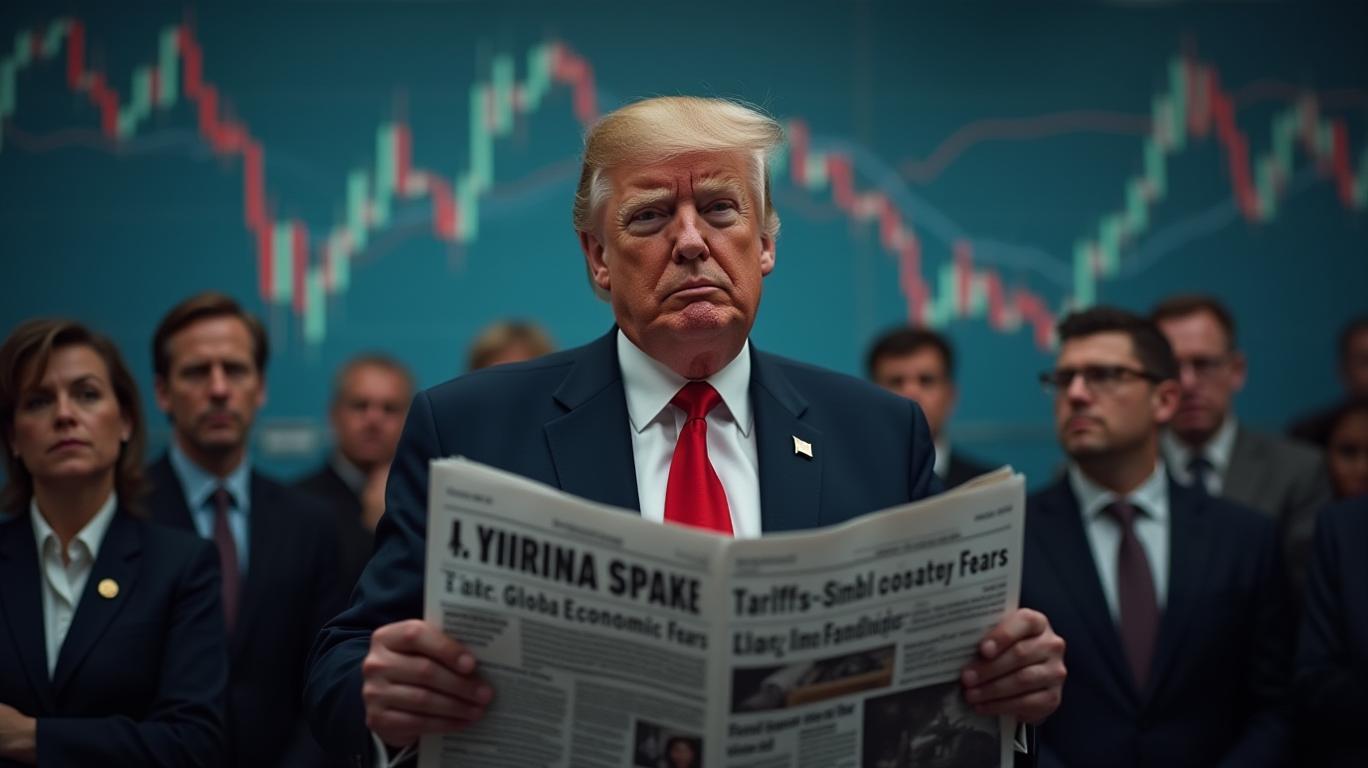
Trump's Tariffs Spark Global Economic Fears, Echo Smoot-Hawley Mistake
Jeremy Siegel, a finance professor emeritus at the Wharton School of the University of Pennsylvania, has described President Trump's tariffs as the "biggest policy mistake in 95 years." This assessment is rooted in the historical context of the Smoot-Hawley Tariff Act of 1930, a protectionist trade measure that some economists blame for exacerbating the Great Depression.
Siegel, in a recent interview, expressed his surprise at Trump's failure to learn from the historical lessons of the Smoot-Hawley Tariff. He argued that Trump's tariffs could be even more detrimental than the Smoot-Hawley Tariff because trade plays a significantly larger role in the global economy today compared to nearly a century ago.
The imposition of tariffs and the ensuing global trade war have created significant turmoil on Wall Street, with stock markets experiencing sharp declines over consecutive trading days. Analysts have uniformly criticized Trump's new tariffs, with some describing them as worse than the worst-case scenarios. The economic fallout has led to heightened concerns about a potential global economic recession.
Siegel, who remains invested in the market as a long-term investor, acknowledged the stormy outlook for traders as long as tariffs persist. He echoed the sentiments of other economists who view the tariff system as a form of self-inflicted harm on the U.S. economy.
Despite Trump's apparent disregard for the lessons of the Smoot-Hawley Tariff, Siegel believes that the Federal Reserve has learned from history. He anticipates that the central bank will be compelled to lower interest rates in response to the global economic shock. "I think, because of this global shock, they will have to lower rates," Siegel stated. "Inflation will be higher."







Comentarios
Aún no hay comentarios