
Trump Tariffs Slam Auto Stocks; Dow Jones Rebounds After 300-Point Slide
Generado por agente de IATheodore Quinn
jueves, 27 de marzo de 2025, 11:12 am ET2 min de lectura
HMC--
The stock market today was a rollercoaster ride, with President Trump's announcement of a 25% tariff on imported cars and auto parts sending shockwaves through the automotive sector. The Dow Jones Industrial Average (DJIA) initially slid more than 300 points but managed to rebound, closing at 42,454.79, down 0.3%. The S&P 500 sank 1.1% to 5,712.20, and the Nasdaq composite dropped 2% to 17,889.01. The tariffs, set to take effect on or after April 3, have sparked fears of higher car prices and disrupted supply chains, leading to a significant sell-off in auto stocks.
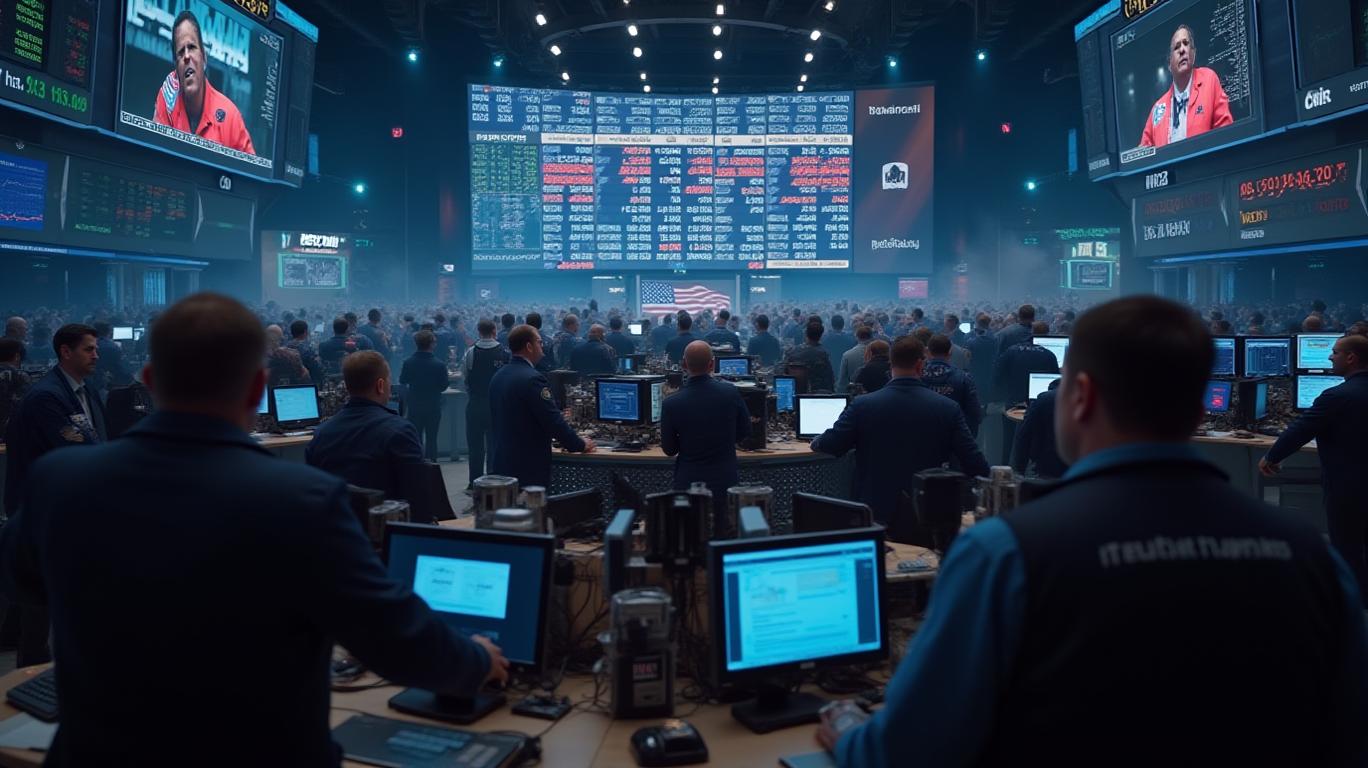
The impact was most pronounced in foreign automakers, which rely heavily on the U.S. market. Shares in Germany’s Volkswagen, Europe’s largest automaker, fell 2 percent. Other German carmakers like Mercedes-Benz and BMW dropped 2 to 4 percent in early European trading. StellantisSTLA--, the parent of Chrysler, Fiat, Jeep, Peugeot, and Ram, saw its European shares fall about 4 percent. Japanese automakers Toyota MotorTM--, Honda MotorHMC--, and Nissan Motor all fell about 2 percent in Tokyo. South Korea’s Hyundai Motor and Kia saw even steeper drops, with shares falling 3 to 5 percent.
Domestic automakers were not spared from the turmoil. General Motors shares were down more than 6 percent in premarket trading, and Ford shares were 3 percent lower. The complex supply chains of these companies, which source many components from around the world, will be disrupted by the tariffs, leading to increased costs and potential production delays.
Tesla, which makes all its cars in the United States, was less affected by the tariffs. However, Elon Musk noted that the tariff impact on Tesla is still significant, indicating that even domestic manufacturers with strong U.S. production capabilities will face challenges. Tesla's stock performance has been volatile, with shares dropping 5.6% to extend its loss for 2025 to 32.6%.
The tariffs are expected to raise the price of imported cars by $5,000 to $15,000, according to Goldman Sachs analysts. For U.S.-made cars with roughly 50% of parts from foreign sources, the tariff could raise prices by $3,000 to $8,000. This price increase could deter consumers from purchasing new vehicles, leading to a decline in sales for automakers that rely heavily on imports. The tariffs could also affect the demand for domestically produced vehicles, as nearly 60 percent of the parts in vehicles assembled in the United States are imported.
The announcement of the tariffs has already led to a slump in auto stocks, with shares in automakers around the world tumbling. This volatility could make it difficult for automakers to plan for the future and make long-term investments, potentially hindering the growth of the automotive sector in the coming years. The major Detroit carmakers, which build some of their vehicles in Canada and Mexico, were also hit hard. Shares in General Motors were down more than 6 percent in premarket trading and Ford shares were 3 percent lower.
The tariffs have introduced significant uncertainty into the market, with businesses potentially holding back on spending to see how the situation plays out. This could lead to a slowdown in economic growth and further impact the profitability of automakers. The S&P 500 sank 1.1% to 5,712.20, and the Dow Jones Industrial Average swung from a gain of 230 points in the morning to a loss of 132 points, or 0.3%, closing at 42,454.79. Weakness for Big Tech sent the Nasdaq composite to a market-leading drop of 2%, at 17,889.01. The group of dominant stocks known as the “Magnificent Seven” has been at the center of the U.S. stock market’s recent sell-off, which earlier this month took the S&P 500 10% below its all-time high for its first “correction” since 2023. Big Tech had rocketed in earlier years amid a frenzy around artificial-intelligence technology, and critics said their prices rose too quickly compared with their already rapidly growing profits.
In conclusion, the 25% tariff on imported cars and auto parts is likely to have a profound impact on the long-term profitability and stock performance of major automakers. The increased costs and potential disruptions to global supply chains will challenge both domestic and foreign automakers, leading to higher prices, reduced demand, and market volatility. The tariffs could also influence consumer behavior by encouraging them to purchase used vehicles instead of new ones, further impacting the overall performance of the automotive sector in the coming years.
STLA--
TM--
The stock market today was a rollercoaster ride, with President Trump's announcement of a 25% tariff on imported cars and auto parts sending shockwaves through the automotive sector. The Dow Jones Industrial Average (DJIA) initially slid more than 300 points but managed to rebound, closing at 42,454.79, down 0.3%. The S&P 500 sank 1.1% to 5,712.20, and the Nasdaq composite dropped 2% to 17,889.01. The tariffs, set to take effect on or after April 3, have sparked fears of higher car prices and disrupted supply chains, leading to a significant sell-off in auto stocks.
The impact was most pronounced in foreign automakers, which rely heavily on the U.S. market. Shares in Germany’s Volkswagen, Europe’s largest automaker, fell 2 percent. Other German carmakers like Mercedes-Benz and BMW dropped 2 to 4 percent in early European trading. StellantisSTLA--, the parent of Chrysler, Fiat, Jeep, Peugeot, and Ram, saw its European shares fall about 4 percent. Japanese automakers Toyota MotorTM--, Honda MotorHMC--, and Nissan Motor all fell about 2 percent in Tokyo. South Korea’s Hyundai Motor and Kia saw even steeper drops, with shares falling 3 to 5 percent.
Domestic automakers were not spared from the turmoil. General Motors shares were down more than 6 percent in premarket trading, and Ford shares were 3 percent lower. The complex supply chains of these companies, which source many components from around the world, will be disrupted by the tariffs, leading to increased costs and potential production delays.
Tesla, which makes all its cars in the United States, was less affected by the tariffs. However, Elon Musk noted that the tariff impact on Tesla is still significant, indicating that even domestic manufacturers with strong U.S. production capabilities will face challenges. Tesla's stock performance has been volatile, with shares dropping 5.6% to extend its loss for 2025 to 32.6%.
The tariffs are expected to raise the price of imported cars by $5,000 to $15,000, according to Goldman Sachs analysts. For U.S.-made cars with roughly 50% of parts from foreign sources, the tariff could raise prices by $3,000 to $8,000. This price increase could deter consumers from purchasing new vehicles, leading to a decline in sales for automakers that rely heavily on imports. The tariffs could also affect the demand for domestically produced vehicles, as nearly 60 percent of the parts in vehicles assembled in the United States are imported.
The announcement of the tariffs has already led to a slump in auto stocks, with shares in automakers around the world tumbling. This volatility could make it difficult for automakers to plan for the future and make long-term investments, potentially hindering the growth of the automotive sector in the coming years. The major Detroit carmakers, which build some of their vehicles in Canada and Mexico, were also hit hard. Shares in General Motors were down more than 6 percent in premarket trading and Ford shares were 3 percent lower.
The tariffs have introduced significant uncertainty into the market, with businesses potentially holding back on spending to see how the situation plays out. This could lead to a slowdown in economic growth and further impact the profitability of automakers. The S&P 500 sank 1.1% to 5,712.20, and the Dow Jones Industrial Average swung from a gain of 230 points in the morning to a loss of 132 points, or 0.3%, closing at 42,454.79. Weakness for Big Tech sent the Nasdaq composite to a market-leading drop of 2%, at 17,889.01. The group of dominant stocks known as the “Magnificent Seven” has been at the center of the U.S. stock market’s recent sell-off, which earlier this month took the S&P 500 10% below its all-time high for its first “correction” since 2023. Big Tech had rocketed in earlier years amid a frenzy around artificial-intelligence technology, and critics said their prices rose too quickly compared with their already rapidly growing profits.
In conclusion, the 25% tariff on imported cars and auto parts is likely to have a profound impact on the long-term profitability and stock performance of major automakers. The increased costs and potential disruptions to global supply chains will challenge both domestic and foreign automakers, leading to higher prices, reduced demand, and market volatility. The tariffs could also influence consumer behavior by encouraging them to purchase used vehicles instead of new ones, further impacting the overall performance of the automotive sector in the coming years.

Divulgación editorial y transparencia de la IA: Ainvest News utiliza tecnología avanzada de Modelos de Lenguaje Largo (LLM) para sintetizar y analizar datos de mercado en tiempo real. Para garantizar los más altos estándares de integridad, cada artículo se somete a un riguroso proceso de verificación con participación humana.
Mientras la IA asiste en el procesamiento de datos y la redacción inicial, un miembro editorial profesional de Ainvest revisa, verifica y aprueba de forma independiente todo el contenido para garantizar su precisión y cumplimiento con los estándares editoriales de Ainvest Fintech Inc. Esta supervisión humana está diseñada para mitigar las alucinaciones de la IA y garantizar el contexto financiero.
Advertencia sobre inversiones: Este contenido se proporciona únicamente con fines informativos y no constituye asesoramiento profesional de inversión, legal o financiero. Los mercados conllevan riesgos inherentes. Se recomienda a los usuarios que realicen una investigación independiente o consulten a un asesor financiero certificado antes de tomar cualquier decisión. Ainvest Fintech Inc. se exime de toda responsabilidad por las acciones tomadas con base en esta información. ¿Encontró un error? Reportar un problema


SOBRE NOSOTROS
Nuestra historiaAutores de noticiasBase de conocimientosPolítica de privacidadTérmino de usoDescargo de responsabilidad de corretaje de tercerosTérminos de uso de AIMEDivulgaciones de riesgos de AInvest AICarrerasCONTÁCTENOS
Email: support@ainvest.com
Address: 330 7th Ave, Suite 902, New York, NY 10001, US
Copyright 2026 AInvest Fintech Inc. All rights reserved.


Comentarios
Aún no hay comentarios