
Trump Tariffs' Legal Labyrinth: A Strategic Guide to Supply Chain Resilience
The U.S. Court of Appeals' stay on May 29, 2025, has bought manufacturers and investors a temporary reprieve from the collapse of Trump-era tariffs—but the clock is ticking. With a final ruling expected by mid-June, the legal uncertainty surrounding these tariffs has created a high-stakes game of sector roulette. For investors, this is no time to bet blindly: the path to profit lies in parsing vulnerabilities and opportunities across industries. Here's how to navigate it.
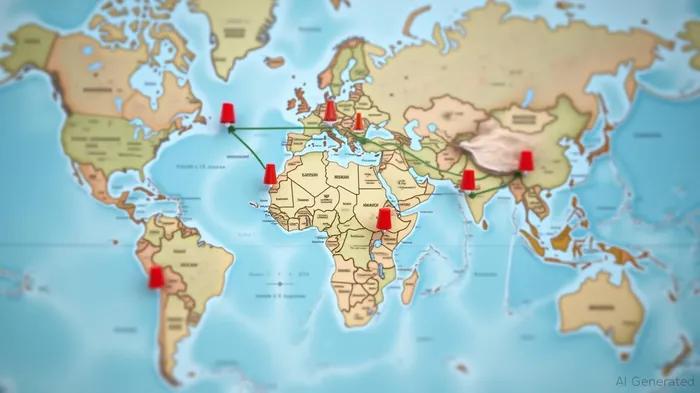
The Legal Clock is Ticking: Near-Term Risks
The appeals court's stay keeps tariffs at 10%–30% on imports until June, but the underlying legal battle rages. The administration must defend its claim that tariffs are essential to national security—a shaky argument as courts increasingly side with plaintiffs. By mid-June, one of three outcomes loom:
1. Tariffs are overturned, triggering immediate refunds and supply chain chaos as companies rebalance.
2. A partial suspension, leaving key sectors exposed (e.g., steel, autos).
3. Full retention, locking in prolonged trade wars.
Investors must act now to insulate portfolios from this volatility.
The Vulnerable: Sectors on the Brink
The tariffs have carved deep fissures in manufacturing. Here's where to avoid at all costs:
1. Agriculture (e.g., soybeans, beef): Retaliatory tariffs from China and the EU have obliterated export markets. Over 400,000 jobs were lost in 2024 alone, and no recovery is in sight.
2. China-Dependent Electronics (e.g., Qualcomm): Firms reliant on Chinese supply chains face dual blows: retaliatory tariffs and forced diversification costs. Qualcomm's 2024 revenue dropped 15% as it scrambled to shift production.
3. Steel & Aluminum Commodity Producers: Low-margin, bulk producers (not niche players) are trapped between rising input costs and stagnant demand.
The Opportunities: Sectors Building Resilience
The smart money is flowing to firms that have already diversified or restructured:
1. Niche Steel & Specialty Materials:
Firms like AK Steel (AKS) and Nucor (NUE) are thriving by focusing on high-margin segments—think aerospace-grade alloys and wind turbine composites. Their job growth in specialized markets exceeds 10% annually, while their stocks trade at a 50% discount to historical averages.
2. Automation & Robotics Leaders:
Tariffs on semiconductors and rare earth minerals have turbocharged automation adoption. Teradyne (TER) (robotics testing) and Cadence (CDNS) (AI-driven design tools) are riding a 35% surge in industrial robot installations since 2022. Both report 20%+ revenue growth with minimal tariff exposure.
3. USMCA Nearshoring Winners:
Auto giants like Ford and Toyota are reshoring critical parts to Mexico and the U.S. under the USMCA. This shift shields them from 25% Section 232 tariffs and positions them to capitalize on a potential post-2025 trade détente.
The Long Game: Post-2025 Trade Realities
Regardless of June's ruling, the era of globalized supply chains is dead. Here's what's coming:
- Tariffs as a permanent tool: Even if Trump's tariffs fall, expect future administrations to wield IEEPA for “national emergencies.”
- Regional blocs dominate: The USMCA and Indo-Pacific partnerships will replace China as key trade hubs.
- Automation eats margin volatility: Companies with robotics-driven agility will outpace competitors.
Act Now—Before the June Ruling:
- Buy: AKS, NUE, TER, CDNS.
- Short: Agriculture ETFs (MOO), China-dependent hardware stocks (QCOM).
Final Call to Action
The mid-June deadline is a clarion bell. Investors who bet on sectors with diversified, localized supply chains—and flee those trapped in tariff crossfires—will dominate post-2025 markets. The legal stay is a fleeting window: act decisively before the gavel falls.
The next 30 days will decide who wins and who loses. Position wisely.







Comentarios
Aún no hay comentarios