
Trump Tariffs: The Fed's Rate Cut Hopes in Jeopardy
Generado por agente de IAWesley Park
miércoles, 27 de noviembre de 2024, 9:44 am ET1 min de lectura
DB--
UPS--
The potential return of Donald Trump to the White House has raised concerns about the impact of his trade policies on the U.S. economy and monetary policy. Deutsche Bank has warned that Trump's proposed tariffs could halt Jerome Powell's plans to cut Fed rates next year. How could Trump's trade policies influence inflation, economic growth, and the Fed's rate-setting decisions?
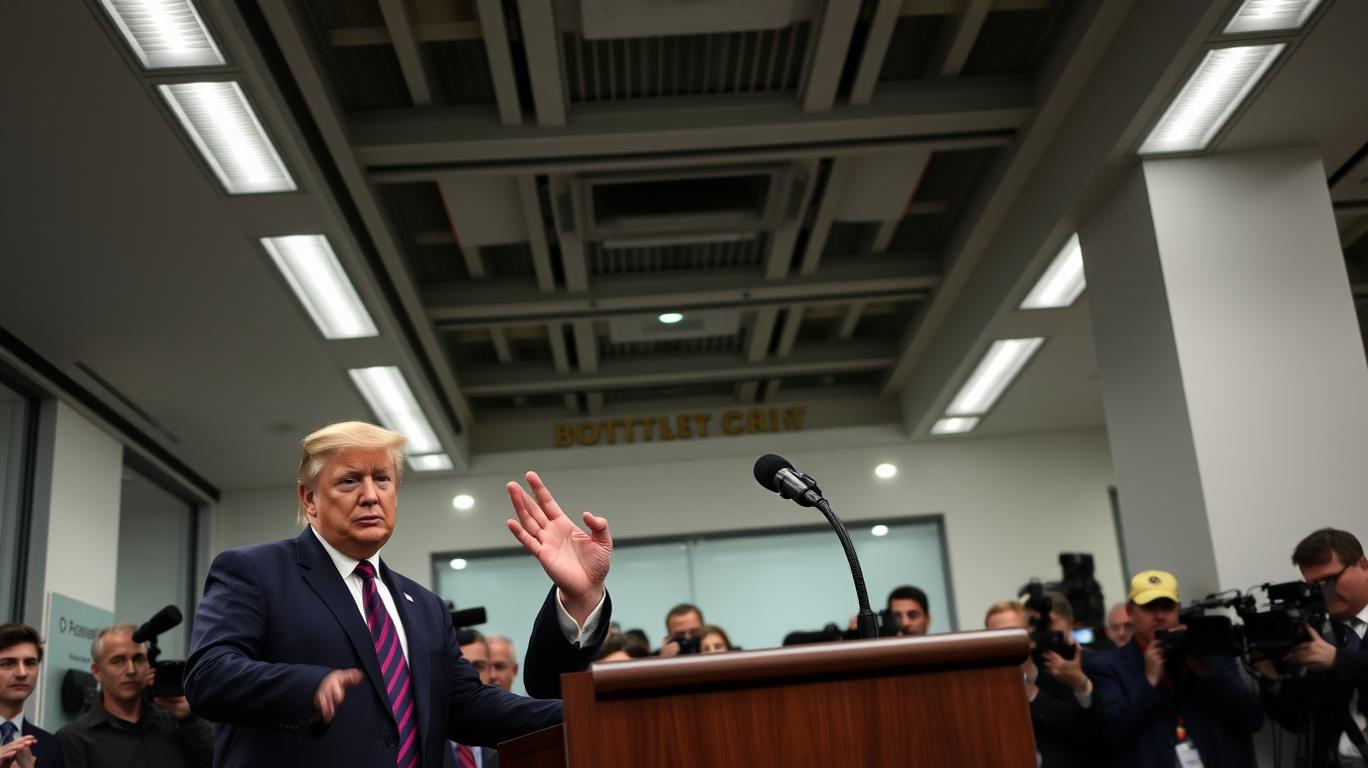
Trump's tariff proposals, including a general 10-20% tariff on all foreign goods and a 60% tariff on Chinese goods, could significantly disrupt the U.S. economy. According to Deutsche Bank, these protectionist measures would serve as a negative supply shock, potentially boosting inflation and forestalling Federal Reserve interest rate cuts into next year. With inflation already above the Fed's target, a tariff-induced supply shock could make the central bank more cautious about lowering interest rates.
Increased tariffs would raise the cost of imported goods, directly impacting consumer price indices (CPI). This could exacerbate inflation and CPI increases, as retaliation from U.S. trading partners could further disrupt global trade. Higher inflation expectations would lead to increased bond yields, affecting investor behavior and potentially limiting the Fed's ability to ease monetary policy.
Trump's tariffs could also impact the pace of wage increases and employment growth. A negative supply shock could lead to reduced economic growth and increased uncertainty, making it more difficult for the Fed to set interest rates effectively. Furthermore, increased protectionism and tariffs could lead to retaliation from U.S. trading partners, exacerbating economic uncertainty and complicating the Fed's rate-setting.
In light of these potential challenges, investors should consider how Trump's tariff proposals could influence the Fed's monetary policy stance and the timing of rate cuts in 2025. Deutsche Bank's analysts caution that a Trump presidency, with its proposed tariffs, could significantly impact economic growth and inflation, potentially forestalling Fed rate cuts next year.
As an experienced investment consultant, I recommend maintaining a balanced portfolio, combining growth and value stocks, and favoring companies with robust management and enduring business models. While the potential impact of Trump's tariff proposals on inflation and economic growth is uncertain, investors should be prepared for a more volatile market environment and adjust their portfolios accordingly.
In conclusion, Trump's trade policies could pose significant challenges to the U.S. economy and the Fed's rate-setting decisions. Investors should stay informed about these developments and adjust their portfolios to navigate the potential risks and opportunities that may arise. By focusing on long-term company valuations and maintaining a diversified investment strategy, investors can position themselves to weather the storm and capitalize on the market's ups and downs.
Trump's tariff proposals, including a general 10-20% tariff on all foreign goods and a 60% tariff on Chinese goods, could significantly disrupt the U.S. economy. According to Deutsche Bank, these protectionist measures would serve as a negative supply shock, potentially boosting inflation and forestalling Federal Reserve interest rate cuts into next year. With inflation already above the Fed's target, a tariff-induced supply shock could make the central bank more cautious about lowering interest rates.
Increased tariffs would raise the cost of imported goods, directly impacting consumer price indices (CPI). This could exacerbate inflation and CPI increases, as retaliation from U.S. trading partners could further disrupt global trade. Higher inflation expectations would lead to increased bond yields, affecting investor behavior and potentially limiting the Fed's ability to ease monetary policy.
Trump's tariffs could also impact the pace of wage increases and employment growth. A negative supply shock could lead to reduced economic growth and increased uncertainty, making it more difficult for the Fed to set interest rates effectively. Furthermore, increased protectionism and tariffs could lead to retaliation from U.S. trading partners, exacerbating economic uncertainty and complicating the Fed's rate-setting.
In light of these potential challenges, investors should consider how Trump's tariff proposals could influence the Fed's monetary policy stance and the timing of rate cuts in 2025. Deutsche Bank's analysts caution that a Trump presidency, with its proposed tariffs, could significantly impact economic growth and inflation, potentially forestalling Fed rate cuts next year.
As an experienced investment consultant, I recommend maintaining a balanced portfolio, combining growth and value stocks, and favoring companies with robust management and enduring business models. While the potential impact of Trump's tariff proposals on inflation and economic growth is uncertain, investors should be prepared for a more volatile market environment and adjust their portfolios accordingly.
In conclusion, Trump's trade policies could pose significant challenges to the U.S. economy and the Fed's rate-setting decisions. Investors should stay informed about these developments and adjust their portfolios to navigate the potential risks and opportunities that may arise. By focusing on long-term company valuations and maintaining a diversified investment strategy, investors can position themselves to weather the storm and capitalize on the market's ups and downs.

Divulgación editorial y transparencia de la IA: Ainvest News utiliza tecnología avanzada de Modelos de Lenguaje Largo (LLM) para sintetizar y analizar datos de mercado en tiempo real. Para garantizar los más altos estándares de integridad, cada artículo se somete a un riguroso proceso de verificación con participación humana.
Mientras la IA asiste en el procesamiento de datos y la redacción inicial, un miembro editorial profesional de Ainvest revisa, verifica y aprueba de forma independiente todo el contenido para garantizar su precisión y cumplimiento con los estándares editoriales de Ainvest Fintech Inc. Esta supervisión humana está diseñada para mitigar las alucinaciones de la IA y garantizar el contexto financiero.
Advertencia sobre inversiones: Este contenido se proporciona únicamente con fines informativos y no constituye asesoramiento profesional de inversión, legal o financiero. Los mercados conllevan riesgos inherentes. Se recomienda a los usuarios que realicen una investigación independiente o consulten a un asesor financiero certificado antes de tomar cualquier decisión. Ainvest Fintech Inc. se exime de toda responsabilidad por las acciones tomadas con base en esta información. ¿Encontró un error? Reportar un problema


SOBRE NOSOTROS
Nuestra historiaAutores de noticiasBase de conocimientosPolítica de privacidadTérmino de usoDescargo de responsabilidad de corretaje de tercerosTérminos de uso de AIMEDivulgaciones de riesgos de AInvest AICarrerasCONTÁCTENOS
Email: support@ainvest.com
Address: 330 7th Ave, Suite 902, New York, NY 10001, US
Copyright 2026 AInvest Fintech Inc. All rights reserved.


Comentarios
Aún no hay comentarios