
Trump's Tariffs: A Double-Edged Sword for Main Street and Wall Street
Generado por agente de IATheodore Quinn
lunes, 7 de abril de 2025, 7:20 pm ET1 min de lectura
WSML--
The S&P 500 fell 0.7% and the Dow Jones dropped 342 points in Monday's volatile session marked by record intraday swings. The market turmoil is not just a Wall Street phenomenon; it's impacting Main Street as well. BlackRockWSML-- CEO Larry Fink made this clear during his appearance at the Economic Club of New York, stating that the tariffs are "going to freeze more and more consumption." This sentiment is echoed by other market experts, who warn of a potential 20% decline in the stock market and a looming recession.
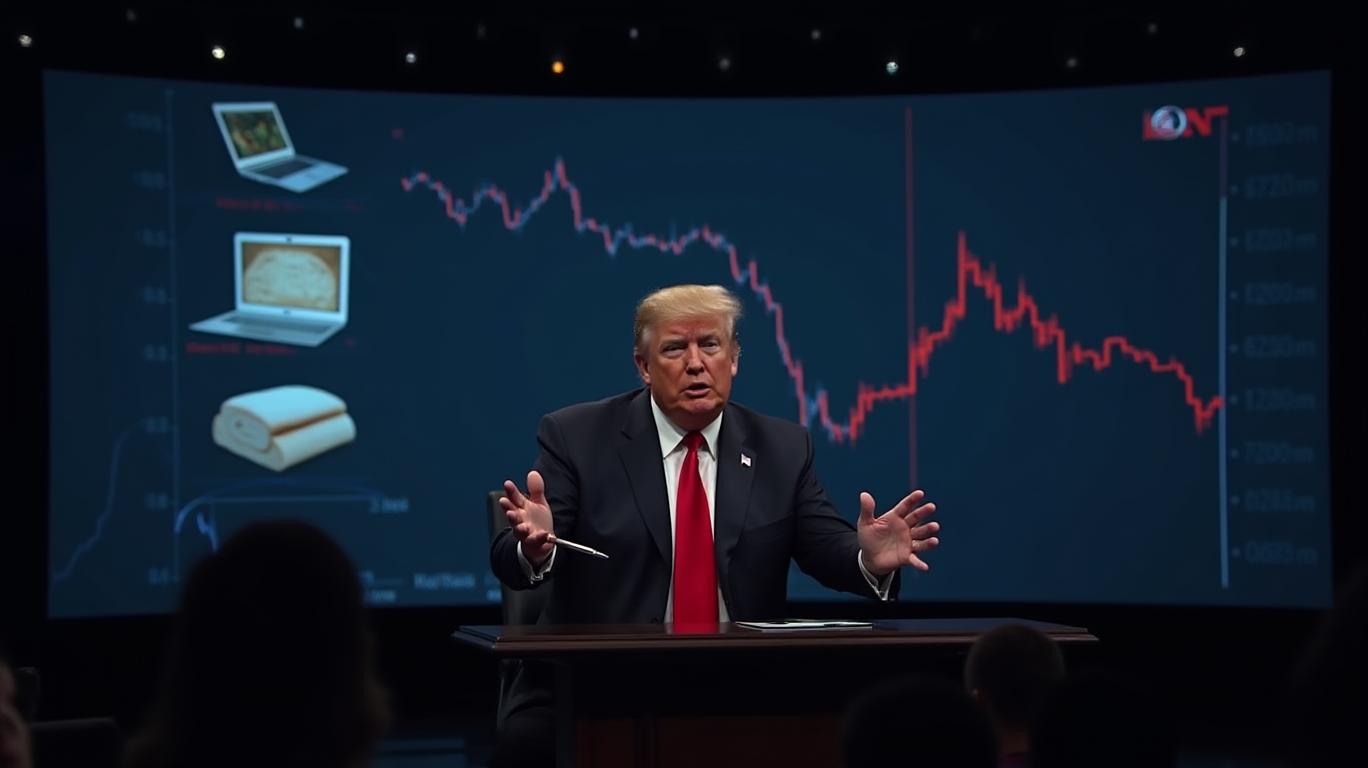
The tariffs, which took effect on April 2, have already had a significant impact on the economy. Oil prices have crashed to $60 per barrel, and the SPDR Select Consumer Discretionary Sector Fund (XLY) has dropped over 12% in the past month. This reflects the reduced consumer spending power as everyday goods become more expensive. The SPDR Select Industrial Sector Fund (XLI) has also fallen over 10% in the past week, indicating supply chain disruptions and higher production costs.
The impact of the tariffs is not confined to Wall Street's wealthy investors. As Chamath Palihapitiya pointed out, the top 10% of American households own 88% of the total equities owned by American households, while the bottom 50% have zero interest in the stock market. This means that the tariffs are likely to have a more significant impact on Main Street, where households are already struggling with debt and reduced purchasing power.
The long-term effects of the tariffs on consumer spending and economic growth are concerning. Higher prices and reduced purchasing power could lead to a prolonged recession, as businesses delay investments and consumers cut spending. The trade war escalation, with retaliatory tariffs from China and other countries, could further stifle economic growth and deter foreign investment.
However, there are mitigation strategies that could help offset the tariffs' impact. Larry Fink urges the administration to prioritize pro-growth policies like tax cuts, permit streamlining, and deregulation. Trade negotiations could also help stabilize supply chains and ease inflation. Companies may relocate production to tariff-exempt regions, and long-term investors should view the downturn as a "buying opportunity," despite short-term volatility.
In conclusion, Trump's tariffs are impacting both Main Street and Wall Street, with long-term effects on consumer spending and economic growth. Mitigation strategies, including policy adjustments, trade negotiations, and corporate adaptation, could help offset the tariffs' impact. However, without these measures, the U.S. faces prolonged recession risks and structural damage to key industries.
The S&P 500 fell 0.7% and the Dow Jones dropped 342 points in Monday's volatile session marked by record intraday swings. The market turmoil is not just a Wall Street phenomenon; it's impacting Main Street as well. BlackRockWSML-- CEO Larry Fink made this clear during his appearance at the Economic Club of New York, stating that the tariffs are "going to freeze more and more consumption." This sentiment is echoed by other market experts, who warn of a potential 20% decline in the stock market and a looming recession.
The tariffs, which took effect on April 2, have already had a significant impact on the economy. Oil prices have crashed to $60 per barrel, and the SPDR Select Consumer Discretionary Sector Fund (XLY) has dropped over 12% in the past month. This reflects the reduced consumer spending power as everyday goods become more expensive. The SPDR Select Industrial Sector Fund (XLI) has also fallen over 10% in the past week, indicating supply chain disruptions and higher production costs.
The impact of the tariffs is not confined to Wall Street's wealthy investors. As Chamath Palihapitiya pointed out, the top 10% of American households own 88% of the total equities owned by American households, while the bottom 50% have zero interest in the stock market. This means that the tariffs are likely to have a more significant impact on Main Street, where households are already struggling with debt and reduced purchasing power.
The long-term effects of the tariffs on consumer spending and economic growth are concerning. Higher prices and reduced purchasing power could lead to a prolonged recession, as businesses delay investments and consumers cut spending. The trade war escalation, with retaliatory tariffs from China and other countries, could further stifle economic growth and deter foreign investment.
However, there are mitigation strategies that could help offset the tariffs' impact. Larry Fink urges the administration to prioritize pro-growth policies like tax cuts, permit streamlining, and deregulation. Trade negotiations could also help stabilize supply chains and ease inflation. Companies may relocate production to tariff-exempt regions, and long-term investors should view the downturn as a "buying opportunity," despite short-term volatility.
In conclusion, Trump's tariffs are impacting both Main Street and Wall Street, with long-term effects on consumer spending and economic growth. Mitigation strategies, including policy adjustments, trade negotiations, and corporate adaptation, could help offset the tariffs' impact. However, without these measures, the U.S. faces prolonged recession risks and structural damage to key industries.

Divulgación editorial y transparencia de la IA: Ainvest News utiliza tecnología avanzada de Modelos de Lenguaje Largo (LLM) para sintetizar y analizar datos de mercado en tiempo real. Para garantizar los más altos estándares de integridad, cada artículo se somete a un riguroso proceso de verificación con participación humana.
Mientras la IA asiste en el procesamiento de datos y la redacción inicial, un miembro editorial profesional de Ainvest revisa, verifica y aprueba de forma independiente todo el contenido para garantizar su precisión y cumplimiento con los estándares editoriales de Ainvest Fintech Inc. Esta supervisión humana está diseñada para mitigar las alucinaciones de la IA y garantizar el contexto financiero.
Advertencia sobre inversiones: Este contenido se proporciona únicamente con fines informativos y no constituye asesoramiento profesional de inversión, legal o financiero. Los mercados conllevan riesgos inherentes. Se recomienda a los usuarios que realicen una investigación independiente o consulten a un asesor financiero certificado antes de tomar cualquier decisión. Ainvest Fintech Inc. se exime de toda responsabilidad por las acciones tomadas con base en esta información. ¿Encontró un error? Reportar un problema


SOBRE NOSOTROS
Nuestra historiaAutores de noticiasBase de conocimientosPolítica de privacidadTérmino de usoDescargo de responsabilidad de corretaje de tercerosTérminos de uso de AIMEDivulgaciones de riesgos de AInvest AICarrerasCONTÁCTENOS
Email: support@ainvest.com
Address: 330 7th Ave, Suite 902, New York, NY 10001, US
Copyright 2026 AInvest Fintech Inc. All rights reserved.


Comentarios
Aún no hay comentarios