
Trump's Tariffs and the Crypto Exodus: Macroeconomic Risks Fuel Digital Safe-Haven Demand
The 2025 iteration of Donald Trump's trade policies has ignited a perfect storm of macroeconomic turbulence, with tariffs on over 90 countries-ranging from 10% to 50%-threatening to unravel decades of global supply chain efficiency. According to the Penn Wharton Budget Model, these tariffs could slash U.S. GDP by 6% and wages by 5% in the long term, while raising consumer prices by 5.7% for goods like electronics and computers. The automotive, tech, and agricultural sectors are already grappling with cascading costs, as automakers face 25% tariffs on Canadian steel and aluminum, and tech firms contend with 20% levies on Chinese imports, as noted in a Farmonaut analysis. This systemic shock to trade flows is not merely a U.S. phenomenon; it has triggered retaliatory measures, slowing global growth and destabilizing cross-border commerce, according to CNBC.
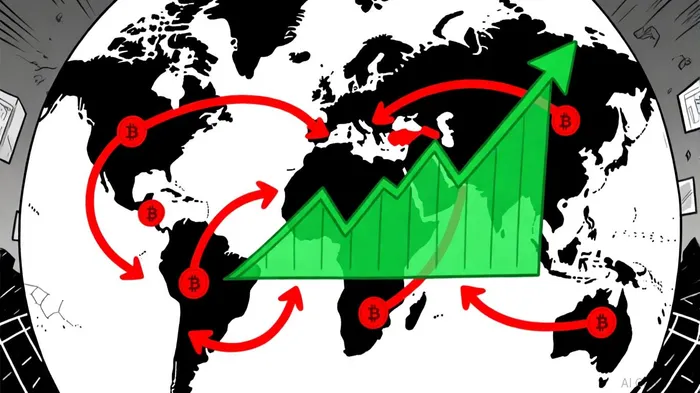
Macroeconomic Risks: Inflation, Volatility, and Currency Devaluation
The tariffs' inflationary impact is immediate and visceral. By raising import costs, they force businesses to pass these expenses to consumers, exacerbating existing inflationary pressures. For the average household, this translates to an additional $1,300 burden in 2025 and $1,600 in 2026, according to the Penn Wharton Budget Model. Meanwhile, trade instability has eroded investor confidence, with global markets reacting to Trump's "Strategic BitcoinBTC-- Reserve" proposal by treating seized crypto as a national asset-a move that has paradoxically driven both institutional and retail investors to digital assets, according to a Mitosis report.
Currency devaluation risks further compound the crisis. As nations retaliate with tariffs of their own, trade deficits widen, pressuring currencies like the U.S. dollar and euro. In such an environment, traditional safe-havens like gold face competition from cryptocurrencies, which offer borderless, decentralized alternatives.
Crypto as a Hedge: Short-Term Resilience, Long-Term Uncertainty
Historical precedents suggest that cryptocurrencies act as short-term hedges during periods of economic policy uncertainty (EPU). A 2024 Springer study found that Bitcoin's trading volume increases by ~1% for every unit rise in the EPU index, reflecting its role as a speculative asset during trade wars. However, this utility wanes over time, as crypto's volatility undermines its reliability as a long-term store of value. For instance, Bitcoin's 20% drop in April 2025-triggered by tariff announcements-exposed its sensitivity to macroeconomic shocks, as noted by the Mitosis report.
Institutional adoption, however, is reshaping crypto's narrative. The U.S. government's endorsement of a national Bitcoin reserve and the launch of regulated ETFs have legitimized digital assets as part of diversified portfolios, according to the Mitosis report. MicroStrategy's accumulation of 553,000 BTC and Texas's exploration of crypto reserves underscore this shift, as discussed in the Mitosis report. Yet, regulatory clarity-not just tariff-driven uncertainty-remains the primary driver of adoption. As one analyst notes in an MDPI paper, "Structural factors like digital infrastructure and legal frameworks matter more than reactive hedging behavior."
The Path Forward: Trade Wars and the Crypto Crossroads
While Trump's tariffs have accelerated crypto's ascent as a hedge, their long-term efficacy remains contingent on macroeconomic stability. If trade disputes resolve or stabilize, demand for risk assets like Bitcoin could rebound, especially if interest rates decline. Conversely, prolonged instability may force further capital flight to crypto, despite its volatility.
For investors, the key lies in balancing exposure. Crypto futures, which allow hedging against inflation and currency risk, are gaining traction, according to Analytics Insight. Yet, diversification across traditional safe-havens (e.g., gold) and digital assets remains prudent. As the Supreme Court deliberates on the legality of IEEPA tariffs, the next few months will test whether crypto can solidify its role as a true safe-haven-or remain a speculative play in a world of uncertain trade.






Comentarios
Aún no hay comentarios