
Trump's Tariffs: The Big Bank Earnings Bombshell!
Generado por agente de IAWesley Park
viernes, 11 de abril de 2025, 2:37 am ET2 min de lectura
MORN--
Ladies and gentlemen, buckleBKE-- up! We're diving headfirst into the storm of uncertainty that President Trump's tariffs have unleashed on the banking sector. The earnings season is just around the corner, and the big banks are bracing for impact. Let's break it down, step by step, and see how these tariffs could shake up the financial landscape.
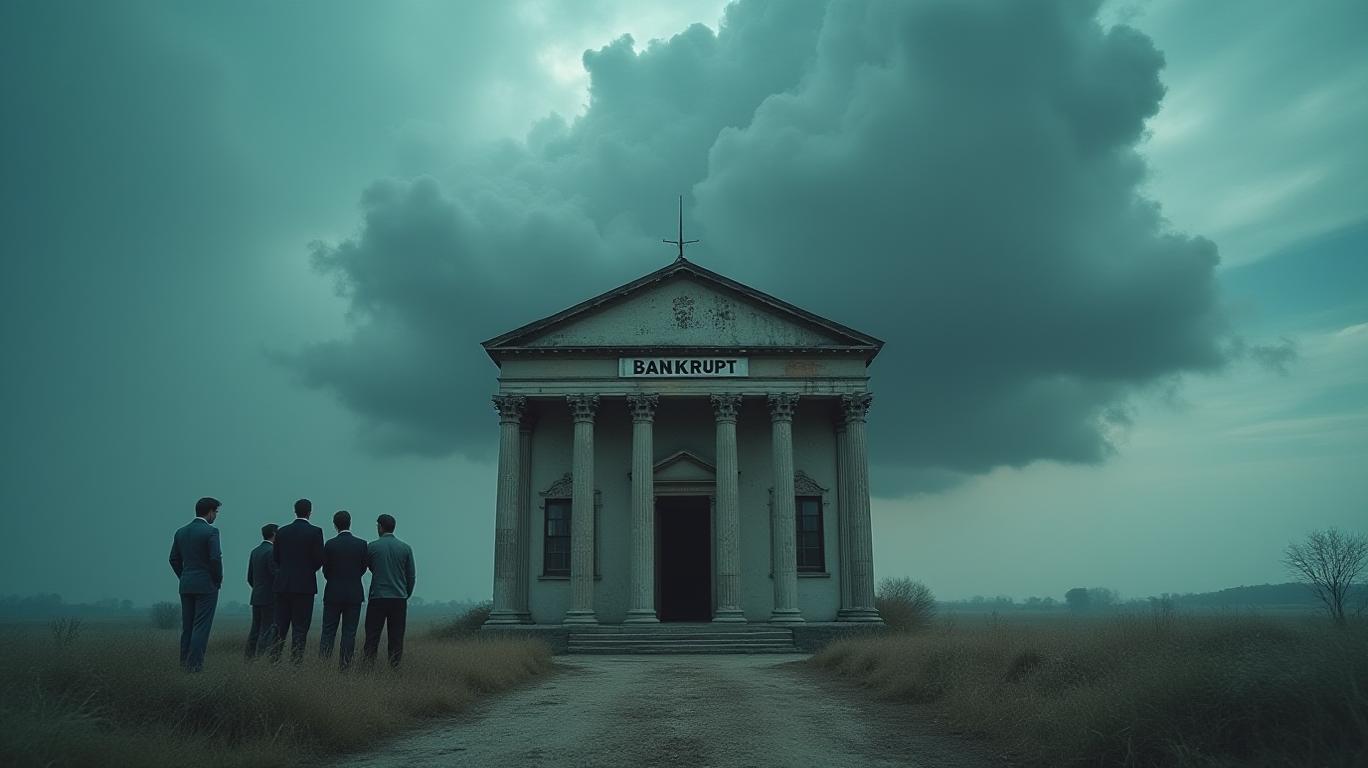
First things first, let's talk about the elephant in the room: NET INTEREST MARGINS. These are the lifeblood of any bank, and the tariffs are threatening to squeeze them dry. Suryansh Sharma, an equities analyst at MorningstarMORN-- DBRS, warns us that any economic disruption is bad news for banks. If the economy slows down or goes into a recession, the Federal Reserve will have to cut interest rates. And when rates go down, so do net interest margins. It's a simple equation: LOWER RATES = LOWER MARGINS.
But wait, there's more! We could also see a STAGFLATION scenario, where growth is weak but inflation is high. In this nightmare, the Fed can't cut rates aggressively, leading to an inverted yield curve. Banks borrow on the short end and lend on the long end, so an inverted curve is a DEATH SENTENCE for their profitability.
So, what can banks do to mitigate these losses? DIVERSIFY, DIVERSIFY, DIVERSIFY! They need to focus on their trading and principal transaction businesses, which can benefit from increased market volatility. More volatility means higher bid-ask spreads, more transaction volume, and increased demand for hedging instruments. But be careful, too much volatility can lead to significant losses on their securities investments.
Next up, let's talk about LOAN GROWTH and CREDIT COSTS. Economic uncertainty is a loan killer. When times are tough, businesses and consumers are less likely to take on new debt. And if they do, the risk of default goes up, driving credit costs through the roof. Sharma warns us that during a recession, credit costs can spike, hurting bank provisioning and profitability.
But here's the kicker: the tariffs could lead to a scenario where the Federal Reserve has to cut interest rates faster than anticipated. Lower rates mean lower net interest margins, which is a DOUBLE WHAMMY for banks. They earn less on their assets relative to what they pay on their liabilities, and their profitability takes a hit.
So, what's the bottom line? The economic uncertainty caused by the tariffs could lead to reduced loan growth, increased credit costs, and lower net interest margins. All of which would negatively impact the profitability of U.S. banks. THIS IS A NO-BRAINER! Banks need to stay vigilant, adapt their strategies, and diversify their revenue streams to weather this storm.
Stay tuned, folks! The earnings season is just around the corner, and the big banks are in for a wild ride. BUCKLE UP and get ready for the BANK EARNINGS BOMBSHELL!
Ladies and gentlemen, buckleBKE-- up! We're diving headfirst into the storm of uncertainty that President Trump's tariffs have unleashed on the banking sector. The earnings season is just around the corner, and the big banks are bracing for impact. Let's break it down, step by step, and see how these tariffs could shake up the financial landscape.
First things first, let's talk about the elephant in the room: NET INTEREST MARGINS. These are the lifeblood of any bank, and the tariffs are threatening to squeeze them dry. Suryansh Sharma, an equities analyst at MorningstarMORN-- DBRS, warns us that any economic disruption is bad news for banks. If the economy slows down or goes into a recession, the Federal Reserve will have to cut interest rates. And when rates go down, so do net interest margins. It's a simple equation: LOWER RATES = LOWER MARGINS.
But wait, there's more! We could also see a STAGFLATION scenario, where growth is weak but inflation is high. In this nightmare, the Fed can't cut rates aggressively, leading to an inverted yield curve. Banks borrow on the short end and lend on the long end, so an inverted curve is a DEATH SENTENCE for their profitability.
So, what can banks do to mitigate these losses? DIVERSIFY, DIVERSIFY, DIVERSIFY! They need to focus on their trading and principal transaction businesses, which can benefit from increased market volatility. More volatility means higher bid-ask spreads, more transaction volume, and increased demand for hedging instruments. But be careful, too much volatility can lead to significant losses on their securities investments.
Next up, let's talk about LOAN GROWTH and CREDIT COSTS. Economic uncertainty is a loan killer. When times are tough, businesses and consumers are less likely to take on new debt. And if they do, the risk of default goes up, driving credit costs through the roof. Sharma warns us that during a recession, credit costs can spike, hurting bank provisioning and profitability.
But here's the kicker: the tariffs could lead to a scenario where the Federal Reserve has to cut interest rates faster than anticipated. Lower rates mean lower net interest margins, which is a DOUBLE WHAMMY for banks. They earn less on their assets relative to what they pay on their liabilities, and their profitability takes a hit.
So, what's the bottom line? The economic uncertainty caused by the tariffs could lead to reduced loan growth, increased credit costs, and lower net interest margins. All of which would negatively impact the profitability of U.S. banks. THIS IS A NO-BRAINER! Banks need to stay vigilant, adapt their strategies, and diversify their revenue streams to weather this storm.
Stay tuned, folks! The earnings season is just around the corner, and the big banks are in for a wild ride. BUCKLE UP and get ready for the BANK EARNINGS BOMBSHELL!

Divulgación editorial y transparencia de la IA: Ainvest News utiliza tecnología avanzada de Modelos de Lenguaje Largo (LLM) para sintetizar y analizar datos de mercado en tiempo real. Para garantizar los más altos estándares de integridad, cada artículo se somete a un riguroso proceso de verificación con participación humana.
Mientras la IA asiste en el procesamiento de datos y la redacción inicial, un miembro editorial profesional de Ainvest revisa, verifica y aprueba de forma independiente todo el contenido para garantizar su precisión y cumplimiento con los estándares editoriales de Ainvest Fintech Inc. Esta supervisión humana está diseñada para mitigar las alucinaciones de la IA y garantizar el contexto financiero.
Advertencia sobre inversiones: Este contenido se proporciona únicamente con fines informativos y no constituye asesoramiento profesional de inversión, legal o financiero. Los mercados conllevan riesgos inherentes. Se recomienda a los usuarios que realicen una investigación independiente o consulten a un asesor financiero certificado antes de tomar cualquier decisión. Ainvest Fintech Inc. se exime de toda responsabilidad por las acciones tomadas con base en esta información. ¿Encontró un error? Reportar un problema




Comentarios
Aún no hay comentarios