
Trump's Tariff Turmoil: A Republican Divide
Generado por agente de IAHarrison Brooks
martes, 8 de abril de 2025, 10:57 pm ET2 min de lectura
The political landscape in the United States is once again in turmoil, as President Donald Trump's sweeping tariff policies have sent shockwaves through the economy and his own party. The tariffs, which Trump has touted as a means to protect American interests and revive domestic manufacturing, have instead sparked a backlash from Republicans and a significant drop in investor confidence. As the 2024 elections approach, Trump is wooing political donors to shore up his campaign, but the tariff controversy threatens to undermine his support and the economic stability of the nation.
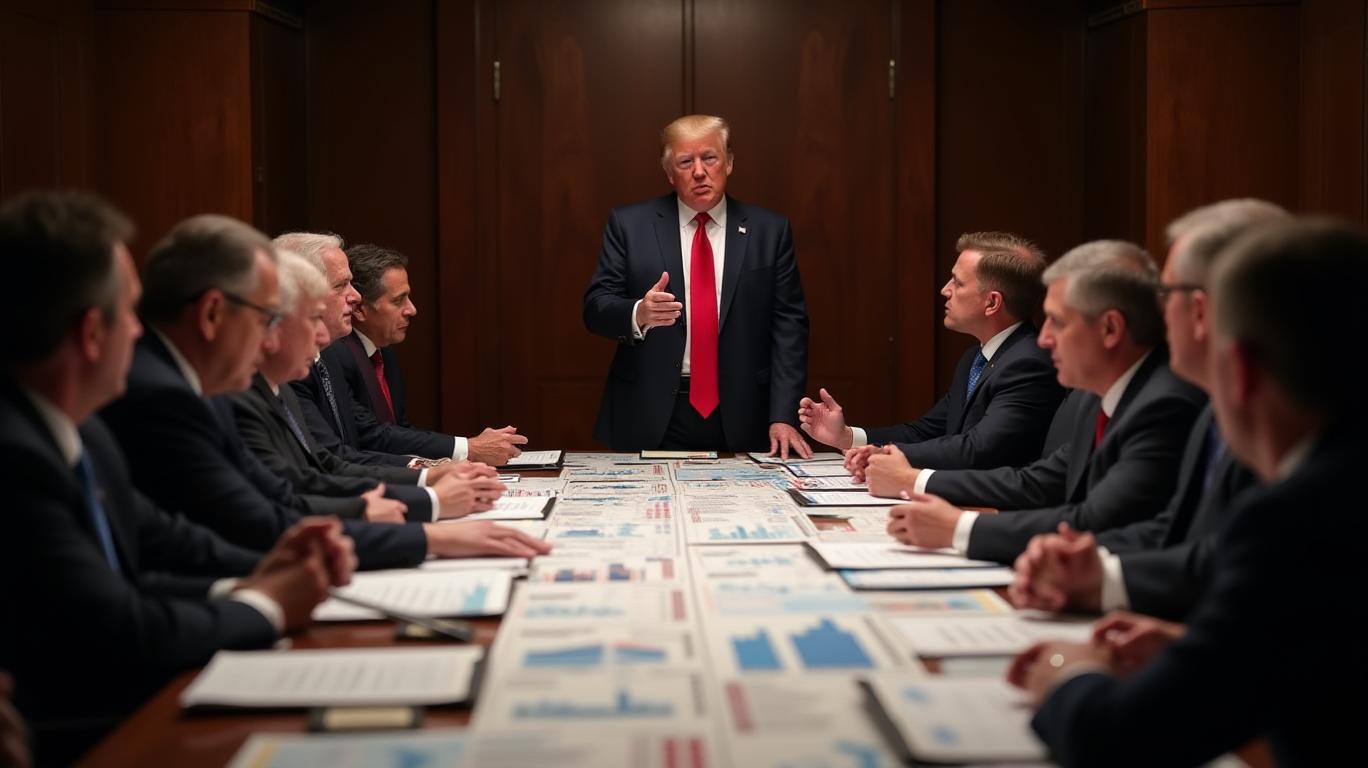
The tariffs, which Trump announced in April 2025, have been met with fierce opposition from key Republican senators, who warn that the policies could lead to a recession and cost the party control of Congress. Senator Ted Cruz of Texas, a one-time Trump allyALLY--, has been particularly vocal in his criticism, stating that the tariffs are a tax on consumers and could result in a "bad recession" by 2026. Cruz's concerns are echoed by other Republicans, including Senator RandRAND-- Paul of Kentucky, who has described the tariffs as a "terrible mistake" that will burden American households.
The economic repercussions of Trump's tariffs have been swift and severe. Wall Street had its worst week in five years in response to the announcement, as the U.S. and global markets reeled with recession fears and uncertainty about the potentially devastating impact the tariffs could have. The U.S. dollar also wiped out all its gains since Trump's reelection, and the stock market has seen a $6 trillion drop in value. Economists warn that the tariffs will raise the price of goods in the United States, further exacerbating the economic instability.
In an effort to mitigate the potential risks, investors have been advised to diversify their portfolios and stay informed about the latest developments in trade policy. However, the uncertainty surrounding the tariffs has made it difficult for investors to make informed decisions, and the lack of clarity from the Trump administration has only added to the confusion.
The tariffs have also had a significant impact on key industries such as manufacturing, agricultureANSC--, and technology. In the manufacturing sector, the tariffs on steel and aluminum have led to increased domestic production but also sparked retaliatory tariffs, raising costs and domestic prices for downstream industries. This could lead to a shift in manufacturing operations to countries with lower tariffs, potentially reducing the competitiveness of U.S. manufacturers in the global market.
In the agricultural sector, the tariffs could lead to a trade war, which would put Iowa farmers directly in the crossfire without getting any closer to the long-term goal of fair trade that values Iowa farmers and workers. This could result in a significant drop in agricultural exports, leading to lower prices for farmers and potentially forcing some out of business.
In the technology sector, the tariffs could lead to higher costs for technology companies that rely on imported components, potentially reducing their competitiveness in the global market. This could also lead to a shift in technology manufacturing operations to countries with lower tariffs, potentially reducing the competitiveness of U.S. technology companies.
As the 2024 elections approach, Trump is wooing political donors to shore up his campaign, but the tariff controversy threatens to undermine his support and the economic stability of the nation. The tariffs have created a divide within the Republican Party, with some senators warning that the policies could lead to a recession and cost the party control of Congress. The economic repercussions of the tariffs have been swift and severe, and the uncertainty surrounding the policies has made it difficult for investors to make informed decisions.
The tariffs have also had a significant impact on key industries, with potential long-term effects that could influence investment opportunities and risks in these sectors. The key for investors will be to carefully monitor the evolving trade landscape and adapt their strategies accordingly. However, the lack of clarity from the Trump administration and the uncertainty surrounding the tariffs have made it difficult for investors to make informed decisions, and the economic stability of the nation hangs in the balance.



Divulgación editorial y transparencia de la IA: Ainvest News utiliza tecnología avanzada de Modelos de Lenguaje Largo (LLM) para sintetizar y analizar datos de mercado en tiempo real. Para garantizar los más altos estándares de integridad, cada artículo se somete a un riguroso proceso de verificación con participación humana.
Mientras la IA asiste en el procesamiento de datos y la redacción inicial, un miembro editorial profesional de Ainvest revisa, verifica y aprueba de forma independiente todo el contenido para garantizar su precisión y cumplimiento con los estándares editoriales de Ainvest Fintech Inc. Esta supervisión humana está diseñada para mitigar las alucinaciones de la IA y garantizar el contexto financiero.
Advertencia sobre inversiones: Este contenido se proporciona únicamente con fines informativos y no constituye asesoramiento profesional de inversión, legal o financiero. Los mercados conllevan riesgos inherentes. Se recomienda a los usuarios que realicen una investigación independiente o consulten a un asesor financiero certificado antes de tomar cualquier decisión. Ainvest Fintech Inc. se exime de toda responsabilidad por las acciones tomadas con base en esta información. ¿Encontró un error? Reportar un problema




Comentarios
Aún no hay comentarios