
Trump's Tariff Threats: A Timeline and Impact Analysis
Generado por agente de IAWesley Park
martes, 28 de enero de 2025, 3:04 pm ET2 min de lectura
EYE--
As Donald Trump begins his second term as U.S. President, investors and businesses alike are keeping a close eye on his tariff policies, which have been a significant aspect of his administration's trade strategy. In this article, we will provide an overview of Trump's tariff threats, their potential economic and market implications, and the retaliatory measures that affected countries could take.
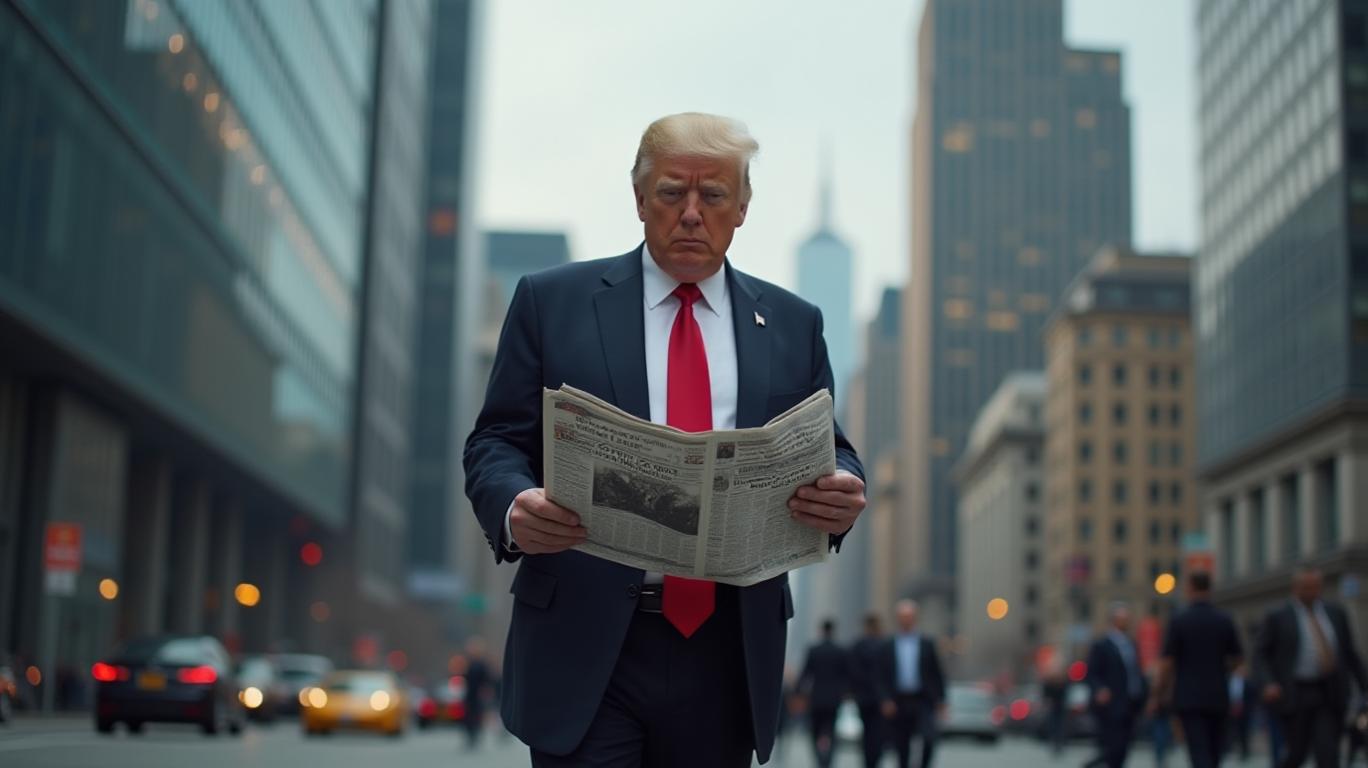
Trump's tariff threats have evolved over time, targeting various countries and sectors. Some of the most notable threats include:
1. 2018: Tariffs on Chinese goods: Trump imposed tariffs on $250 billion worth of Chinese goods, citing intellectual property theft and unfair trade practices. This move marked the beginning of a trade war between the U.S. and China.
2. 2019: Tariffs on Mexican goods: Trump threatened to impose tariffs on Mexican goods to pressure the country into addressing illegal immigration. The tariffs were later suspended after Mexico agreed to take action.
3. 2020: Tariffs on European goods: Trump threatened to impose tariffs on European goods, including cars, in response to the EU's digital services tax. The tariffs were later suspended after the U.S. and EU agreed to a five-year truce on trade disputes.
4. 2021: Tariffs on aluminum and steel: Trump reimposed tariffs on aluminum and steel imports from the EU, Japan, and other countries, citing national security concerns.
5. 2024: Proposed tariffs on Canada, Mexico, and China: During his 2024 presidential campaign, Trump proposed imposing 25% tariffs on goods from Canada and Mexico, as well as a 10% tariff on goods from China.
Trump's tariff threats have had significant economic and market implications. According to the Tax Foundation, the imposed Trump-Biden tariffs reduced long-run GDP by 0.2 percent, the capital stock by 0.1 percent, and employment by 142,000 full-time equivalent jobs. Additionally, the proposed tariffs on Canada, Mexico, and China could reduce long-run economic output by 0.4 percent.
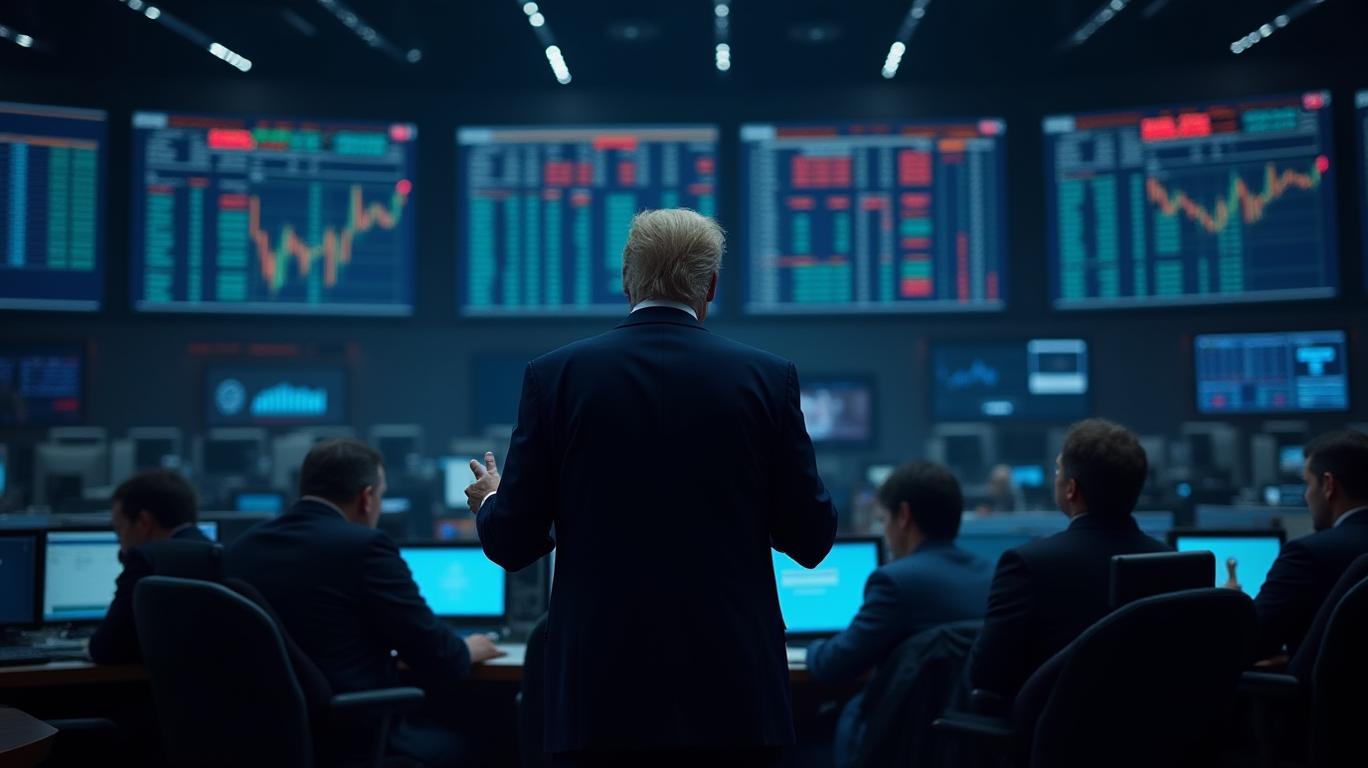
Trump's tariff policies have also had an impact on financial markets. In the days following his 2024 election victory, U.S. 10-year Treasury yields rose sharply, driven by expectations of fiscal stimulus and inflationary pressures. The dollar index surged in response to higher expected yields and anticipated trade barriers, with larger depreciations against the dollar observed for currencies of countries likely to be significantly affected by heightened trade protectionism and stricter migration policies. The S&P 500 posted a gain of around 2.5%, marking its strongest one-day performance following election results in over a century.
In response to Trump's tariff policies, affected countries could take retaliatory measures, such as imposing tariffs on U.S. exports, implementing non-tariff barriers, or challenging U.S. tariffs at the World Trade Organization (WTO). These retaliatory measures could further disrupt global trade dynamics and potentially offset any gains from the U.S. tariffs.
In conclusion, Trump's tariff threats and implementations have had significant economic and market implications, affecting specific sectors and industries. As Trump begins his second term, investors and businesses should closely monitor his tariff policies and their potential impact on the global economy and financial markets.
As Donald Trump begins his second term as U.S. President, investors and businesses alike are keeping a close eye on his tariff policies, which have been a significant aspect of his administration's trade strategy. In this article, we will provide an overview of Trump's tariff threats, their potential economic and market implications, and the retaliatory measures that affected countries could take.
Trump's tariff threats have evolved over time, targeting various countries and sectors. Some of the most notable threats include:
1. 2018: Tariffs on Chinese goods: Trump imposed tariffs on $250 billion worth of Chinese goods, citing intellectual property theft and unfair trade practices. This move marked the beginning of a trade war between the U.S. and China.
2. 2019: Tariffs on Mexican goods: Trump threatened to impose tariffs on Mexican goods to pressure the country into addressing illegal immigration. The tariffs were later suspended after Mexico agreed to take action.
3. 2020: Tariffs on European goods: Trump threatened to impose tariffs on European goods, including cars, in response to the EU's digital services tax. The tariffs were later suspended after the U.S. and EU agreed to a five-year truce on trade disputes.
4. 2021: Tariffs on aluminum and steel: Trump reimposed tariffs on aluminum and steel imports from the EU, Japan, and other countries, citing national security concerns.
5. 2024: Proposed tariffs on Canada, Mexico, and China: During his 2024 presidential campaign, Trump proposed imposing 25% tariffs on goods from Canada and Mexico, as well as a 10% tariff on goods from China.
Trump's tariff threats have had significant economic and market implications. According to the Tax Foundation, the imposed Trump-Biden tariffs reduced long-run GDP by 0.2 percent, the capital stock by 0.1 percent, and employment by 142,000 full-time equivalent jobs. Additionally, the proposed tariffs on Canada, Mexico, and China could reduce long-run economic output by 0.4 percent.
Trump's tariff policies have also had an impact on financial markets. In the days following his 2024 election victory, U.S. 10-year Treasury yields rose sharply, driven by expectations of fiscal stimulus and inflationary pressures. The dollar index surged in response to higher expected yields and anticipated trade barriers, with larger depreciations against the dollar observed for currencies of countries likely to be significantly affected by heightened trade protectionism and stricter migration policies. The S&P 500 posted a gain of around 2.5%, marking its strongest one-day performance following election results in over a century.
In response to Trump's tariff policies, affected countries could take retaliatory measures, such as imposing tariffs on U.S. exports, implementing non-tariff barriers, or challenging U.S. tariffs at the World Trade Organization (WTO). These retaliatory measures could further disrupt global trade dynamics and potentially offset any gains from the U.S. tariffs.
In conclusion, Trump's tariff threats and implementations have had significant economic and market implications, affecting specific sectors and industries. As Trump begins his second term, investors and businesses should closely monitor his tariff policies and their potential impact on the global economy and financial markets.

Divulgación editorial y transparencia de la IA: Ainvest News utiliza tecnología avanzada de Modelos de Lenguaje Largo (LLM) para sintetizar y analizar datos de mercado en tiempo real. Para garantizar los más altos estándares de integridad, cada artículo se somete a un riguroso proceso de verificación con participación humana.
Mientras la IA asiste en el procesamiento de datos y la redacción inicial, un miembro editorial profesional de Ainvest revisa, verifica y aprueba de forma independiente todo el contenido para garantizar su precisión y cumplimiento con los estándares editoriales de Ainvest Fintech Inc. Esta supervisión humana está diseñada para mitigar las alucinaciones de la IA y garantizar el contexto financiero.
Advertencia sobre inversiones: Este contenido se proporciona únicamente con fines informativos y no constituye asesoramiento profesional de inversión, legal o financiero. Los mercados conllevan riesgos inherentes. Se recomienda a los usuarios que realicen una investigación independiente o consulten a un asesor financiero certificado antes de tomar cualquier decisión. Ainvest Fintech Inc. se exime de toda responsabilidad por las acciones tomadas con base en esta información. ¿Encontró un error? Reportar un problema




Comentarios
Aún no hay comentarios