
Trump's Tariff Strategy and the Furniture Industry: Reshoring Opportunities Amid Sectoral Divergence
The U.S. furniture industry is at a crossroads, shaped by President Donald Trump's aggressive tariff strategy and the broader “America First” agenda. With proposed tariffs on furniture imports under Section 232 of U.S. trade law, the sector is witnessing a seismic shift in supply chains, stock valuations, and long-term resilience. For investors, the divergence between domestic-focused manufacturers and global retailers has never been more pronounced.
Tariffs as a Catalyst for Reshoring
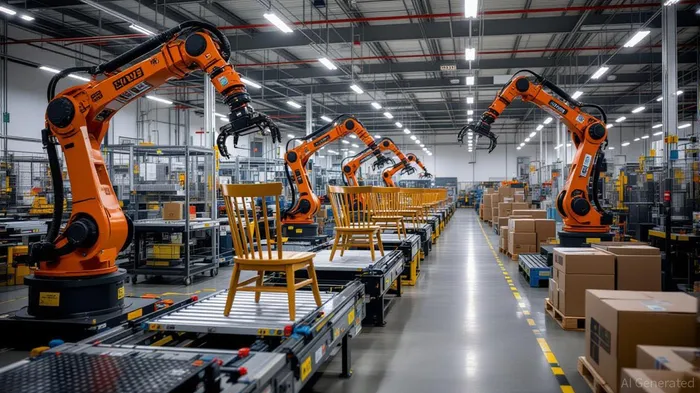
The Trump administration's investigation into furniture imports—expected to culminate in tariffs by October 2025—has already triggered a wave of reshoring. The U.S. imported $25.5 billion in furniture in 2024, with 60% sourced from China and Vietnam. However, the “One Big Beautiful Bill” (a tax incentive package including 100% bonus depreciation for machinery and expanded small business expensing) has accelerated domestic production. Companies like Ashley Furniture and La-Z-BoyLZB-- are leveraging automation and robotics to offset higher labor costs, with Ashley's CEO Todd Wanek noting that reshoring is viable only with “heavy investment in efficiency.”
The decline of Chinese imports—from 59.6% in 2017 to 30.2% in 2025—reflects a strategic pivot to ASEAN suppliers (36% of U.S. imports) and North American partners (18.1%). This regionalization aligns with Trump's goal of “bringing the furniture business back to North Carolina, South Carolina, and Michigan.” For investors, this shift underscores the growing importance of domestic manufacturers with advanced manufacturing capabilities.
Sectoral Divergence: Winners and Losers
The tariff-driven environment has created stark investment divergences. Domestic-focused firms like La-Z-Boy have seen stock gains, while import-reliant retailers such as WayfairW-- and RHRH-- face headwinds. The latter's reliance on foreign supply chains exposes them to inflationary pressures and potential disruptions from delayed shipments. For example, outdoor furniture retailers risk missing key sales seasons due to unpredictable tariff policies.
These divergences are further amplified by supply chain adjustments. U.S. furniture firms are now holding higher inventory levels (76 days of inventory, up from 70 in 2024) to mitigate risks. Retailers are also passing costs to consumers through price increases or negotiating lower supplier prices, particularly with Chinese manufacturers. However, this strategy is not sustainable for all, as companies like RH and Williams-SonomaWSM-- face margin compression.
Long-Term Resilience and Strategic Positioning
The furniture industry's long-term resilience hinges on its ability to adapt to a protectionist trade environment. Domestic manufacturers with robust automation and nearshoring partnerships are better positioned to thrive. For instance, Ashley Furniture's shift to U.S. production, supported by AI-driven scheduling and robotics, exemplifies a forward-looking strategy. Conversely, global retailers lacking diversified supply chains face heightened vulnerability to retaliatory tariffs or sudden policy changes.
Investors should also consider the role of tax incentives. The “One Big Beautiful Bill” has spurred demand for American-made and Amish-crafted furniture, supported by a 200% surge in consumer searches for “American-made furniture” since 2023. This trend suggests a growing market for domestically produced goods, particularly among price-conscious consumers navigating a sluggish housing market and high inflation.
Investment Implications
For investors, the key lies in hedging short-term volatility while capitalizing on long-term gains. Domestic manufacturers with strong balance sheets and automation capabilities—such as La-Z-Boy and Ashley Furniture—are prime candidates. Conversely, global retailers like Wayfair and RH may require caution, given their exposure to import costs and supply chain bottlenecks.
A diversified portfolio could include:
1. Reshoring Leaders: Companies with U.S.-based production and automation investments.
2. Nearshoring Partners: Firms leveraging ASEAN or Mexican suppliers to reduce dependency on China.
3. Tariff-Resilient Retailers: Brands with flexible pricing models and diversified sourcing strategies.
Conclusion
Trump's tariff strategy is reshaping the furniture industry, creating both risks and opportunities. While domestic manufacturers stand to benefit from reshoring incentives and reduced foreign competition, global retailers face margin pressures and operational challenges. For investors, the path forward requires a nuanced understanding of supply chain dynamics, policy timelines, and sectoral trends. In a protectionist trade environment, resilience is not just a buzzword—it's a necessity.







Comentarios
Aún no hay comentarios