
Trump's Tariff Shifts: Stocks Soar to New Records
Generado por agente de IATheodore Quinn
viernes, 24 de enero de 2025, 11:05 pm ET1 min de lectura
In a surprising turn of events, President Donald Trump's tariff policies have not only reshaped the global trade landscape but also sent U.S. stocks to new record highs. Despite initial market jitters and concerns about potential economic fallout, the U.S. stock market has rallied, with the Dow Jones Industrial Average (^DJI 0.00%) and S&P 500 (^GSPC 0.00%) reaching all-time highs. This article explores how Trump's tariff policies have influenced the market dynamics and contributed to the stock market's remarkable performance.
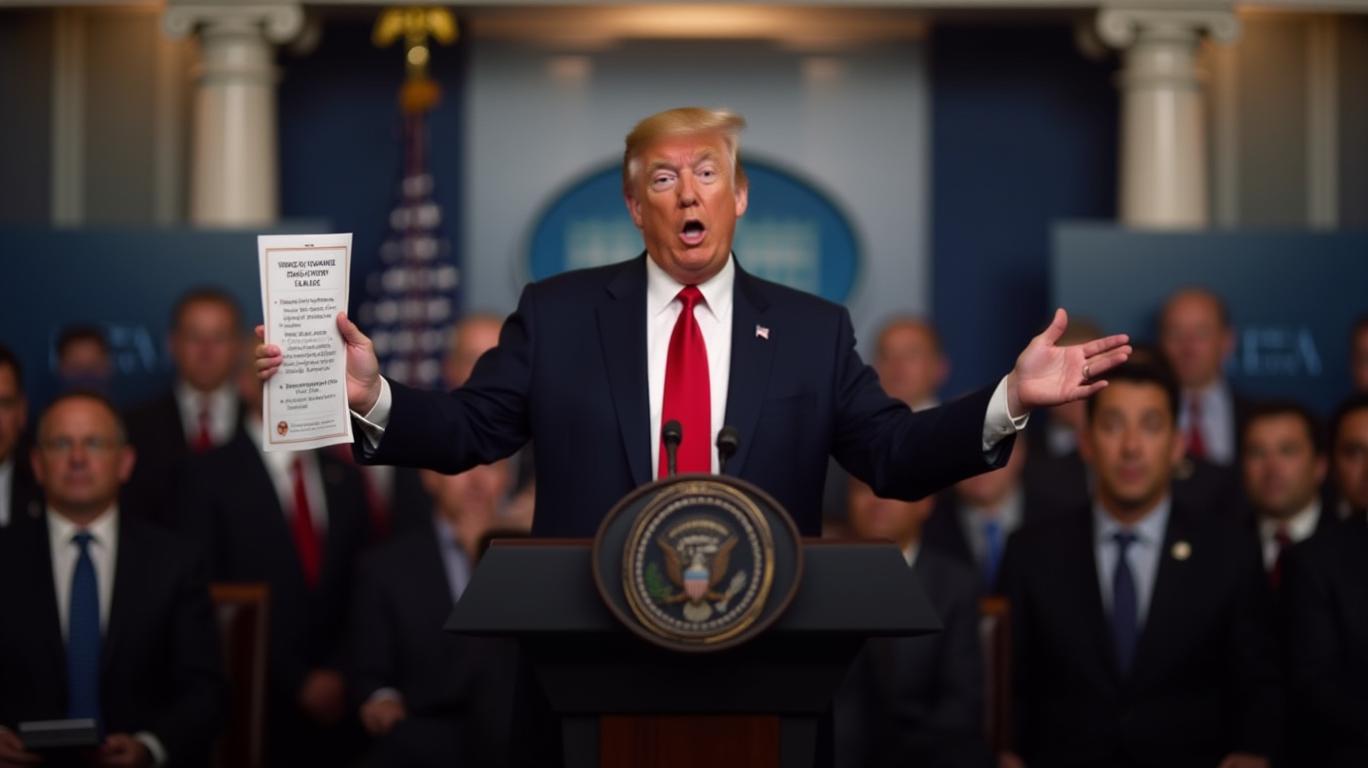
Trump's tariff policies, which include a 25% tariff on steel and 10% tariff on aluminum imports, as well as proposed tariffs on Chinese goods, have sparked a global trade war. While these policies have been criticized for their potential to raise prices for consumers and businesses, disrupt supply chains, and lead to retaliation from other countries, the U.S. stock market has remained resilient and even flourished.
One reason for the stock market's resilience is the expectation that Trump's policies will benefit certain sectors and industries. For instance, the tariffs on steel and aluminum are expected to boost domestic production and create jobs in the U.S. steel industry. Additionally, the proposed tariffs on Chinese goods could benefit U.S. manufacturers by making their products more competitive in the domestic market.
Moreover, the market's positive reaction to Trump's tariff policies can be attributed to the overall strength of the U.S. economy. The U.S. economy has been growing at a steady pace, with low unemployment and rising consumer confidence. This economic backdrop has provided a solid foundation for the stock market, allowing it to weather the potential headwinds from Trump's trade policies.
However, it is essential to note that the long-term effects of Trump's tariff policies on the U.S. economy and stock market remain uncertain. While the market has thus far shrugged off the potential risks, the possibility of higher inflation, supply chain disruptions, and trade wars could still materialize. Furthermore, the retaliatory measures taken by other countries, such as China and the European Union, could negatively impact U.S. exports and the overall economy.
In conclusion, Trump's tariff policies have sent U.S. stocks to new record highs, driven by expectations of sector-specific benefits, a strong U.S. economy, and market resilience. However, the long-term effects of these policies on the U.S. economy and stock market remain uncertain, and investors should remain vigilant to potential risks and retaliatory measures from other countries.



Divulgación editorial y transparencia de la IA: Ainvest News utiliza tecnología avanzada de Modelos de Lenguaje Largo (LLM) para sintetizar y analizar datos de mercado en tiempo real. Para garantizar los más altos estándares de integridad, cada artículo se somete a un riguroso proceso de verificación con participación humana.
Mientras la IA asiste en el procesamiento de datos y la redacción inicial, un miembro editorial profesional de Ainvest revisa, verifica y aprueba de forma independiente todo el contenido para garantizar su precisión y cumplimiento con los estándares editoriales de Ainvest Fintech Inc. Esta supervisión humana está diseñada para mitigar las alucinaciones de la IA y garantizar el contexto financiero.
Advertencia sobre inversiones: Este contenido se proporciona únicamente con fines informativos y no constituye asesoramiento profesional de inversión, legal o financiero. Los mercados conllevan riesgos inherentes. Se recomienda a los usuarios que realicen una investigación independiente o consulten a un asesor financiero certificado antes de tomar cualquier decisión. Ainvest Fintech Inc. se exime de toda responsabilidad por las acciones tomadas con base en esta información. ¿Encontró un error? Reportar un problema


SOBRE NOSOTROS
Nuestra historiaAutores de noticiasBase de conocimientosPolítica de privacidadTérmino de usoDescargo de responsabilidad de corretaje de tercerosTérminos de uso de AIMEDivulgaciones de riesgos de AInvest AICarrerasCONTÁCTENOS
Email: support@ainvest.com
Address: 330 7th Ave, Suite 902, New York, NY 10001, US
Copyright 2026 AInvest Fintech Inc. All rights reserved.


Comentarios
Aún no hay comentarios