
Trump's Tariff Shift Boosts Markets, S&P 500 Jumps 9.52%
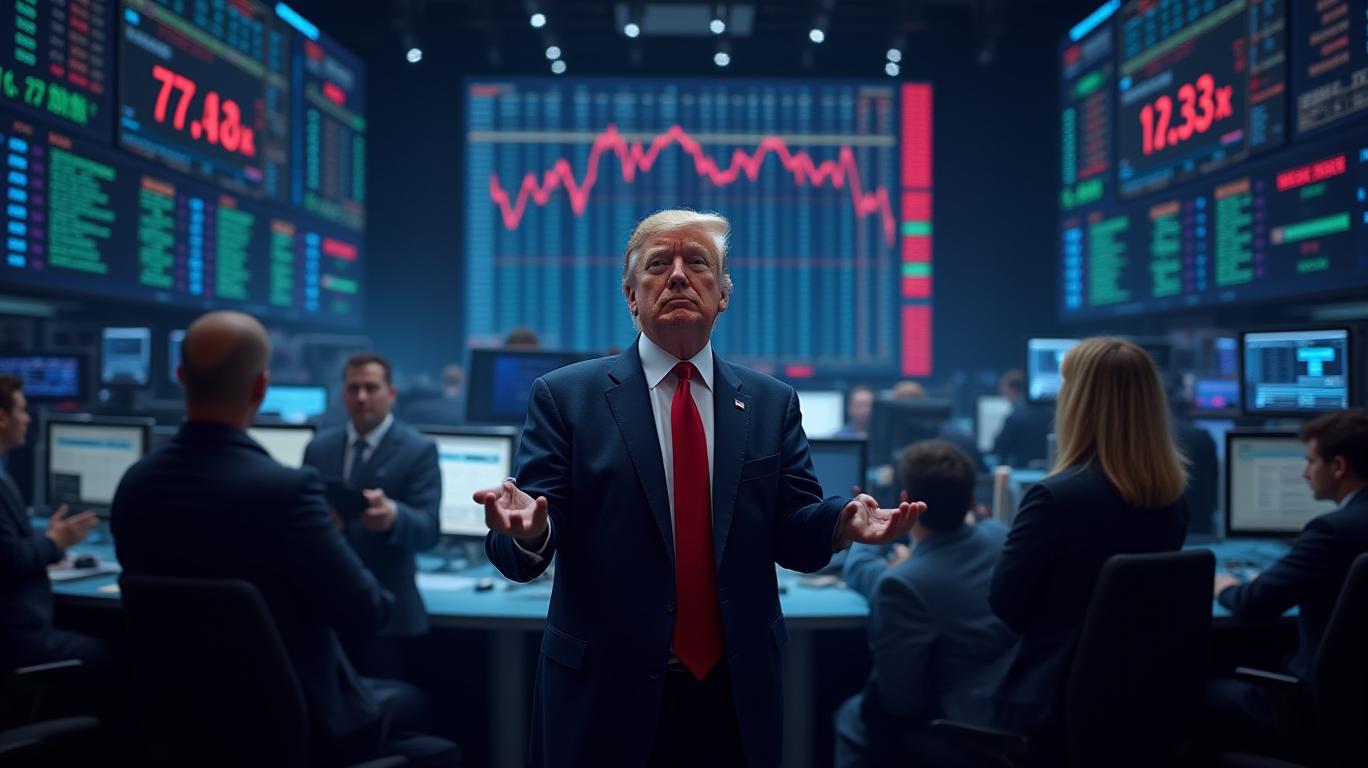
On April 9, President Donald Trump announced a 90-day suspension of reciprocal tariffs affecting over 75 nations, replacing them with a streamlined 10% flat rate, with China being the only exception. This decision came after a week of market volatility triggered by initial tariff hikes ranging from 11% to 50% across various U.S. trading partners. The move was influenced by mounting political pressure, financial market instability, and diplomatic unease, with several trade partners warning that the tariff escalation risked tipping the U.S. toward a recession.
Treasury Secretary Scott Bessent noted that the original tariffs were designed as a strategic "leverage" and had served their purpose, as more than 70 countries have now opened trade discussions with Washington. However, China remains an outlier, with the U.S. raising tariffs on Chinese goods from 104% to 125% in response to China’s retaliatory measures, including an 84% tariff on American imports. This escalation suggests that the U.S.-China trade confrontation is entering a more deeply entrenched phase.
Markets responded positively to Trump’s announcement, with equity indices surging across the board. The S&P 500 jumped 9.52%, the Nasdaq Composite climbed 12.16%, and the Dow Jones Industrial Average rose 7.87%. These gains helped claw back a sizable portion of the market value that had been wiped out over the prior four trading sessions. Positive momentum extended into Asian markets, with Japan’s Nikkei leaping over 9% and South Korea’s Kospi rising 6.6%. European markets also moved in sync with the global rebound, with the EURO STOXX 50 climbing nearly 6%.
Crypto markets reflected a similar uplift, with Bitcoin (BTC) rising more than 6% in the 24 hours following the news, reaching around $81,650. The rebound followed a steep drop during the initial tariff rollout, when Bitcoin had slipped 10% to around $74,500. While the recovery helped recapture some lost ground, BTC remains down 13% year-to-date and roughly 25% below its all-time high, suggesting that the move was more a short-term relief rally than a broader trend reversal. The global crypto market cap rose in tandem, increasing from $2.38 trillion to approximately $2.6 trillion in the last 24 hours. Digital asset-linked stocks also joined the rally, with MicroStrategyMSTR-- soaring nearly 25%, CoinbaseCOIN-- adding around 17%, and Robinhood seeing gains of about 24%.
Despite the positive market reaction, analysts remain divided on what comes next for Bitcoin. From a technical perspective, traders are closely watching the $83,000 to $85,000 range as a near-term test for Bitcoin. Market analyst Daan Crypto Trades noted that this zone aligns with the 4-hour 200 moving average, a level that has repeatedly pushed back price attempts over the past couple of weeks. He believes that if Bitcoin slips back below $81,100, it could signal a false breakout or a liquidity grab. Jeff Park, head of Alpha Strategies at Bitwise, believes macroeconomic conditions are still too fragile to support a meaningful shift, pointing to lingering structural pressure from the 10% tariffs, a persistently elevated 10-year Treasury yield above 4%, and credit spreads that remain wide at over 400 basis points. Edward Morra, a widely followed trader, believes the market is still in bearish territory and that the recent bounce should not be trusted unless Bitcoin can decisively break above $94,000 and hold that level.
In the near term, the key levels to watch are both technical and policy-related. Bitcoin holding above $81,000 offers a base to build on. Sustained movement beyond $85,000 could bring in momentum buyers, while any pullback might test recent support. On the macro front, any progress in trade negotiations, signs of easing inflation, or clearer guidance from the Federal Reserve could help crypto find more stable footing. For now, this remains a market that demands both curiosity and caution. Trade wisely, and never invest more than you are prepared to lose.







Comentarios
Aún no hay comentarios