
Trump's Tariff Pause Boosts FTSE 100 by 6.2%, S&P 500 by 9.5%
On April 9th, 2025, U.S. President Donald Trump announced a three-month pause on tariff increases for diplomatic partners, while maintaining existing restrictions against China. This decision was met with approval from the global community and financial markets. Ursula von der Leyen, the European Commission president, described this action as fundamental for economic stability. She proposed eliminating mutually imposed tariffs to achieve zero-for-zero trade for seamless market transactions. The Trump tariff had led to increased market uncertainty and volatility.
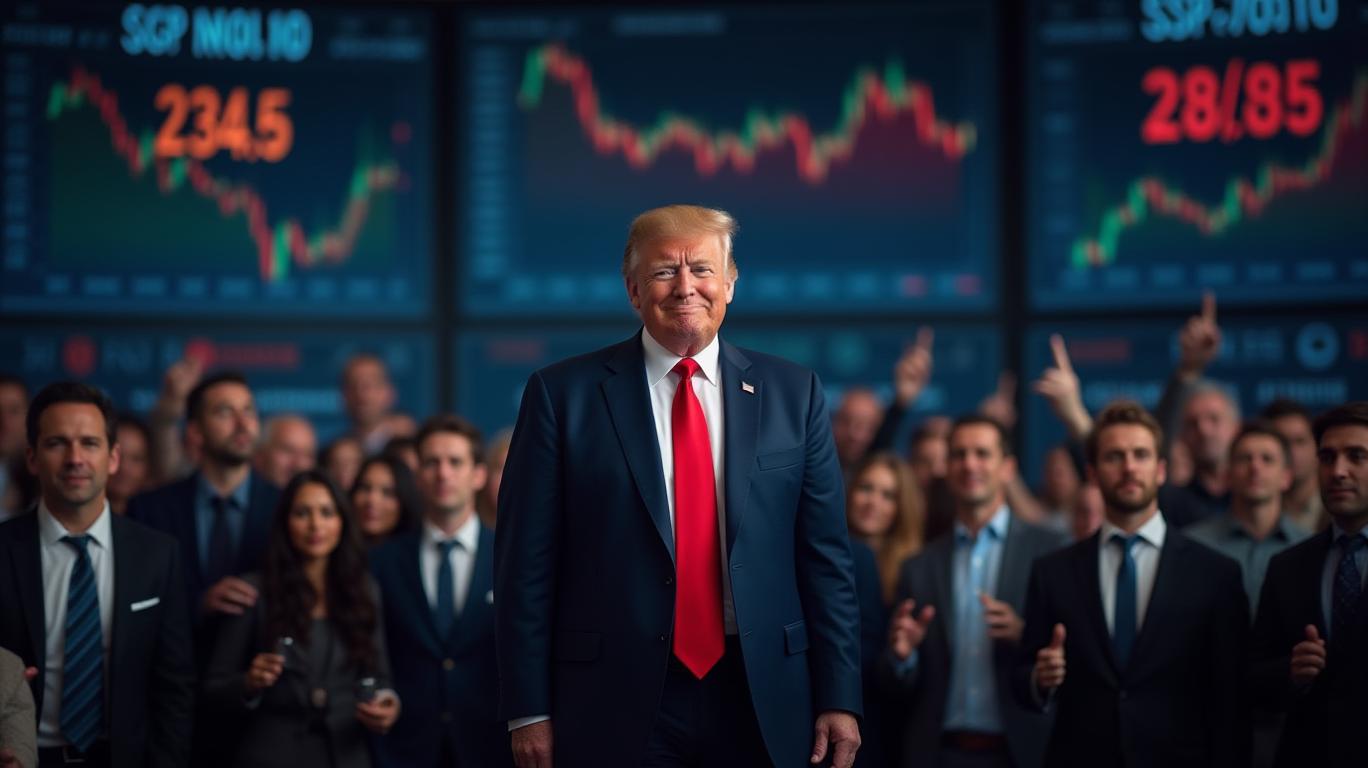
The announcement had immediate positive effects on worldwide markets. The FTSE 100 index saw a 6.2% increase, its most significant move in several months, driven by robust growth in mining and banking companies. The S&P 500 demonstrated its highest gain since 2008, increasing by 9.5%. German index DAX and French index CAC 40, along with other European stock markets, showed strong upward movements. The ongoing trade war between the U.S. and China had led to increased market volatility.
The relief was short-lived for China, as U.S. tariff increases led to an 84% import tax on all American products and the blacklisting of 18 U.S. firms. The escalating trade tariffs raised fears of a direct military conflict. The trade war resulted in higher tariffs and reduced trade between countries. The EU approved a 25% retaliatory tariff on U.S. goods, affecting imports starting April 15. In response to protecting its economic interests, the EU issued various trade restrictions on almonds, motorcycles, and yachts.
Economic difficulties arose in the United Kingdom due to the implemented tariff changes. Economic experts predicted a minimal decrease in GDP and central banks were likely to lower interest rates to combat emerging inflation risks. The implemented tariffs caused financial markets to become volatile, negatively impacting business sectors and postponing major financial agreements. The market volatility caused by the Trump tariff and trade war led to significant fluctuations in stock prices.
The world reacted differently to President Trump’s imposition of tariffs. The market volatility resulted in increased uncertainty and risk for investors. The suspension received divergent interpretations among analysts, with some considering it market pressure relief, while others saw it as a stopgap solution without tackling core trade disputes. The current trade standoff between China and the United States became more difficult after President Trump chose to exclude China from the temporary tariff suspension. Throughout the 90-day waiting period, the global community maintained close observation to investigate the sustainability of trade agreement negotiations. Global economic operations and international trade agreements faced significant influence from the results of these ongoing talks.
Von der Leyen welcomed the decision by U.S. President Donald Trump to pause tariffs on certain goods, describing it as a significant move towards stabilizing the global economy. This pause, which includes a 90-day suspension of retaliatory tariffs, was characterized by von der Leyen as an "important step" in fostering a more predictable and stable trading environment. She emphasized the need for reliable trading conditions, stating that the mutual tariff suspension is beneficial for global economic stability. The European Commission President highlighted that this pause provides an opportunity to address ongoing trade tensions and work towards a more balanced and fair trade relationship between the U.S. and the EU. The decision to halt tariff increases was seen as a positive development that could help mitigate the economic uncertainties caused by the trade disputes.
The pause on tariffs is expected to create a window for negotiations between the two economic powerhouses. Von der Leyen's comments underscore the EU's commitment to resolving trade issues through dialogue and cooperation, rather than through escalating tariffs and retaliatory measures. The European Commission President's remarks reflect a broader sentiment within the EU that stable and predictable trade conditions are essential for economic growth and prosperity. The decision to pause tariffs comes at a time when the global economy is facing numerous challenges, including the ongoing impact of the COVID-19 pandemic and geopolitical tensions. Von der Leyen's statement suggests that the EU is optimistic about the potential for a more cooperative approach to trade, which could help to mitigate some of these challenges and promote economic recovery.
In summary, the pause on tariffs by the U.S. and the EU's decision to suspend retaliatory measures have been welcomed as a positive step towards global economic stability. Von der Leyen's comments highlight the importance of predictable trading conditions and the need for ongoing dialogue and cooperation to address trade tensions. The pause provides an opportunity for both sides to work towards a more balanced and fair trade relationship, which could have significant benefits for the global economy.







Comentarios
Aún no hay comentarios