
Trump Tariff Fears Push Global Rates Higher, IMF Chief Says
Generado por agente de IAWesley Park
viernes, 10 de enero de 2025, 5:33 pm ET1 min de lectura
AMZN--
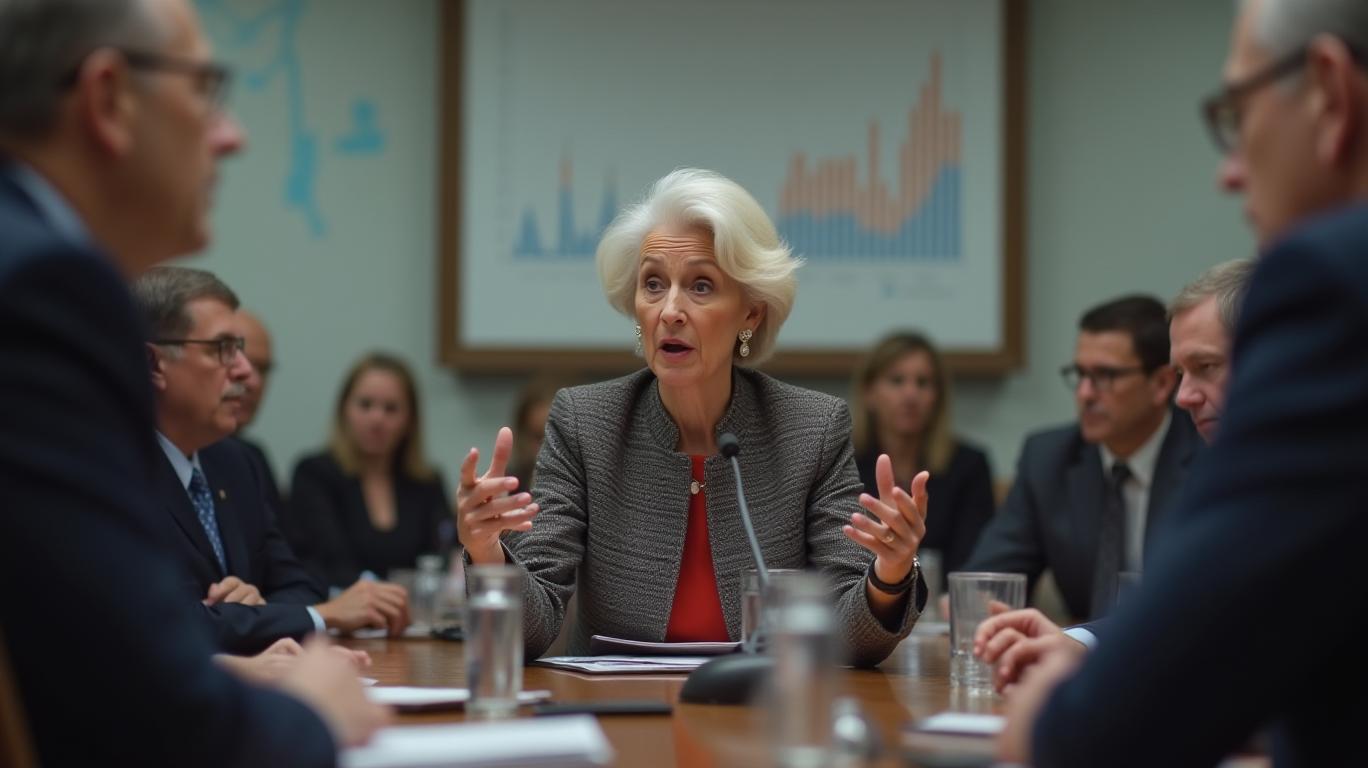
As the global economy grapples with the fallout from President Trump's tariff policies, the International Monetary Fund (IMF) has warned that these measures are pushing up global interest rates and threatening economic growth. In an interview with Bloomberg, IMF Managing Director Christine Lagarde expressed her concerns about the rising protectionism and its impact on the global financial landscape.
The IMF's latest World Economic Outlook Update, released in January 2020, highlighted the potential risks of Trump's tariff policies on the global economy. The report estimated that the global GDP would be 0.8% lower in 2020 due to trade tensions and tariffs. This underscores the IMF's concerns about the rising protectionism and its impact on economic growth and financial stability.
Central banks around the world are grappling with the challenge of managing inflation and currency fluctuations in the face of tariff-induced uncertainty. The Federal Reserve, for instance, has raised interest rates in response to inflation concerns, as mentioned in the article "Checking In on Comcast's Ad Moves and Rating Sportradar." However, raising interest rates can also strengthen the domestic currency, exacerbating currency fluctuations.
The European Central Bank (ECB) has used forward guidance to manage market expectations and influence currency fluctuations. In the context of tariffs, forward guidance can help to reassure markets about the central bank's commitment to maintaining price stability and currency stability.
Central banks can also intervene in the foreign exchange market to stabilize their currency. For example, the Swiss National Bank (SNB) has intervened in the foreign exchange market to prevent the Swiss franc from appreciating too rapidly, as mentioned in the article "Amazon.com, Inc. (AMZN) Is Revolutionizing AI-Powered Ad Campaigns." This can help to mitigate the impact of tariffs on inflation and currency fluctuations.
The IMF's role in mitigating the economic impacts of tariffs is multifaceted, involving both direct and indirect measures. The IMF provides economic analysis and forecasting, policy advice and recommendations, financial assistance, capacity building and technical assistance, and monitoring and surveillance. These efforts help countries navigate the challenges posed by tariffs and trade disputes.
In conclusion, Trump's tariff policies have contributed to increased uncertainty, higher inflation, supply chain disruptions, and negative impacts on emerging markets, all of which can affect global interest rates and economic growth. The IMF has warned about the rising protectionism and its impact on the global financial landscape, while central banks are grappling with the challenge of managing inflation and currency fluctuations in the face of tariff-induced uncertainty. The IMF's role in mitigating the economic impacts of tariffs is crucial in helping countries navigate the challenges posed by tariffs and trade disputes.
CMCSA--
NBHC--
SRAD--
As the global economy grapples with the fallout from President Trump's tariff policies, the International Monetary Fund (IMF) has warned that these measures are pushing up global interest rates and threatening economic growth. In an interview with Bloomberg, IMF Managing Director Christine Lagarde expressed her concerns about the rising protectionism and its impact on the global financial landscape.
The IMF's latest World Economic Outlook Update, released in January 2020, highlighted the potential risks of Trump's tariff policies on the global economy. The report estimated that the global GDP would be 0.8% lower in 2020 due to trade tensions and tariffs. This underscores the IMF's concerns about the rising protectionism and its impact on economic growth and financial stability.
Central banks around the world are grappling with the challenge of managing inflation and currency fluctuations in the face of tariff-induced uncertainty. The Federal Reserve, for instance, has raised interest rates in response to inflation concerns, as mentioned in the article "Checking In on Comcast's Ad Moves and Rating Sportradar." However, raising interest rates can also strengthen the domestic currency, exacerbating currency fluctuations.
The European Central Bank (ECB) has used forward guidance to manage market expectations and influence currency fluctuations. In the context of tariffs, forward guidance can help to reassure markets about the central bank's commitment to maintaining price stability and currency stability.
Central banks can also intervene in the foreign exchange market to stabilize their currency. For example, the Swiss National Bank (SNB) has intervened in the foreign exchange market to prevent the Swiss franc from appreciating too rapidly, as mentioned in the article "Amazon.com, Inc. (AMZN) Is Revolutionizing AI-Powered Ad Campaigns." This can help to mitigate the impact of tariffs on inflation and currency fluctuations.
The IMF's role in mitigating the economic impacts of tariffs is multifaceted, involving both direct and indirect measures. The IMF provides economic analysis and forecasting, policy advice and recommendations, financial assistance, capacity building and technical assistance, and monitoring and surveillance. These efforts help countries navigate the challenges posed by tariffs and trade disputes.
In conclusion, Trump's tariff policies have contributed to increased uncertainty, higher inflation, supply chain disruptions, and negative impacts on emerging markets, all of which can affect global interest rates and economic growth. The IMF has warned about the rising protectionism and its impact on the global financial landscape, while central banks are grappling with the challenge of managing inflation and currency fluctuations in the face of tariff-induced uncertainty. The IMF's role in mitigating the economic impacts of tariffs is crucial in helping countries navigate the challenges posed by tariffs and trade disputes.

Divulgación editorial y transparencia de la IA: Ainvest News utiliza tecnología avanzada de Modelos de Lenguaje Largo (LLM) para sintetizar y analizar datos de mercado en tiempo real. Para garantizar los más altos estándares de integridad, cada artículo se somete a un riguroso proceso de verificación con participación humana.
Mientras la IA asiste en el procesamiento de datos y la redacción inicial, un miembro editorial profesional de Ainvest revisa, verifica y aprueba de forma independiente todo el contenido para garantizar su precisión y cumplimiento con los estándares editoriales de Ainvest Fintech Inc. Esta supervisión humana está diseñada para mitigar las alucinaciones de la IA y garantizar el contexto financiero.
Advertencia sobre inversiones: Este contenido se proporciona únicamente con fines informativos y no constituye asesoramiento profesional de inversión, legal o financiero. Los mercados conllevan riesgos inherentes. Se recomienda a los usuarios que realicen una investigación independiente o consulten a un asesor financiero certificado antes de tomar cualquier decisión. Ainvest Fintech Inc. se exime de toda responsabilidad por las acciones tomadas con base en esta información. ¿Encontró un error? Reportar un problema


SOBRE NOSOTROS
Nuestra historiaAutores de noticiasBase de conocimientosPolítica de privacidadTérmino de usoDescargo de responsabilidad de corretaje de tercerosTérminos de uso de AIMEDivulgaciones de riesgos de AInvest AICarrerasCONTÁCTENOS
Email: support@ainvest.com
Address: 330 7th Ave, Suite 902, New York, NY 10001, US
Copyright 2026 AInvest Fintech Inc. All rights reserved.


Comentarios
Aún no hay comentarios