
Can Trump's Tariff Aggression Strengthen BRICS Economic Integration and Challenge U.S. Dollar Dominance?
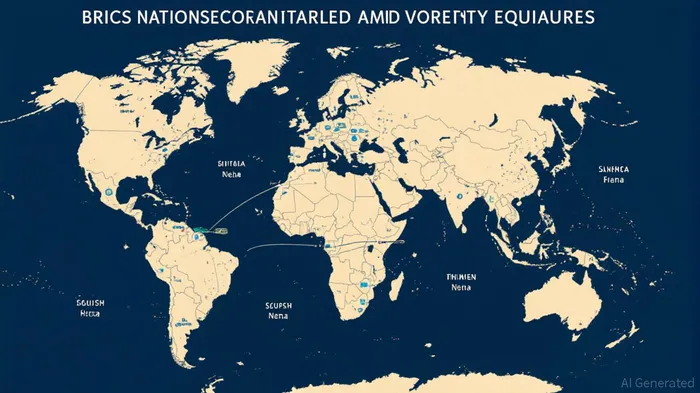
The global economic landscape is undergoing a seismic shift as BRICS nations—Brazil, Russia, India, China, South Africa, and their 2025 additions (Egypt, Ethiopia, Iran, UAE, and Indonesia)—accelerate efforts to reduce reliance on the U.S. dollar. This transformation is being catalyzed, paradoxically, by the very forces it seeks to counter: U.S. protectionist policies under the Trump administration. With tariffs on BRICS exports threatening to erode trade surpluses and financial autonomy, the bloc is doubling down on economic integration, alternative financial infrastructure, and local currency trade. For investors, this raises a critical question: Can Trump's tariff aggression inadvertently strengthen BRICS cohesion and reshape the global monetary order?
BRICS' Strategic Reforms: A Multipolar Financial Ecosystem
BRICS nations have made tangible progress in building a self-sufficient economic architecture. The New Development Bank (NDB), with a $50 billion infrastructure pipeline, is financing projects in local currencies, from Egypt's Suez Canal logistics hubs to India's high-speed rail networks. This reduces exposure to dollar volatility and aligns with the bloc's goal of de-dollarization. The NDB's 2025 bond issuance in yuan-denominated “panda bonds” and rupee-linked instruments has attracted institutional investors seeking diversified portfolios.
Meanwhile, the BRICS Contingent Reserve Arrangement (CRA) is evolving into a liquidity buffer rivaling the IMF. By integrating the CRA with the NDB, BRICS aims to provide emergency funding in local currencies, bypassing Western-dominated systems. Russia's push for a BRICS-based payment platform, leveraging blockchain and central bank digital currencies (CBDCs), further underscores the bloc's ambition to create a parallel financial ecosystem.
Trump's Tariffs: A Double-Edged Sword
Trump's 2025 threats of 100% tariffs on BRICS exports have introduced volatility but also accelerated strategic alignment. While such tariffs could shrink U.S. trade deficits and raise inflation, they have forced BRICS members to deepen intra-bloc trade. For example, Russian oil exports to India and China are now increasingly priced in rupees and yuan, reducing reliance on dollar settlements.
The U.S. dollar's dominance in global reserves has declined to 54.8% in 2025 from 71% in 2001, reflecting a broader drift toward multipolarity. Central banks in BRICS nations are reallocating reserves into gold and local currencies, with China's yuan reserves growing by 12% year-on-year. This trend is mirrored in deposit dollarization rates: Latin America remains at 19.1%, but China's rate has fallen to 6.3% since 2017, signaling a strategic de-risking.
Investor Behavior: Hedging Against Dollar Volatility
Emerging market investors are recalibrating portfolios to hedge against U.S. policy risks. Foreign ownership of U.S. Treasuries has dropped to 30% in 2025 from a peak of 50% during the 2008 crisis, as capital flows into BRICS-based instruments. The NDB's $50 billion infrastructure fund, offering yields 2–3% higher than dollar-denominated bonds, has attracted $12 billion in subscriptions from regional investors.
However, challenges persist. While BRICS trade in local currencies has grown to 28% of total intra-bloc transactions, the dollar still dominates commodity pricing. Russia's BRICS Pay initiative, though ambitious, faces geopolitical hurdles, as any system involving sanctioned entities risks secondary U.S. penalties.
Strategic Implications for Investors
For investors, the BRICS de-dollarization narrative offers both opportunities and risks:
1. Local Currency Bonds: Exposure to BRICS-issued bonds (e.g., yuan, rupee, real) provides diversification and higher yields. However, currency volatility and political risks require hedging.
2. NDB Infrastructure Projects: Public-private partnerships (PPPs) in green energy and logistics offer long-term returns but demand patience and regulatory due diligence.
3. Gold and Diversified Reserves: Central bank gold purchases (up 45% in 2025) suggest a shift toward tangible assets, making gold ETFs an attractive hedge.
4. Regional Payment Systems: Early-stage investments in BRICS Clear or CBDC platforms could yield outsized gains if adoption accelerates.
Conclusion: A New Equilibrium in Global Finance
Trump's tariff policies, while disruptive, have inadvertently accelerated BRICS' push for economic sovereignty. The bloc's growing infrastructure, financial institutionsFISI--, and local currency trade networks are challenging the dollar's hegemony. For investors, the key lies in balancing exposure to BRICS-driven opportunities with prudence against geopolitical uncertainties. As the world moves toward a multipolar order, those who adapt to the BRICS narrative may find themselves positioned for the next phase of global economic evolution.







Comentarios
Aún no hay comentarios