
Trump's Talks with Putin: A Pivotal Moment for Global Stability
Generado por agente de IATheodore Quinn
jueves, 13 de marzo de 2025, 9:31 pm ET2 min de lectura
In the ever-evolving landscape of geopolitics, President Donald Trump's recent announcement of serious talks with Russian President Vladimir Putin has sent ripples through global markets and political circles alike. The proposed 30-day ceasefire in Ukraine, endorsed by Ukraine and discussed by U.S. and Russian officials, marks a significant shift in the ongoing conflict that has gripped the world for nearly three years. This development could have far-reaching implications for the insurance industry, particularly in how it approaches risk assessment and underwriting in conflict zones.
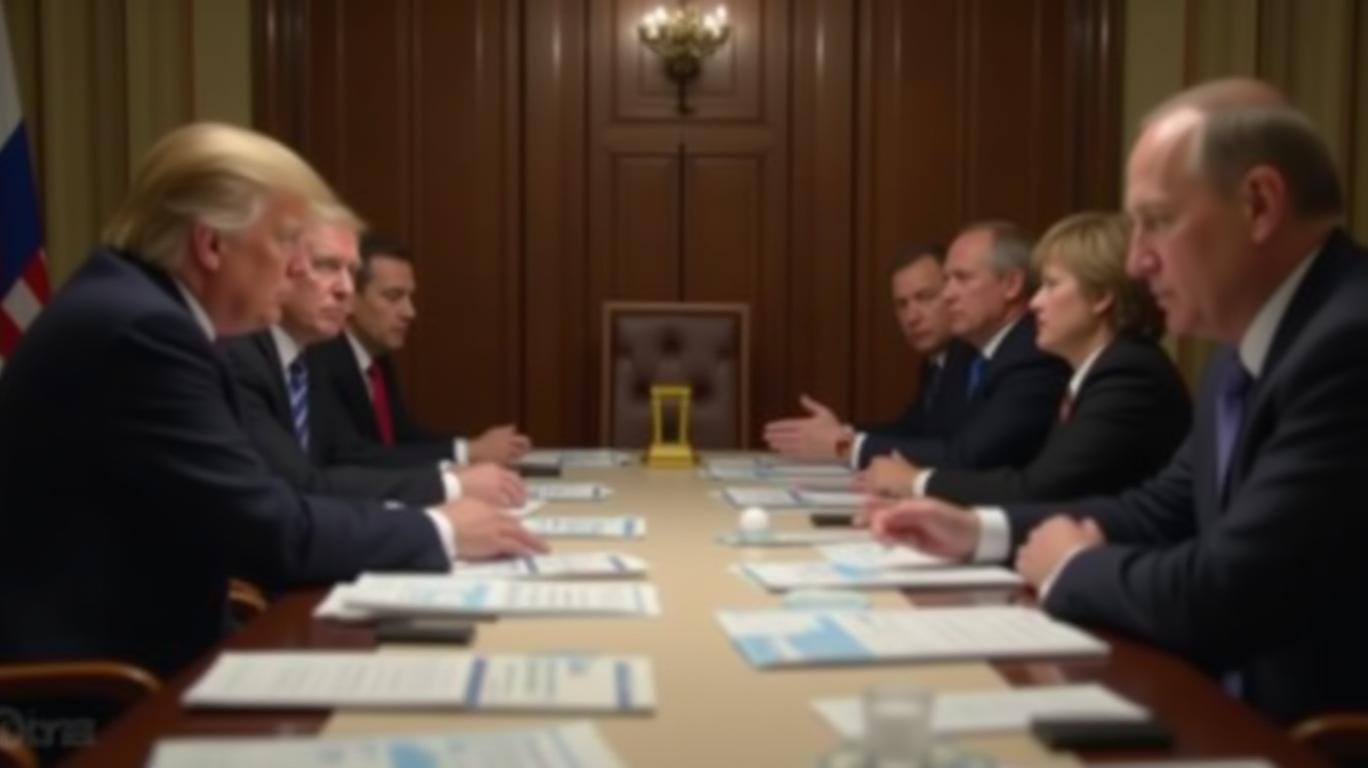
The potential for a ceasefire brings a glimmer of hope for stability in the region, which has been marred by conflict since Russia's full-scale invasion on February 24, 2022. The Russian Defense Ministry's claim that forces have recaptured the town of Sudzha, made hours after President Vladimir Putin's visit to commanders in Kursk, highlights the intensity of the conflict. However, the Ukrainian army's foothold inside Russia has been under intense pressure, and the renewed Russian military push has left Ukraine with a critical decision: withdraw back into Ukraine or risk being cut off from supply lines.
The insurance industry, which has been navigating the complexities of geopolitical tensions and rapid digital transformation, stands to benefit from a more stable environment. A ceasefire could temporarily reduce the immediate risk of conflict-related damages, leading to a decrease in claims related to property damage, business interruptions, and personal injuries. This reduction in claims could make underwriting in conflict zones more attractive for insurers, as it would lower the overall risk profile.
Moreover, a successful ceasefire could stabilize the region, allowing for more accurate risk assessments. Insurers could use this period to gather more data on the actual risks in the area, which would help in creating more precise underwriting models. Technologies such as advanced analytics, artificial intelligence (AI), the Internet of Things (IoT), cloud computing, and blockchain could be more effectively utilized to enhance risk assessment and underwriting processes. For instance, AI and advanced analytics can help in more accurate pricing and faster underwriting and binding processes, as mentioned in the 2025 Global Insurance Outlook.
The stabilization brought by a ceasefire could also open up opportunities for new business models. Insurers could explore digital challengers that operate with lean, tech-driven strategies, ecosystem orchestrators that integrate interconnected services to deliver comprehensive solutions, and prevention-focused partners aiming to mitigate risks proactively. The ceasefire could also encourage partnerships and collaborations between traditional insurers and InsurTech startups, leveraging technology to challenge traditional norms and carve new paths.
In conclusion, the proposed 30-day ceasefire in Ukraine, endorsed by Ukraine and discussed by U.S. and Russian officials, could provide a window of opportunity for the insurance industry to reassess and redefine its approach to risk assessment and underwriting in conflict zones. By leveraging advanced technologies and fostering partnerships, insurers could create more accurate and effective underwriting models, ultimately leading to better risk management and increased insurability in these regions. The outcome of these talks remains uncertain, but the potential for a more stable and prosperous global economy is a beacon of hope in an otherwise tumultuous geopolitical landscape.



Divulgación editorial y transparencia de la IA: Ainvest News utiliza tecnología avanzada de Modelos de Lenguaje Largo (LLM) para sintetizar y analizar datos de mercado en tiempo real. Para garantizar los más altos estándares de integridad, cada artículo se somete a un riguroso proceso de verificación con participación humana.
Mientras la IA asiste en el procesamiento de datos y la redacción inicial, un miembro editorial profesional de Ainvest revisa, verifica y aprueba de forma independiente todo el contenido para garantizar su precisión y cumplimiento con los estándares editoriales de Ainvest Fintech Inc. Esta supervisión humana está diseñada para mitigar las alucinaciones de la IA y garantizar el contexto financiero.
Advertencia sobre inversiones: Este contenido se proporciona únicamente con fines informativos y no constituye asesoramiento profesional de inversión, legal o financiero. Los mercados conllevan riesgos inherentes. Se recomienda a los usuarios que realicen una investigación independiente o consulten a un asesor financiero certificado antes de tomar cualquier decisión. Ainvest Fintech Inc. se exime de toda responsabilidad por las acciones tomadas con base en esta información. ¿Encontró un error? Reportar un problema


SOBRE NOSOTROS
Nuestra historiaAutores de noticiasBase de conocimientosPolítica de privacidadTérmino de usoDescargo de responsabilidad de corretaje de tercerosTérminos de uso de AIMEDivulgaciones de riesgos de AInvest AICarrerasCONTÁCTENOS
Email: support@ainvest.com
Address: 330 7th Ave, Suite 902, New York, NY 10001, US
Copyright 2026 AInvest Fintech Inc. All rights reserved.


Comentarios
Aún no hay comentarios