
Trump Sued Over China Tariffs: Congress Did Not Grant Presidents 'Blank Check To Write Domestic Policy'
Generado por agente de IAWesley Park
jueves, 3 de abril de 2025, 8:57 pm ET2 min de lectura
Ladies and gentlemen, buckleBKE-- up! We're diving headfirst into the storm of trade wars and legal battles that are shaking the foundations of the U.S. economy. President Donald Trump has been sued over his sweeping tariffs on China, and this lawsuit is a game-changer. It's not just about tariffs anymore; it's about the very fabric of our constitutional powers and the future of trade policy in America.
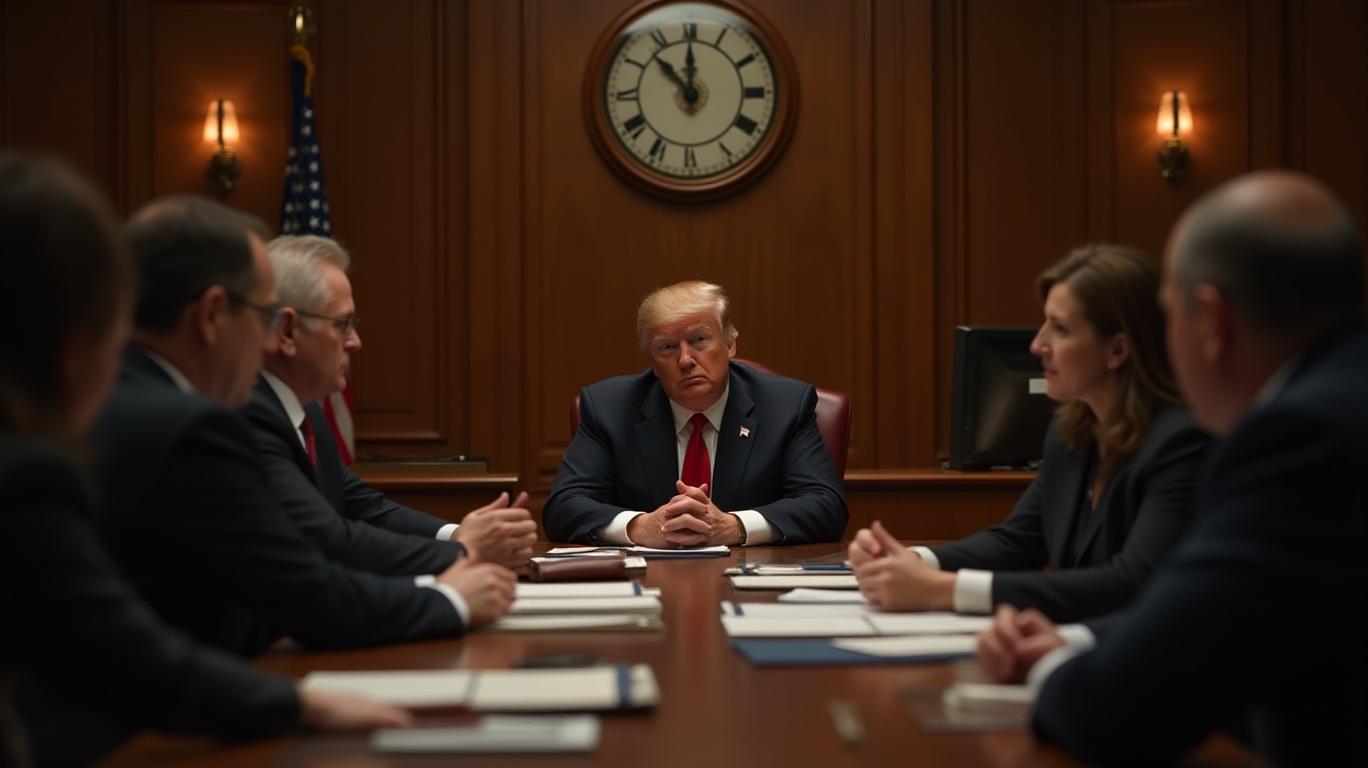
The lawsuit, filed by a small retail stationery business named Simplified, is a bold move that challenges the constitutional boundaries of executive power in trade policy. Simplified alleges that Trump improperly bypassed Congress by imposing tariffs under the International Emergency Economic Powers Act of 1977 (IEEPA). This act allows the president to declare a national emergency and impose tariffs, effectively sidestepping the detailed constraints Congress has placed on tariff authority. The lawsuit argues that this action is an unconstitutional delegation of legislative power to the executive branch, a violation of the non-delegation doctrine.
The non-delegation doctrine, as established in cases like Wayman v. Southard (1825) and Field v. Clark (1892), holds that Congress cannot delegate powers that are strictly and exclusively legislative. The lawsuit argues that by using IEEPA, Trump has overstepped his constitutional authority and encroached on Congress's power to levy tariffs, as outlined in Article I, Section 8 of the Constitution. This challenge has significant implications for future presidential actions on tariffs, as it could set a precedent for limiting the executive branch's ability to unilaterally impose tariffs without congressional approval.
If the court rules in favor of Simplified, it could strengthen congressional oversight over trade policy and curb the president's discretion in imposing tariffs, potentially leading to a more balanced approach to trade policy that respects the separation of powers. This is a monumental moment, folks! The outcome of this lawsuit could reshape the way we think about trade policy and the balance of power between the executive and legislative branches.
Now, let's talk about the economic impacts of this lawsuit on U.S. businesses and consumers, particularly those reliant on imports from China. The lawsuit alleges that the tariffs will inflict "competitive injury in the form of higher costs, competitive disadvantage and lost profits" on Simplified, which sells premium calendar planners and other organizational tools. This suggests that other businesses importing from China may face similar challenges, leading to increased costs for consumers and potential job losses in the U.S.
The tariffs, which are the highest in over a century, could drive up prices for American consumers and manufacturers. For instance, the tariffs on Chinese goods are set at a staggering 34 percent, on top of tariffs that Trump had already imposed since January. This could lead to a significant increase in the cost of goods for U.S. consumers, as businesses pass on the increased costs to their customers. Additionally, the tariffs could disrupt global supply chains and hurt corporate profits, as seen in the stock market's worst day since 2020, with the Dow falling nearly 4%, the S&P 500 losing nearly 5%, and the Nasdaq declining nearly 6%.
The lawsuit could also influence market sentiment and investment decisions. The uncertainty surrounding the tariffs and the potential for a trade war could lead to a decrease in consumer and business confidence, as seen in the stock market's reaction to Trump's tariffs. This could lead to a decrease in investment and spending, further hurting the U.S. economy. Additionally, the lawsuit could lead to a delay in the implementation of the tariffs, providing some relief to businesses and consumers in the short term. However, if the lawsuit is unsuccessful, the tariffs could remain in place, leading to long-term economic impacts.
So, what does this all mean for you, the investor? It means that you need to stay vigilant and be prepared for the potential impacts of this lawsuit on the market. The outcome of this lawsuit could have far-reaching consequences for the U.S. economy and the future of trade policy. It's a wild ride, folks, but remember, the market hates uncertainty, and this lawsuit is a big dose of it. Stay tuned, and stay informed, because this is one legal battle that could change the game for good.



Divulgación editorial y transparencia de la IA: Ainvest News utiliza tecnología avanzada de Modelos de Lenguaje Largo (LLM) para sintetizar y analizar datos de mercado en tiempo real. Para garantizar los más altos estándares de integridad, cada artículo se somete a un riguroso proceso de verificación con participación humana.
Mientras la IA asiste en el procesamiento de datos y la redacción inicial, un miembro editorial profesional de Ainvest revisa, verifica y aprueba de forma independiente todo el contenido para garantizar su precisión y cumplimiento con los estándares editoriales de Ainvest Fintech Inc. Esta supervisión humana está diseñada para mitigar las alucinaciones de la IA y garantizar el contexto financiero.
Advertencia sobre inversiones: Este contenido se proporciona únicamente con fines informativos y no constituye asesoramiento profesional de inversión, legal o financiero. Los mercados conllevan riesgos inherentes. Se recomienda a los usuarios que realicen una investigación independiente o consulten a un asesor financiero certificado antes de tomar cualquier decisión. Ainvest Fintech Inc. se exime de toda responsabilidad por las acciones tomadas con base en esta información. ¿Encontró un error? Reportar un problema


SOBRE NOSOTROS
Nuestra historiaAutores de noticiasBase de conocimientosPolítica de privacidadTérmino de usoDescargo de responsabilidad de corretaje de tercerosTérminos de uso de AIMEDivulgaciones de riesgos de AInvest AICarrerasCONTÁCTENOS
Email: support@ainvest.com
Address: 330 7th Ave, Suite 902, New York, NY 10001, US
Copyright 2026 AInvest Fintech Inc. All rights reserved.


Comentarios
Aún no hay comentarios