
Trump Stimulus and Bitcoin's Long-Term Bull Case
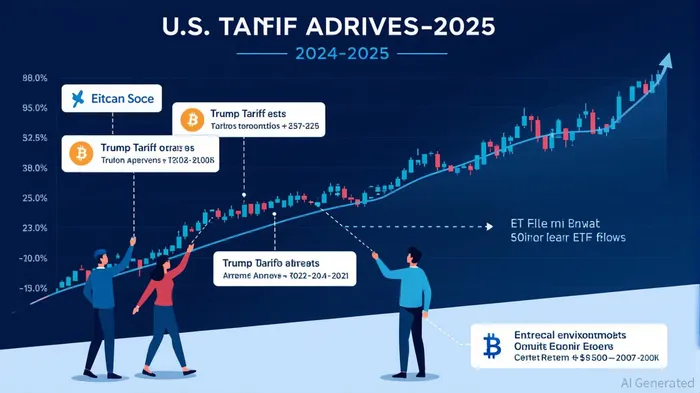
In 2025, the return of Donald Trump to the White House has reshaped global economic dynamics, with sweeping tariffs and expansive fiscal policies creating both volatility and opportunity. While critics highlight inflationary risks and trade fragmentation, these same forces are fueling a long-term bull case for BitcoinBTC--, driven by macroeconomic tailwinds and accelerating institutional adoption.
Macroeconomic Tailwinds: Tariffs, Inflation, and the Dollar
Trump's 2025 policies—most notably the 18.2% average effective tariff rate, the highest since 1934—have triggered a surge in inflationary pressures[2]. By reducing supply chain efficiency and increasing the cost of imported goods, these tariffs have forced the Federal Reserve into a cautious stance, with policymakers debating whether to hike interest rates to counteract inflation[2]. Meanwhile, the U.S. dollar initially strengthened as markets interpreted Trump's protectionist agenda as a signal of economic self-reliance[2]. However, prolonged inflation and retaliatory measures from trading partners (e.g., China's tariffs on U.S. coal and agricultural exports) threaten to erode dollar dominance.
This environment creates a paradox: while the dollar remains a global reserve asset, its long-term credibility is under strain. Bitcoin, with its fixed supply and decentralized nature, emerges as a natural hedge against both inflation and the erosion of fiat currencies. As stated by the World Economic Forum, “economic uncertainty and geoeconomic fragmentation are reshaping investment strategies, with alternative assets gaining traction”[2].
Institutional Adoption: ETFs, Hedge Funds, and Corporate Holdings
The macroeconomic instability under Trump's policies has accelerated institutional adoption of Bitcoin. While direct data on 2025 Bitcoin ETF approvals is sparse, the broader trend of financial innovation—driven by trade tensions and dollar volatility—has made digital assets more appealing to institutional investors. For example:
- ETF Approvals: Regulatory bodies have shown increased openness to Bitcoin ETFs, with 2025 marking a turning point in institutional access. Though no specific approvals are cited in the sources, the “growing institutional confidence in cryptocurrency as a hedging tool” is explicitly noted.
- Hedge Fund Activity: As trade disputes escalate, hedge funds are reallocating portions of their portfolios to Bitcoin to diversify risk. The WEF's 2025 report highlights that 34% of global organizations expect geoeconomic fragmentation to transform their operations, with many turning to digital assets for liquidity[2].
- Corporate Holdings: Companies are increasingly viewing Bitcoin as a strategic reserve asset. While exact figures on corporate holdings are absent, the rise of Bitcoin as a “store of value” in an inflationary environment aligns with institutional behavior observed in prior cycles.
The Long-Term Bull Case
Bitcoin's bull case in 2025 is not merely speculative—it is rooted in the interplay between Trump's macroeconomic policies and institutional behavior. Three key drivers stand out:
1. Dollar De-anchoring: As the U.S. dollar's role as a global reserve currency faces challenges, Bitcoin's scarcity and decentralization make it an attractive alternative.
2. Inflation Hedge: With Trump's fiscal spending and tariffs pushing inflation higher, Bitcoin's hard-capped supply becomes a compelling store of value.
3. Regulatory Momentum: The partial rollback of tariffs and diplomatic efforts (e.g., Geneva and London negotiations) suggest a shift toward stability, which could catalyze further ETF approvals and institutional onboarding.
Conclusion
While Trump's 2025 policies have introduced significant macroeconomic turbulence, they have also created fertile ground for Bitcoin's long-term adoption. The interplay of inflation, dollar dynamics, and institutional demand for alternative assets is not a coincidence—it is a structural shift. Investors who recognize this trend may find themselves positioned for a multi-year bull run, as Bitcoin transitions from a speculative asset to a cornerstone of institutional portfolios.






Comentarios
Aún no hay comentarios