
Trump's Stance on Israeli Annexation and Its Ripple Effects on Middle East Markets
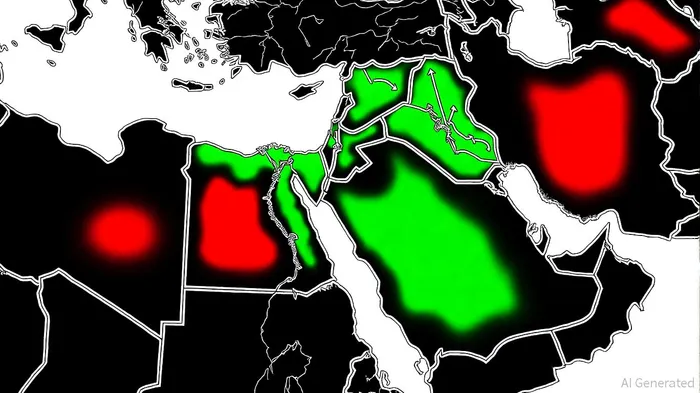
The Middle East remains a focal point for global investors, with U.S. policy shifts under President Donald Trump reshaping regional dynamics and market behavior. Trump's recent assurances to Arab leaders that he will not allow Israel to annex the West Bank[1] have sparked a nuanced recalibration of investor sentiment, regional risk premiums, and commodity flows. This analysis examines how Trump's stance—coupled with broader geopolitical tensions—has influenced equities and commodities in the region, offering insights for investors navigating a volatile landscape.
Investor Sentiment: A Delicate Balancing Act
Trump's firm opposition to Israeli annexation has been framed as a stabilizing force in the region, particularly for Arab allies like the UAE and Saudi Arabia, which have warned of dire consequences should Israel proceed[2]. These assurances have temporarily eased concerns about the collapse of the Abraham Accords, a cornerstone of Trump's Middle East diplomacy[3]. However, the underlying uncertainty persists. For instance, Gulf stock markets reacted sharply to Trump's earlier proposal to resettle Palestinians in Gaza, with Saudi Arabia's Tadawul index declining as investors adopted a cautious stance[4]. This volatility underscores the fragility of investor confidence, which remains tethered to U.S. policy clarity and regional stability.
The UAE's explicit warning that annexation would “undermine the spirit of the Abraham Accords”[5] has further amplified market jitters. While Trump's 21-point peace plan[6] has been hailed as a potential breakthrough, its implementation hinges on resolving tensions between Israel's right-wing coalition and Arab states—a process that remains fraught with unpredictability.
Regional Risk Premiums: A Surge in Insurance Costs
The geopolitical uncertainty has directly translated into higher risk premiums, particularly in the insurance sector. War risk insurance premiums for shipments through the Strait of Hormuz—a critical energy transit point—have doubled in a week, rising to 0.5% of voyage value[7]. This surge reflects fears of Iranian blockades and broader regional instability, with hull and machinery insurance for ships transiting the strait increasing by 60%[8].
These repricings are not isolated to shipping. Political risk insurance demand has spiked among multinational corporations, as firms seek to hedge against supply chain disruptions and regulatory shifts[9]. Meanwhile, cyber insurers face growing challenges in modeling risks tied to state-sponsored attacks, which have become more frequent amid heightened tensions[10]. The cumulative effect is a tightening of capital for insurers, as correlated risks across marine, aviation, and terrorism lines strain underwriting capacity[11].
Commodities: Oil Prices and the Shadow of Conflict
The energy sector has been particularly sensitive to Trump's Middle East policies. For example, a ceasefire between Israel and Iran in mid-2025 led to a sharp drop in oil prices, as fears of a Hormuz blockade receded[12]. Conversely, Trump's earlier comments on Iran-Israel tensions triggered a 5% spike in Brent crude prices within days[13]. These swings highlight the market's dependence on U.S. diplomatic interventions to mitigate supply shocks.
The Strait of Hormuz remains a critical vulnerability. Analysts note that a sustained peace in the region could further depress oil prices, given the global market's oversupply and OPEC+'s plans to increase production[14]. However, the risk of renewed conflict—whether through annexation or Iranian escalation—continues to act as a price floor, ensuring that oil remains a barometer of Middle East stability.
Strategic Implications for Investors
For investors, the interplay between Trump's policies and regional dynamics demands a dual focus:
1. Equities: Gulf markets, while showing resilience, remain susceptible to policy-driven volatility. Sectors tied to infrastructure and trade (e.g., shipping, logistics) face elevated risks due to insurance cost surges[15].
2. Commodities: Oil and gas remain key indicators of regional stability. A sustained de-escalation could unlock long-term gains, but short-term fluctuations will likely persist[16].
Conclusion
Trump's opposition to Israeli annexation has provided a temporary buffer for regional stability, but the broader geopolitical chessboard remains volatile. Investors must navigate a landscape where U.S. policy shifts, Arab-Israeli tensions, and energy market dynamics are inextricably linked. As the region teeters between conflict and diplomacy, the ability to anticipate and hedge against policy-driven risks will be paramount for those seeking to capitalize on—or mitigate losses in—Middle East-related assets.







Comentarios
Aún no hay comentarios