
Trump's Spending Power Grab: A New Era for US Finance?
Generado por agente de IAWesley Park
miércoles, 29 de enero de 2025, 6:17 pm ET2 min de lectura
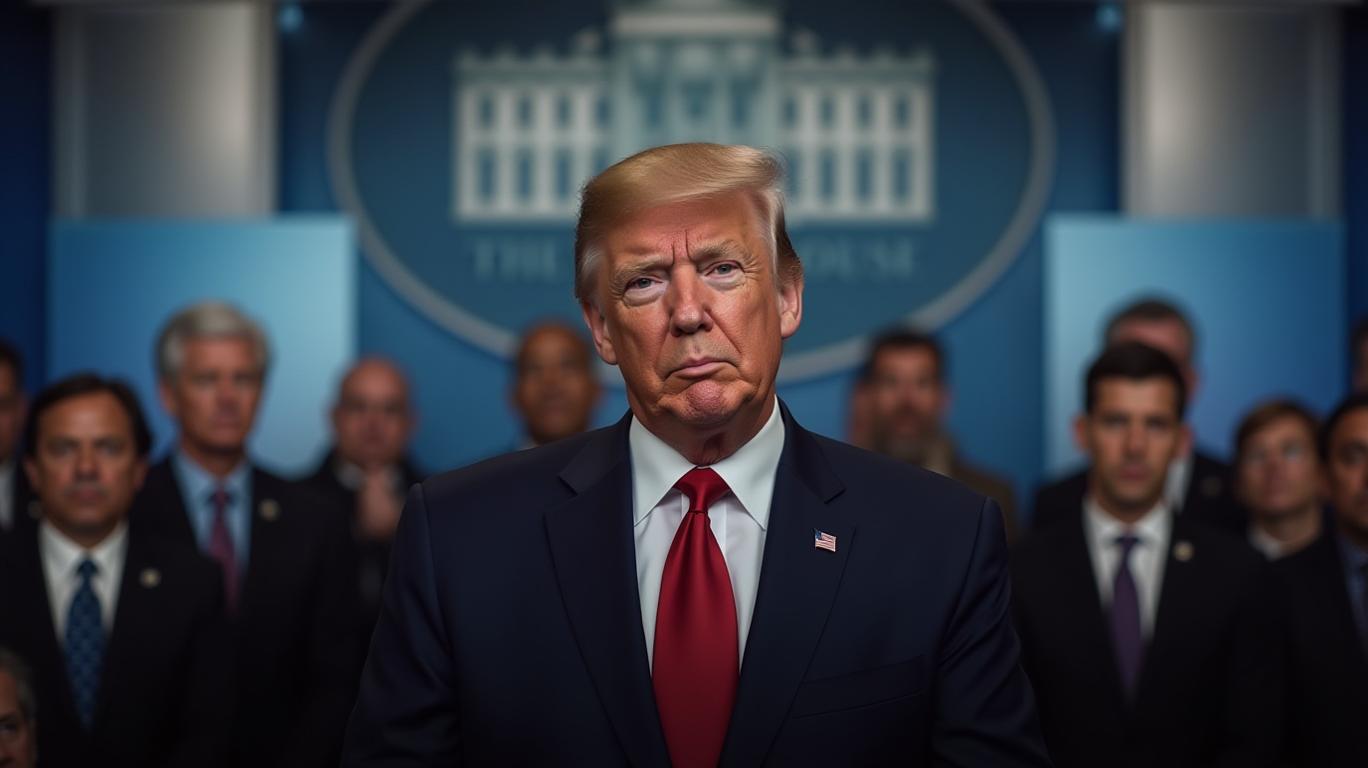
As President Donald Trump returns to the White House, his administration is exploring dozens of new ways to seize spending power, potentially reshaping the US financial landscape. This article delves into the implications of these moves, the sectors most likely to be affected, and the constitutional challenges that may arise.
A New Approach to Federal Spending
The Trump administration has signaled its intention to assert greater control over federal spending, with a memo from Matthew Vaeth, acting director of the White House Office of Management and Budget (OMB), ordering a pause in federal grants and loans. This move reflects a broader theory of presidential power that Trump endorsed during his 2024 campaign, challenging the traditional separation of powers between the executive and legislative branches.
Sectors and Industries in the Crosshairs
Several sectors and industries are likely to be affected by the White House's new spending initiatives, with potential impacts on their stock performances. Financials and energy stocks are expected to benefit from deregulation and increased government spending, while small-cap companies may face headwinds from higher tariffs and labor cost inflation. Construction and hospitality industries could face higher operational costs due to tighter immigration policies and rising tariffs, testing the resilience of labor-intensive businesses. Renewable energy and offshore wind stocks may be impacted by changes in transmission planning and permitting processes, and LNG and petrochemical stocks could experience increased competition and potential oversupply.
Constitutional Challenges and Power Dynamics
The White House's attempts to seize spending power could lead to significant constitutional challenges and an imbalance between the executive and legislative branches. The Trump administration's theory of "impoundment" holds that the president can decide not to spend money on anything they deem unnecessary, potentially setting up a constitutional fight that would require the Supreme Court to weigh in. The memo's language suggests a broad interpretation of presidential power that could lead to further constitutional challenges and pushback from other branches of government.

Looking Ahead
As the Trump administration explores new ways to seize spending power, investors and stakeholders should closely monitor the developments and their potential impacts on the financial landscape. While some sectors may benefit from deregulation and increased government spending, others could face significant challenges. The outcome of these developments will depend on the actions of the judiciary, Congress, and the public in holding the executive branch accountable and preserving the separation of powers.
In conclusion, the White House's attempts to seize spending power could have far-reaching implications for the US financial landscape, with potential impacts on various sectors and industries. As the administration presses forward with its agenda, investors and stakeholders should stay informed and adapt their strategies accordingly. The balance of power between the executive and legislative branches, as well as the potential constitutional challenges, will be crucial factors to watch in the coming months and years.



Divulgación editorial y transparencia de la IA: Ainvest News utiliza tecnología avanzada de Modelos de Lenguaje Largo (LLM) para sintetizar y analizar datos de mercado en tiempo real. Para garantizar los más altos estándares de integridad, cada artículo se somete a un riguroso proceso de verificación con participación humana.
Mientras la IA asiste en el procesamiento de datos y la redacción inicial, un miembro editorial profesional de Ainvest revisa, verifica y aprueba de forma independiente todo el contenido para garantizar su precisión y cumplimiento con los estándares editoriales de Ainvest Fintech Inc. Esta supervisión humana está diseñada para mitigar las alucinaciones de la IA y garantizar el contexto financiero.
Advertencia sobre inversiones: Este contenido se proporciona únicamente con fines informativos y no constituye asesoramiento profesional de inversión, legal o financiero. Los mercados conllevan riesgos inherentes. Se recomienda a los usuarios que realicen una investigación independiente o consulten a un asesor financiero certificado antes de tomar cualquier decisión. Ainvest Fintech Inc. se exime de toda responsabilidad por las acciones tomadas con base en esta información. ¿Encontró un error? Reportar un problema


SOBRE NOSOTROS
Nuestra historiaAutores de noticiasBase de conocimientosPolítica de privacidadTérmino de usoDescargo de responsabilidad de corretaje de tercerosTérminos de uso de AIMEDivulgaciones de riesgos de AInvest AICarrerasCONTÁCTENOS
Email: support@ainvest.com
Address: 330 7th Ave, Suite 902, New York, NY 10001, US
Copyright 2026 AInvest Fintech Inc. All rights reserved.


Comentarios
Aún no hay comentarios