
Trump Signs Stablecoin Law, Mandating 100% Cash Backing and Federal Oversight
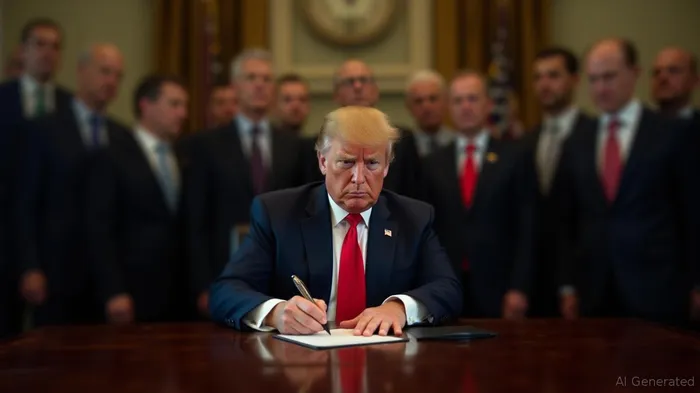
President Donald Trump has signed the “Guiding and Establishing National Innovation for U.S. Stablecoins Act” (GENIUS Act) into law, marking a pivotal shift in the regulatory landscape for stablecoins and digital assets in the United States. The bipartisan legislation, championed by Senator Bill Hagerty, addresses long-standing uncertainties in the sector by establishing a federal framework for payment stablecoins while reinforcing consumer protections and anti-money laundering measures. The law emerges after a contentious political battle, balancing conservative Republican skepticism and Democratic concerns through strategic compromises, including integrating provisions from the “Anti-CBDC Surveillance State Act” into a critical defense bill [1].
The GENIUS Act introduces a two-tiered oversight system for stablecoin issuers, allowing them to operate under a federal charter or state regulation, provided state rules meet federal approval. Issuers with under $10 billion in circulation will fall under state jurisdiction if their programs are certified by a new federal committee. A key provision mandates that stablecoins must be 100% backed by cash or short-term U.S. Treasuries, prohibiting the reuse of reserves—a direct response to past controversies involving asset diversification in stablecoin collateral. Additionally, the law imposes a two-year moratorium on algorithmic stablecoins, such as TerraUSD, which rely on crypto-backed mechanisms [1].
Regulatory authority is centralized under the Office of the Comptroller of the Currency (OCC) and the Federal Reserve, with a newly formed Stablecoin Certification Review Committee overseeing compliance. This committee, comprising Treasury, Fed, and FDIC officials, will evaluate state-level regulatory proposals, ensuring alignment with federal standards. Transparency requirements are stringent: issuers must publish monthly, certified reserve breakdowns, with CEO and CFO accountability. Independent audits will further verify compliance, addressing prior criticisms of opaque reserve practices [1].
Market implications are stark for major players. Tether’s USDTUSDT--, the largest stablecoin, faces a significant operational overhaul. Its diversified reserve strategy, which includes commercial paper and other assets, must transition to a cash-and-Treasury-only model. Tether has pledged compliance but may need to restructure a U.S.-specific version of USDT to meet the law’s demands. USD Coin (USDC), operated by CircleCRCL--, is better positioned due to its existing alignment with the law’s requirements, though it must enhance reporting frequency and audit rigor. Conversely, Dai (DAI), a decentralized stablecoin backed by crypto assets, is at a structural disadvantage. Its model conflicts with the law’s cash-centric mandate, leaving it without a clear regulatory pathway within the U.S. system [1].
The law’s regulatory boundaries explicitly exclude the SEC and CFTC from classifying stablecoins as securities or commodities, effectively sidelining their jurisdiction in this sector. This move counters the SEC’s enforcement-driven approach and aims to foster private-sector innovation. However, the Treasury will continue studying non-payment stablecoins in collaboration with the SEC and CFTC, signaling unresolved jurisdictional tensions [1].
Globally, the U.S. now contends with the European Union’s Markets in Crypto-Assets (MiCA) framework, which offers a unified regulatory license across 27 member states. In contrast, the U.S. system combines federal and state oversight, a model some argue promotes flexibility and private-sector growth. The GENIUS Act’s passage accelerates the U.S. effort to shape digital finance norms, though its patchwork approach may face challenges in competing with MiCA’s streamlined framework [1].
The law also intertwines with broader debates over central bank digital currencies (CBDCs). Proponents argue that a robust private stablecoin market could render a U.S. CBDC unnecessary, a stance reinforced by the attached Anti-CBDC Act, which blocks the Fed from offering digital currency accounts to the public. Critics, however, view the GENIUS Act as a “stealth” CBDC, granting federal agencies excessive control over private assets. Legal experts anticipate challenges to the law’s authority to freeze or burn stablecoin assets, raising questions about constitutional protections against unreasonable seizure [1].
The GENIUS Act’s implementation heralds a new phase in the U.S. crypto regulatory landscape. While it provides clarity for stablecoin operators, its long-term impact hinges on compliance hurdles, global competition, and unresolved legal debates. As industry players adapt to the law’s requirements, the battle for the future of digital finance—private versus public, decentralized versus centralized—remains far from settled.
Source: [1] [Trump signs GENIUS Act into law – Stablecoins, crypto adoption, and more…] [https://ambcrypto.com/trump-signs-genius-act-into-law-what-it-means-for-stablecoins-crypto-adoption-financial-risk/]





Comentarios
Aún no hay comentarios