
Trump Signs GENIUS Act Regulating Stablecoins in U.S.
President Donald Trump has signed the Guiding and Establishing National Innovation for United States Stablecoins (GENIUS) Act into law, marking a significant milestone in the regulation of stablecoins in the U.S. The bill, which passed with a bipartisan vote of 306–122 in the House of Representatives, introduces a comprehensive regulatory framework aimed at governing stablecoin issuance, reserve management, and transparency. This move has sparked debate over its implications for the development of central bank digital currency (CBDC).
The GENIUS Act imposes stringent requirements on stablecoin issuers operating in the U.S. market. Key provisions include mandatory 1:1 backing of stablecoins with U.S. dollars or highly liquid equivalents, regular third-party audits to verify reserve holdings, and dual licensing options for issuers to register with federal agencies or obtain state-level licenses with reciprocal recognition. The law also bans algorithmic stablecoins and uncollateralized digital assets posing as payment instruments. By defining stablecoins as a unique class of payment instruments, the law seeks to distinguish them from broader cryptocurrencies like Bitcoin or Ethereum. The policy also prohibits the use of proprietary blockchains for issuing compliant stablecoins, pushing for open, interoperable networks.
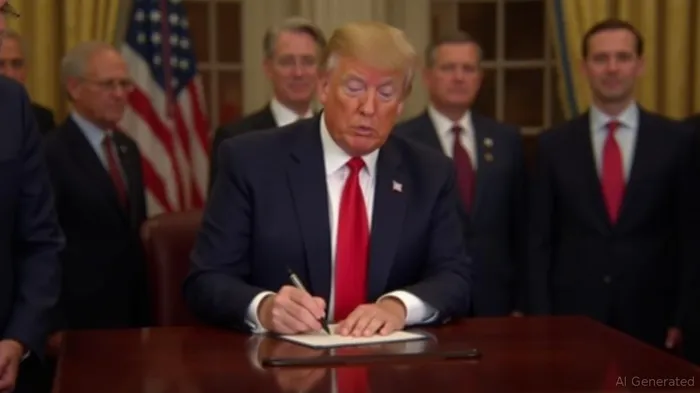
President Trump signed the GENIUS Act in a closed-door White House session early Friday morning. When asked about the name, he responded with a characteristic quip: “It’s called the GENIUS Act. I think it’s named after me.” His intervention was reportedly decisive in getting the bill across the finish line after some negotiations stalled earlier in the week. Crypto advisor and now federal “Crypto Czar” David Sacks said the bill was “dead” just days ago, but was revived following Trump's direct involvement. While the bill enjoyed broad support in both parties, it exposed a sharp divide among Republican lawmakers, particularly those skeptical of digital finance initiatives linked to federal authority.
Backers of the GENIUS Act argue that the legislation provides a clear legal pathway for private-sector stablecoin issuers, while imposing safeguards that address systemic risk. Unlike algorithmic stablecoins such as TerraUSD, which collapsed spectacularly in 2022, the GENIUS Act mandates strict asset backing, regular disclosures, and regulator oversight. Supporters say this not only protects consumers but also helps integrate stablecoins into the broader financial system without handing monetary control to the federal government. “Stablecoins are here to stay,” said Representative Patrick McHenry, Chair of the House Financial Services Committee. “This law ensures that they’re safe, sound, and regulated—not experimental or rogue.” Notably, the law does not create a new federal agency to oversee stablecoins but instead leverages existing regulators such as the Office of the Comptroller of the Currency (OCC), the Federal Reserve, and state banking regulators.
With Trump’s signature, the GENIUS Act becomes law immediately, but the full implementation timeline stretches into 2026. Regulatory agencies now have up to 18 months to draft detailed rules, define registration processes, and coordinate state-federal frameworks. During this interim period, existing stablecoin issuers like CircleCRCL-- (USDC), Paxos (USDP), and PayPalPYPL-- (PYUSD) will need to either apply for appropriate licenses or restructure operations to remain compliant. Analysts expect that most major issuers will align with the federal route to secure broader acceptance across U.S. financial markets. The GENIUS Act is also expected to influence institutional adoption of stablecoins by providing regulatory clarity. Banking giants like JPMorganJPM-- and fintech platforms like Stripe, which have been experimenting with stablecoin payments, may now ramp up development and testing in response.
The GENIUS Act’s passage comes amid a broader shift in U.S. policy toward digital assets, driven in part by political realignments. With Donald Trump openly campaigning as a pro-crypto president - and contrasting his stance with prior Biden administration skepticism - the crypto sector has gained new momentum in Washington. Just days before the GENIUS Act was signed, the House also passed two related bills: The Digital AssetDAAQ-- Market Clarity (CLARITY) Act, which defines jurisdictional roles for the SEC and CFTC in regulating crypto markets, and The Anti-CBDC Surveillance State Act, designed to block any future issuance of a U.S. central bank digital currency. Although only the GENIUS Act has become law so far, the broader legislative package signals the emergence of a new federal stance that embraces digital innovation while attempting to constrain government overreach.
Initial reactions from the crypto industry have been cautiously optimistic. Circle CEO Jeremy Allaire posted on X: “Regulatory clarity on stablecoins will unlock the next wave of crypto adoption. GENIUS is a milestone.” However, concerns remain around how the implementation process will unfold. Smaller issuers and DeFi protocols fear that compliance burdens could crowd out competition and entrench a handful of large players. Others worry that without explicit legal boundaries on CBDCs, the GENIUS Act may inadvertently pave the way for government-led digital currencies. “This is a sandbox for the Fed to experiment with digital dollars under the guise of private innovation,” said one anonymous policy advisor.
The GENIUS Act marks a historic moment in the evolution of U.S. digital asset regulation. As the first federal law dedicated to crypto infrastructure, it brings long-sought clarity to the stablecoin market, but not without controversy. While its backers hail it as a balanced approach that fosters innovation and protects users, critics warn of potential slippery slopes toward surveillance-oriented digital currency systems. As regulators move to implement the law’s provisions and more bills make their way through Congress, the GENIUS Act could either become a foundational pillar of responsible crypto finance - or a stepping stone to deeper state involvement in digital money.





Comentarios
Aún no hay comentarios