
Trump Signs GENIUS Act Regulating Stablecoins
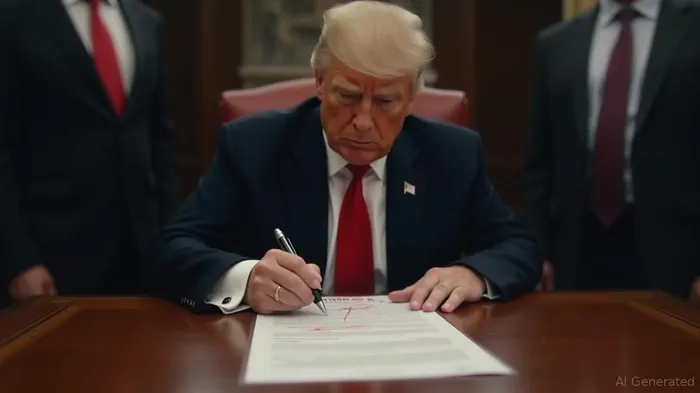
President Donald Trump is set to sign the "GENIUS Act" into law today, marking a pivotal moment in the regulation of cryptocurrencies in the United States. The Guiding and Establishing National Innovation for U.S. Stablecoins (GENIUS) Act, which garnered overwhelming bipartisan support in the House of Representatives, aims to establish clear guidelines for the issuance and management of stablecoins. These digital assets, which are pegged to a $1 valuation, are viewed as a faster and more cost-effective method for making payments.
The GENIUS Act mandates that stablecoin issuers must collateralize their coins with low-risk assets on a one-to-one basis, maintain accounts with state or federal regulators, and implement robust anti-money-laundering controls. This legislation is anticipated to offer greater protection for stablecoin holders against fraud and mismanagement, while also preventing their misuse by criminal actors. The passage of the bill has been widely hailed by the crypto industry as a historic advancement in the regulation of stablecoins.
However, the GENIUS Act has faced criticism for not adequately addressing potential conflicts of interest, particularly those involving the Trump family's crypto endeavors. Concerns have been raised about the absence of provisions that would prevent the Trump family from profiting from their own stablecoins. For example, World Liberty Financial, a firm affiliated with the Trump family, has been involved in a $2 billion investment deal with the world's largest crypto exchange, which could potentially earn the firm tens of millions of dollars.
Despite these criticisms, the urgent need to regulate the rapidly growing stablecoin market has driven lawmakers to support the GENIUS Act. Even those who had previously objected to Trump's crypto entanglements, such as Congressman Sam Liccardo, have lined up behind the bill. Liccardo acknowledged the need for a calculated compromise, stating that passing nothing would continue to create uncertainty about who can regulate and how.
The GENIUS Act is expected to lead to an explosion in the number of dollar-denominated stablecoins, with competition likely to be fierce among issuers. Experts predict that many traditional banks and fintech companies will enter the market, further driving innovation and growth in the stablecoin sector. Proponents of the bill argue that stablecoins will strengthen the US Dollar as the global reserve currency by increasing demand in developing countries with unstable economies, and allow the US to borrow more cheaply by juicing demand for government bonds.
However, critics warn that a proliferation of stablecoins could destabilize the financial system if regulators fail to maintain proper oversight. If a major issuer were to mismanage a stablecoin reserve, leading to a collapse in the coin's value and a potential run on other stablecoins, the value of US government bonds could tumble as issuers are forced to liquidate their reserve assets to cover redemptions. This could potentially leave taxpayers on the hook to pay for bailouts.
The GENIUS Act represents a significant step forward in the regulation of cryptocurrencies in the United States. While it may not be perfect, it provides a framework for the issuance and management of stablecoins that is expected to better protect holders and prevent misuse. As the bill becomes law, the crypto industry will continue to evolve, with stablecoins playing an increasingly important role in the global financial system.







Comentarios
Aún no hay comentarios