
Trump Set to Meet Oil Titans Amid Trade War
Generado por agente de IAHarrison Brooks
viernes, 14 de marzo de 2025, 1:31 pm ET2 min de lectura
CVX--
In the heart of the 2025 trade war, President Donald Trump is set to meet with the titans of the U.S. oil industry. The American Petroleum Institute (API), which includes giants like ExxonMobil and ChevronCVX--, has orchestrated this high-stakes gathering. The agenda? Tariffs, trade, and the export of liquefied natural gas. The stakes? Nothing less than the future of U.S. energy policy and the global oil market.
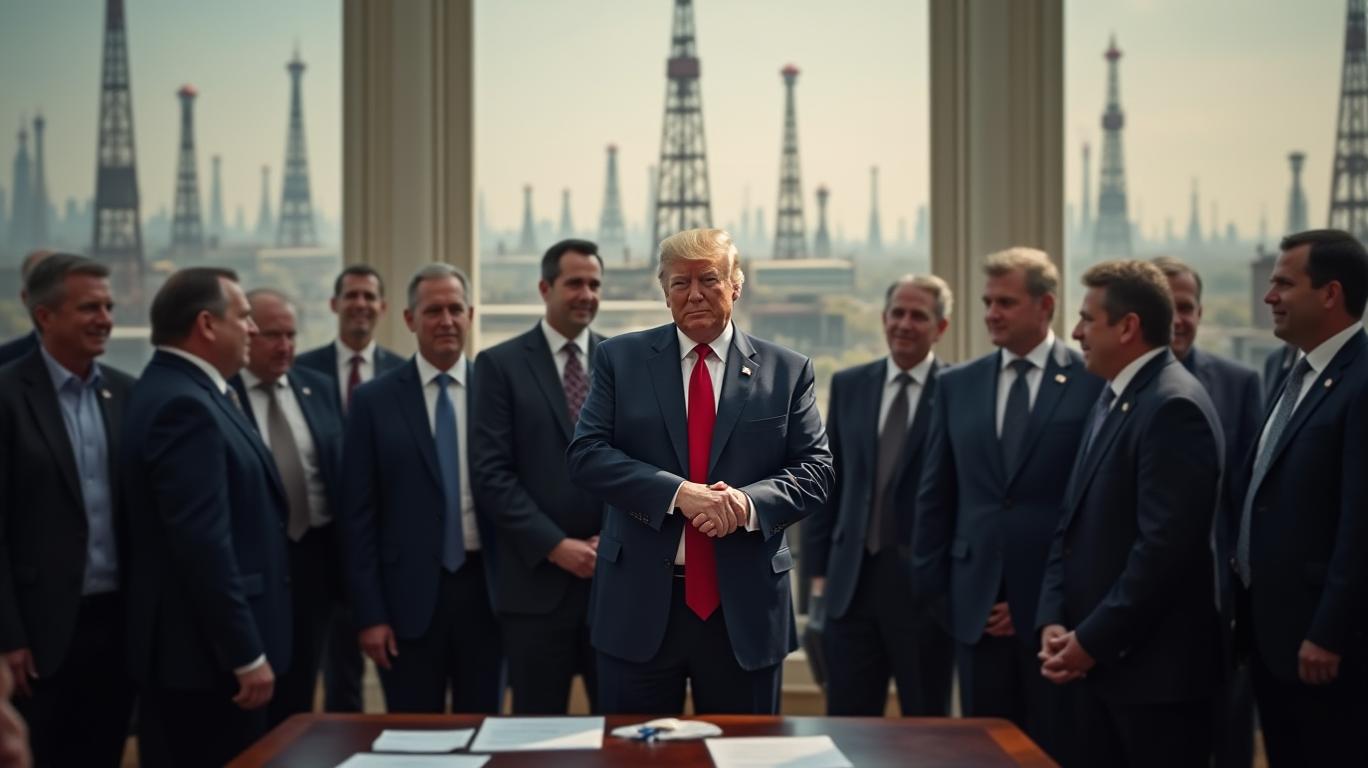
The API, which has publicly opposed Trump’s trade war with allies Mexico and Canada, is hoping to steer the conversation towards free and fair trade. “Energy markets are highly integrated, and free and fair trade across our borders is critical for delivering affordable, reliable energy to U.S. consumers,” API CEO Mike Sommers has stated. This stance aligns with the industry’s broader interest in maintaining free trade to ensure the affordability and reliability of energy supplies.
But the concerns of American energyUSEG-- executives go deeper. In private, they worry about the economic slowdown that could result from lower oil prices and the impact of tariffs on their bottom line. During the CERAWeek conference, industry executives discussed their frustrations with the tariffs and the potential economic downturn, while still praising Trump’s administration for its deregulation efforts.
The financial support from oil and gas interests to Trump’s presidential campaign, totaling $75 million, could potentially influence the administration’s energy policies. Key donors such as Harold Hamm of Continental Resources, Kelcy Warren of Energy TransferET-- Partners, and Jeffery Hildebrand of Hilcorp Energy Co, who collectively donated $15 million, might expect favorable policies in return. This financial support could lead to policies that benefit the oil and gas industry, such as deregulation and reduced environmental regulations, which could enhance profitability for these companies.
The upcoming meeting between U.S. oil producers and President Donald Trump, facilitated by the American Petroleum Institute (API), is likely to focus on topics such as tariffs, trade, and exports of liquefied natural gas. The API, which includes major oil companies like ExxonMobil and Chevron, has publicly opposed Trump’s trade war with allies Mexico and Canada. The API’s CEO, Mike Sommers, has emphasized the importance of free and fair trade for delivering affordable, reliable energy to U.S. consumers. This suggests that the industry might push for policies that mitigate the impact of tariffs and promote trade agreements that benefit the oil and gas sector.
The administration’s stance on tariffs and trade could be influenced by the industry’s concerns. For instance, Trump has imposed tariffs on imported crude from Canada and Mexico but issued exemptions for producers who comply with the United States-Mexico-Canada Agreement (USMCA). This approach indicates a willingness to balance trade restrictions with industry interests, potentially leading to policies that support the oil and gas sector while addressing broader economic concerns.
The broader implications of the U.S.-China trade war on the global energy market are also at play. The trade conflict between the U.S. and China has already led to a reduction in energy demand and a general economic slowdown in both countries, as indicated by a study on the impacts of the trade war. This could further affect global oil prices and market stability, as China and the U.S. are two of the world's largest energy consumers and producers.
In summary, the meeting between President Trump and U.S. oil producers could have significant implications for U.S. trade policies and the global oil market. The API's involvement suggests a push for reduced tariffs on imported crude, which could lower energy costs and increase trade. However, the broader implications of the U.S.-China trade war and potential retaliatory measures from Canada and Mexico could also affect global oil demand and supply dynamics. The financial support from oil and gas interests could influence the administration’s energy policies by promoting deregulation and favorable trade agreements. The industry can balance these interests by engaging in lobbying and advocacy, using public relations, forming strategic partnerships, investing in clean energy, and adapting to regulatory changes.
XOM--
In the heart of the 2025 trade war, President Donald Trump is set to meet with the titans of the U.S. oil industry. The American Petroleum Institute (API), which includes giants like ExxonMobil and ChevronCVX--, has orchestrated this high-stakes gathering. The agenda? Tariffs, trade, and the export of liquefied natural gas. The stakes? Nothing less than the future of U.S. energy policy and the global oil market.
The API, which has publicly opposed Trump’s trade war with allies Mexico and Canada, is hoping to steer the conversation towards free and fair trade. “Energy markets are highly integrated, and free and fair trade across our borders is critical for delivering affordable, reliable energy to U.S. consumers,” API CEO Mike Sommers has stated. This stance aligns with the industry’s broader interest in maintaining free trade to ensure the affordability and reliability of energy supplies.
But the concerns of American energyUSEG-- executives go deeper. In private, they worry about the economic slowdown that could result from lower oil prices and the impact of tariffs on their bottom line. During the CERAWeek conference, industry executives discussed their frustrations with the tariffs and the potential economic downturn, while still praising Trump’s administration for its deregulation efforts.
The financial support from oil and gas interests to Trump’s presidential campaign, totaling $75 million, could potentially influence the administration’s energy policies. Key donors such as Harold Hamm of Continental Resources, Kelcy Warren of Energy TransferET-- Partners, and Jeffery Hildebrand of Hilcorp Energy Co, who collectively donated $15 million, might expect favorable policies in return. This financial support could lead to policies that benefit the oil and gas industry, such as deregulation and reduced environmental regulations, which could enhance profitability for these companies.
The upcoming meeting between U.S. oil producers and President Donald Trump, facilitated by the American Petroleum Institute (API), is likely to focus on topics such as tariffs, trade, and exports of liquefied natural gas. The API, which includes major oil companies like ExxonMobil and Chevron, has publicly opposed Trump’s trade war with allies Mexico and Canada. The API’s CEO, Mike Sommers, has emphasized the importance of free and fair trade for delivering affordable, reliable energy to U.S. consumers. This suggests that the industry might push for policies that mitigate the impact of tariffs and promote trade agreements that benefit the oil and gas sector.
The administration’s stance on tariffs and trade could be influenced by the industry’s concerns. For instance, Trump has imposed tariffs on imported crude from Canada and Mexico but issued exemptions for producers who comply with the United States-Mexico-Canada Agreement (USMCA). This approach indicates a willingness to balance trade restrictions with industry interests, potentially leading to policies that support the oil and gas sector while addressing broader economic concerns.
The broader implications of the U.S.-China trade war on the global energy market are also at play. The trade conflict between the U.S. and China has already led to a reduction in energy demand and a general economic slowdown in both countries, as indicated by a study on the impacts of the trade war. This could further affect global oil prices and market stability, as China and the U.S. are two of the world's largest energy consumers and producers.
In summary, the meeting between President Trump and U.S. oil producers could have significant implications for U.S. trade policies and the global oil market. The API's involvement suggests a push for reduced tariffs on imported crude, which could lower energy costs and increase trade. However, the broader implications of the U.S.-China trade war and potential retaliatory measures from Canada and Mexico could also affect global oil demand and supply dynamics. The financial support from oil and gas interests could influence the administration’s energy policies by promoting deregulation and favorable trade agreements. The industry can balance these interests by engaging in lobbying and advocacy, using public relations, forming strategic partnerships, investing in clean energy, and adapting to regulatory changes.

Divulgación editorial y transparencia de la IA: Ainvest News utiliza tecnología avanzada de Modelos de Lenguaje Largo (LLM) para sintetizar y analizar datos de mercado en tiempo real. Para garantizar los más altos estándares de integridad, cada artículo se somete a un riguroso proceso de verificación con participación humana.
Mientras la IA asiste en el procesamiento de datos y la redacción inicial, un miembro editorial profesional de Ainvest revisa, verifica y aprueba de forma independiente todo el contenido para garantizar su precisión y cumplimiento con los estándares editoriales de Ainvest Fintech Inc. Esta supervisión humana está diseñada para mitigar las alucinaciones de la IA y garantizar el contexto financiero.
Advertencia sobre inversiones: Este contenido se proporciona únicamente con fines informativos y no constituye asesoramiento profesional de inversión, legal o financiero. Los mercados conllevan riesgos inherentes. Se recomienda a los usuarios que realicen una investigación independiente o consulten a un asesor financiero certificado antes de tomar cualquier decisión. Ainvest Fintech Inc. se exime de toda responsabilidad por las acciones tomadas con base en esta información. ¿Encontró un error? Reportar un problema


SOBRE NOSOTROS
Nuestra historiaAutores de noticiasBase de conocimientosPolítica de privacidadTérmino de usoDescargo de responsabilidad de corretaje de tercerosTérminos de uso de AIMEDivulgaciones de riesgos de AInvest AICarrerasCONTÁCTENOS
Email: support@ainvest.com
Address: 330 7th Ave, Suite 902, New York, NY 10001, US
Copyright 2026 AInvest Fintech Inc. All rights reserved.


Comentarios
Aún no hay comentarios