
Trump's Secondary Tariffs: Reshaping U.S. Manufacturing and Supply Chain Opportunities
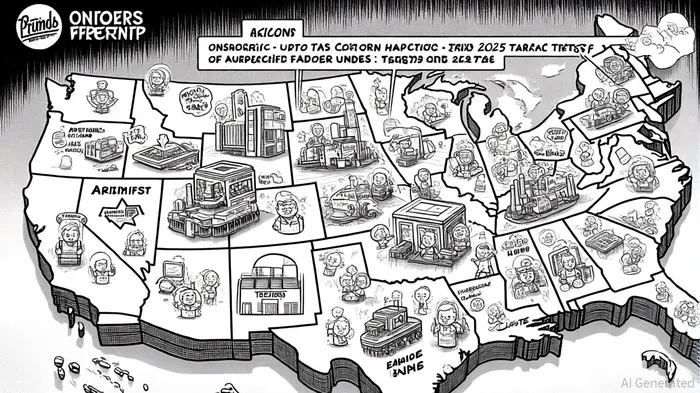
The U.S. trade policy landscape has undergone a seismic shift under President Donald J. Trump's 2025 “secondary tariff” strategy, a two-tiered system designed to recalibrate global supply chains and bolster domestic manufacturing. By imposing a baseline 10% tariff on all imports (excluding Canada and Mexico) and layering reciprocal tariffs based on trade deficits and unfair practices, the administration has triggered a wave of sector-specific realignments. For investors, this policy shift presents both risks and opportunities, particularly in industries poised to benefit from reshoring, nearshoring, and strategic diversification.
Steel, Aluminum, and Automotive: A Tariff-Driven Reshoring Surge
The most immediate impact of Trump's tariffs has been on the steel and aluminum sectors, where import duties have doubled to 50% (except for the UK, which remains at 25%) [1]. This has forced automakers like General MotorsGM-- and FordF-- to accelerate onshoring efforts to avoid the steep costs of Canadian steel, which now carries a 25% tariff [2]. TeslaTSLA--, meanwhile, faces rising costs for lithium-ion batteries and AI chips due to 145% tariffs on Chinese imports, prompting a $10 billion expansion of its U.S. Gigafactory in Nevada [2].
The automotive industry's pivot to domestic production is emblematic of a broader trend: U.S. manufacturers are increasingly prioritizing local sourcing to mitigate supply chain volatility. A QIMA survey found that 80% of U.S. companies anticipate major disruptions to their international sourcing strategies, with many shifting production to the U.S. or nearshore partners like Mexico [2].
Semiconductors and Critical Minerals: A Strategic Reinvestment
Semiconductor manufacturing has emerged as a key beneficiary of the tariff-driven realignment. Companies like TSMC and Samsung have committed to massive U.S. expansions—TSMC's $100 billion investment in Arizona and Samsung's $17 billion Texas facility—catalyzed by the administration's focus on national security and supply chain resilience [1]. These projects are expected to create tens of thousands of jobs and reduce reliance on Asian suppliers, particularly in the wake of China's retaliatory 125% tariffs on U.S. goods [1].
The Trump administration has also adjusted its reciprocal tariff framework to exclude critical goods like pharmaceuticals and minerals, while adding products such as aluminum hydroxide and silicone to the list [3]. This recalibration aims to protect domestic industries while incentivizing partners to meet U.S. trade conditions through the “Potential Tariff Adjustments for Aligned Partners” (PTAAP) framework [3].
Challenges and Risks: Bottlenecks and Compliance Costs
Despite the opportunities, the secondary tariff strategy has introduced significant challenges. The uncertainty surrounding tariff policies has led to a 50% drop in ocean freight bookings, creating bottlenecks at U.S. ports and delaying shipments [1]. Businesses are also grappling with rising compliance costs and sustainability trade-offs, as rapid supplier changes disrupt established green supply chains [2].
For example, the timing of tariff announcements—such as the April 5, 2025, escalation—has caused supply shocks, with companies scrambling to adjust to shifting rules. While the PTAAP framework offers a path to tariff reductions, its success depends on the ability of trading partners to meet stringent U.S. conditions, a process that could take years [3].
Investment Implications: Where to Focus
For investors, the reshoring boom in steel, aluminum, and semiconductors offers compelling opportunities. Companies like Caterpillar and Alcoa stand to gain from increased demand for domestic materials, while ASML and Applied Materials could benefit from the semiconductor industry's capital expenditures. However, caution is warranted in sectors reliant on global supply chains, such as consumer electronics and textiles, which face higher costs and reduced flexibility.
Conclusion
Trump's secondary tariff strategy is a double-edged sword: it accelerates onshoring in strategic industries but introduces volatility that could strain global trade. For investors, the key lies in balancing exposure to high-growth sectors like semiconductors and automotive with hedging against supply chain risks. As the administration continues to refine its tariff framework through mechanisms like PTAAP, the long-term success of this policy will hinge on its ability to foster domestic innovation without stifling international collaboration.





Comentarios
Aún no hay comentarios